
Am I Part of a Secret White Guy Death Cult?
And now that I’m thinking about it, what is this guy thing anyway?
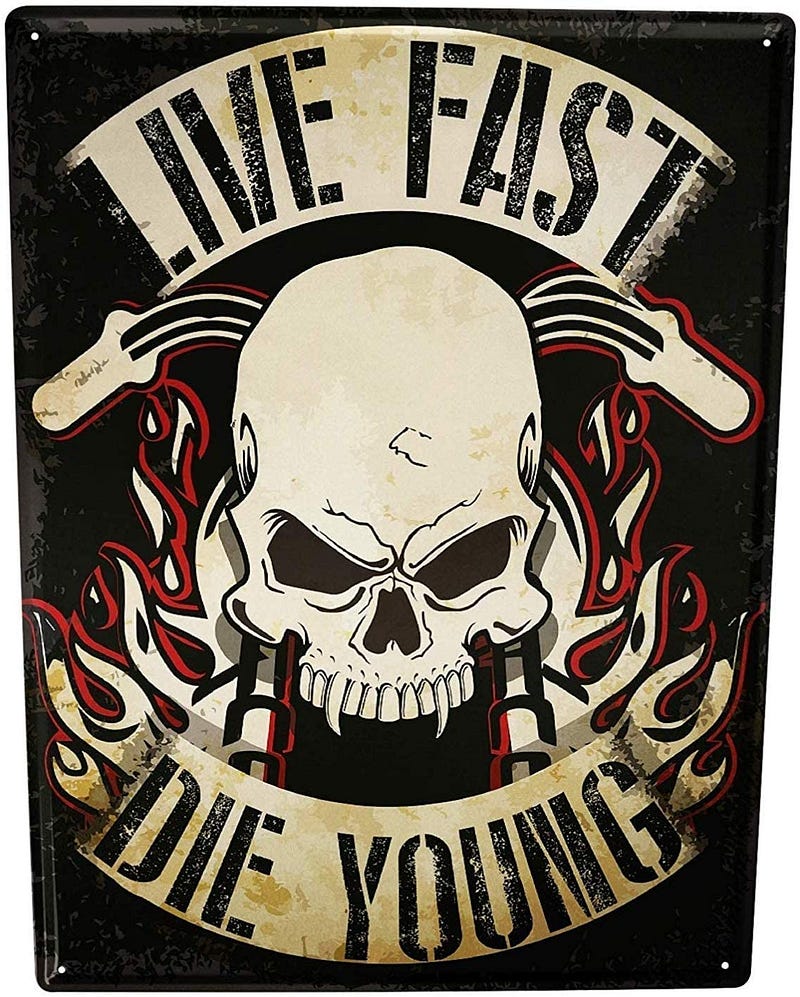
Am I Part of a Secret White Guy Death Cult?
I certainly don’t think so. But I have to consider the facts
- I’m a guy
- I’m a White guy
- I’m a White guy that grew up in South Dakota, home of the Sturgis Motorcycle Rally, and even sort of went once…though more in a drive-by capacity.
- I have, in fact, no problem with motorcycles…or with tractors, ride-mowers, reasonable folks owning guns, hunting, fishing, and a variety of ‘guy things’. (No big love for cars, sports, sports cars, or leaf blowers, though, so I am a bit of a suspicious character.)
But, yes, we have to consider the facts.
But First, We Consider Nick Bockwinkel
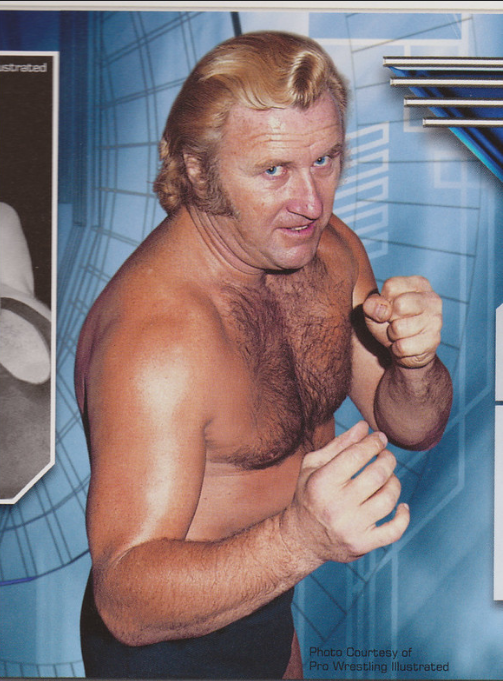
Nick was a hero of mine.
He was a pro-wrestling ‘heel.’ Take a look at him: he looked Hollywood, was in fact from California, and acted arrogantly. Clearly a Bad Person! By contrast, his league, the American Wrestling Association, was headquartered in down-to-earth Minneapolis.
The apotheosis of Nick-ness was a match with the Crusher on a run-up to the Championship.
(Pro-wrestling has a rhythm: a win by a heel, and then the heel’s defeat by a good guy laddering up to the Championship Match.)
Our cast: Crusher — the ‘face’ ie good guy, Nick — the heel, Marty — the Ref.
Marty was short and wore coke-bottle thick glasses. If the heel was one of the worst, he would attack the short guy with glasses. Wrestling was not afraid of cliches.
The Crusher was defeated and out on the mat.
Nick told Marty he would, in uncharacteristic generosity, give him 60 seconds to recover and get up.
But after 30 seconds the Crusher stirred, so Nick got up on the ropes and jumped on him. The audience went wild in contempt and rage.
The following week, Marty had a picture of Nick suspended in the air above the Crusher and called him out for this treacherous behavior.
Nick’s reply? “Marty, I am master of my fate and I am the captain of my soul. When I gave the Crusher 60 seconds to get up, that was appropriate. But 30 seconds later it was a different time and different times demand a different response. So I gave him the flying body slam.”
The crowd I was with went wild — granted it was a dorm lounge full of college students. Nick Bockwinkle, existential philosopher.
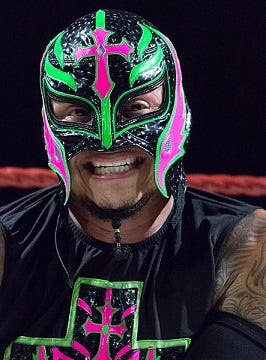
Most every wrestler at that time had an identity tag. Maybe it was a cowboy hat and boots or the trappings of some other manly cultural icon. Maybe it was a mask of some sort.
Part of Nick’s heel-ness was that he ridiculed that. He would wonder aloud about what sort of insecure personalities felt it necessary to prop themselves up with a cowboy costume. He, Nick, didn’t need the props. He was man enough that he didn’t need to crib an identity.
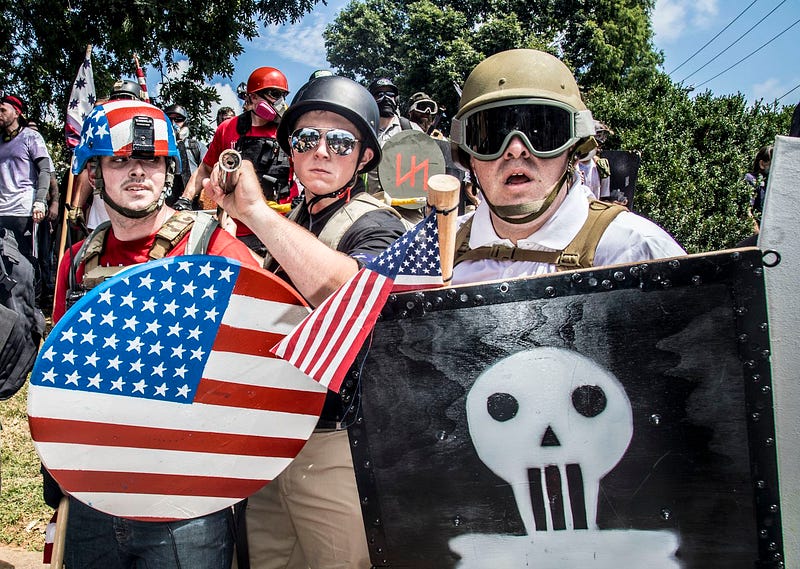
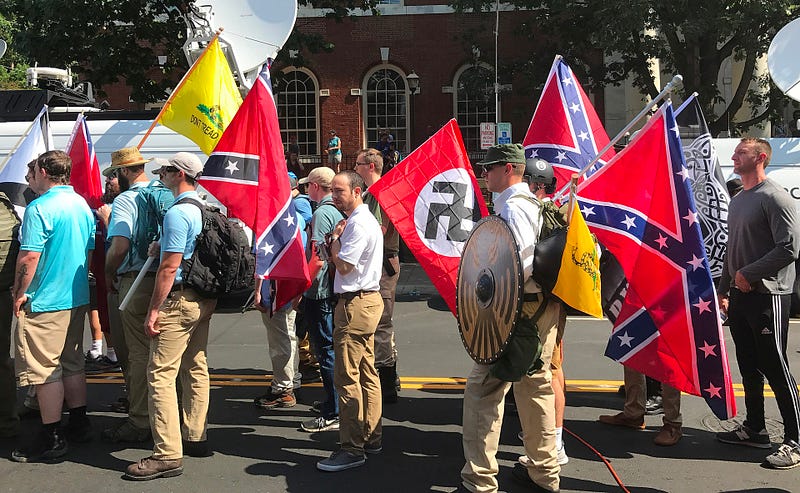
We find ourselves in a time of cosplay revolution. Men without any real program for change parade in costumes and adopt defender identities divorced from any pragmatic way to stop the ongoing destruction of the biosphere, our culture, or what’s needed for families to grow and thrive.
Nick had a point.
It’s Tough to Be a Man, Baby
Jobs are not just the source of money; they are the basis for the rituals, customs, and routines of working-class life. Destroy work and, in the end, working-class life cannot survive. - Anne Case and Angus Deaton from Deaths of Despair and the Future of Capitalism 2020
In all honesty right now … I just wanna make the world glow, dude…. That’s what it’s gonna take for us to take it back. - Adam Fox, member of the Militia that planned to kidnap Michigan Governor, Gretchen Whitmer, Wikipedia
Things seem pretty crazy at the moment in the world of the American White male.
Behind the crazy is the economy. Jobs have stagnated or simply disappeared. The majority of the US population has seen progressive immiseration over the last 40 years and the good job — a cornerstone of working-class identity — is gone for many. Even for those with a pad, economic free fall sits out on a terrifying near horizon for themselves or for their kids or for their grandkids. I’ve written about that here and here.
The issue: a sense of self that is based on a job or career is following economic free-fall into the void.
There are few viable paths out.
This may sound abstract but close to million working-class white males found no path out during the last decade or so and are dead from suicide, drug overdose, or alcoholism.
These are the ‘deaths of despair’ that Anne Case and Angus Deaton talk about. They found an inflection point in the early 2000s with a sharp uptick in deaths among White working-class males that were not shared in other classes or ethnicities. They reported 500,000 such deaths of despair. If you extend their methodology out to immediately before the pandemic you get close to a million deaths.
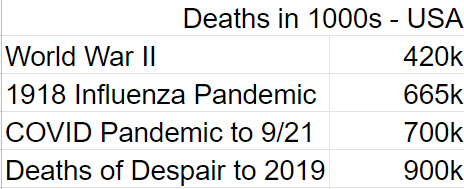
There’s an old saw that depression is anger turned inward. The other face of these deaths of despair looks outward and the symptoms aren’t as lethal — at least for the men themselves.
And the line between inner and outer is often amorphous: mass shooters typically externalize their inner chaos while expecting to die themselves. We’ve emerged from the role-playing of pro-wrestling into a real world of lethal aggression based in significant part on the dynamic of cribbed identities.
Mostly without formal organization (but occasionally with), a Death Cult has formed.
The proper framework for gender dysphoria might be of initiation. And that initiation is called forth by a world culture that demands some individuals cross the sea of gender assumptions and perform heroic acts on behalf of us all.
Don’t Be an Evil Minion
In my textbook on violence, I emphasize the symbolic nature of violence and how it is a life impulse gone awry. Briefly, if one cannot have love, one resorts to respect. And when respect is unavailable, one resorts to fear. - Bandy X. Lee
Cause when love is gone There’s always justice And when justice is gone There’s always force - Laurie Anderson riffing on the Tao Te Ching
So then, how does one avoid becoming, moth to the flame, an inadvertent Death Cult Minion?
Step one is to recognize that the Death Cult is rooted in a hard painful identity crisis, with dire impact for all genders and flavors. Step two is to examine possible paths forward and look for a better way.
I’ve been thinking about how to tease out the different paths. Two books have been touchstones. Both look at crises of meaning and both focus on stories that men and the wider culture tell about themselves.
Male Fantasies
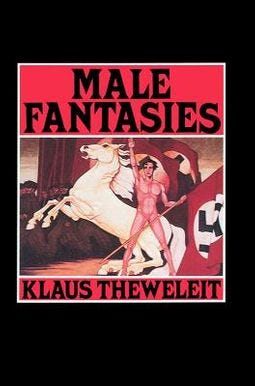
Male Fantasies, Vol. 1: Women, Floods, Bodies, History
Klaus Theweleit’s book, written in 1987 as young Germans were struggling to bring the Nazi years out of the shadows and force a public reckoning, looks at the proto-Nazi German Freikorps between WWI and WWII.
This interwar period was a time of economic disaster with masses of WWI veterans cut loose from meaningful work and German society in shambles. The path forward was up for grabs.
Clearly, this is not a precise parallel to our situation but core elements match up.
Theweleit looks at Freikorps’ diaries, novels, cartoons, art, and eyewitness accounts to determine the inner dynamic behind their actions and beliefs.
At the core he sees unwithstandable inner pressure being exteriorized in violence. The ‘enemy’ was described as formless: oceans, floods, heathen masses, commies, decadence — a formlessness that the men feared was eating at the core of their culture and individual identity. Women are often described as the carrier of the weakness and formlessness that men feared in themselves. Violence exteriorized the formlessness to its victims.
Here there is nothing truly programmatic but a porn of violence and its impact. Other bodies are reduced to formlessness. Men emerge ‘vindicated’ and defined.
Adam Fox, quoted above, sums it up: In all honesty right now … I just wanna make the world glow, dude…. That’s what it’s gonna take for us to take it back.
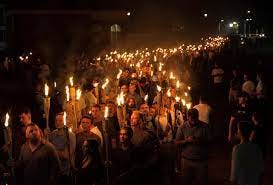
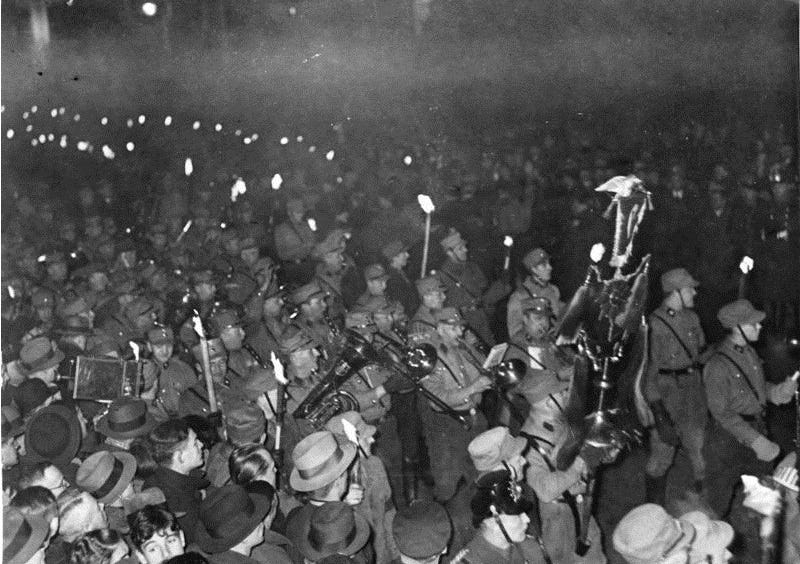
The Water of Life
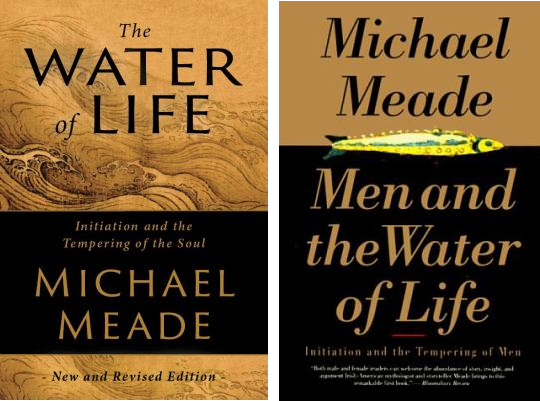
The Water of Life: Initiation and the Tempering of the Soul by Micheal Meade Men and the Water of Life: Initiation and the Tempering of Men by Micheal Meade
Micheal Meade is a badass. His bio includes a juvenile street gang in NYC and, after being drafted into the Vietnam war, 6 months in solitary confinement in a military prison for insubordination. There a hunger strike took him from 159 to 97 lbs. Conversations with his jailors lead to his interest in the transformational power of stories.
Meade explores a different story space, one that both overlaps and departs from the Freikorps’.
Meade’s workshop technique forms the backbone of his books. He tells mythic stories and guides participants through identification with parts of the story.
I intend to dig into this a bit; I believe that deep currents sparked by our natures and our circumstances are patterned as stories upstream from the politics that emerge to embody and, often, exploit them.
Dreams and myths build individual and cultural identity by generating characters and narratives that resonate with parts of the emotional landscape.
Significantly, they have a front-facing nature that probes for paths forward.
In other words, these are not stories that describe a process but stories that channel the process.
Two concepts are central to Meade’s work: Water of Life and Initiation as Crisis and Renewal.
I’ll attempt an (over)simplified description of these below.
Crisis in mythic terms is best explained by example. I’m using a formulation from European myth but one found in variants in other cultures: the desolate Kingdom.
The Kingdom has become a wasteland; or perhaps the King is ailing through a wasting disease causing the Kingdom to wither through neglect; or perhaps a malign force is laying it to waste.
The everyday commonplace has failed. Something has to be done.
The Water of Life is the fix: it might be a spring that, unblocked or liberated, can restore the withered Kingdom; it might be an elixir that heals the King.
Initiation: the King’s children must journey forth to find the cure.
There are always three sons or daughters. The older two must fail to show that the typical approach will not work.
The third child (often portrayed as hapless, naive, or unfocused) succeeds by accepting odd counsel or heading off on a tangent through the wilderness, or by finding animal helpers. That child is initiated by their departure from any known approach and returns with something new and healing.
Renewal: In this departure from the everyday commonplace, the hero locates new essential resources and inspiration and returns to heal the community. With that, the King or Kingdom is regrounded and renewed.
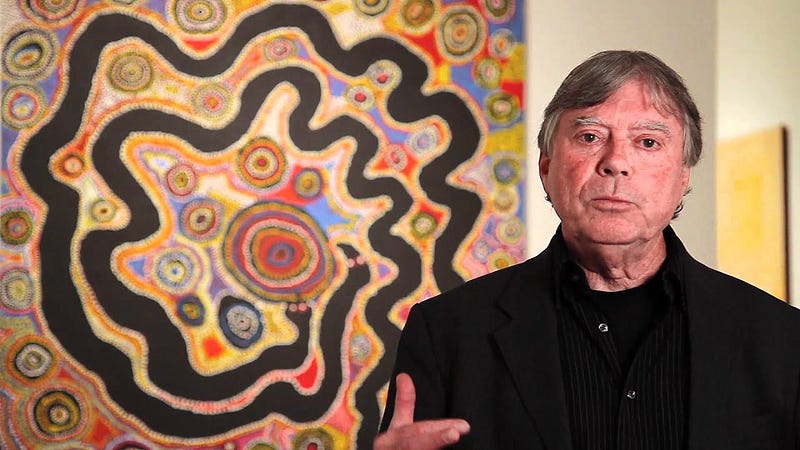
In Meade’s view all elements of the story — king, kingdom, failure, animal helpers, wellspring or elixir — are aspects of the self and activate emotions and memory…frequently of trauma or neglect that blocks growth…and then point to possibilities for healing.
Men
Meade devoted a second book to the role of this pattern in young men. In a guided journey away from everyday life and then ritual return to it, young men are bound to community or tribe.
Failure to initiate leaves young men disconnected from the Waters of Life and their aggression undirected and dangerous. Men unattached risk becoming simply thugs. The resources that restore and heal are not easily obtained. Connected to the Waters of Life through an Initiatory Journey they become Defenders, Protectors, Healers, Heros.
The critical component is the return with needed insight and resources and a commitment for service to the community. Without initiation, the fires of impulse and aggression burn rather than warm. By contrast, the initiate has not merely put on a cowboy costume and started shooting but learned how to ride, rope, brand, and test themselves in tough circumstances with an apprenticeship to learn community wisdom. Their identity isn’t adrift and formless but forged from within through experience.
We live in a culture poor in initiatory rituals. Baptism and Bas/Bat Mitzvahs are perhaps the main surviving examples. You can see the pattern of break, transition, and dedication to something greater in both. But in most cases even with that young men and women are left at loose ends.
At the Crossroads: Crossroads All the Way Down
All truths are for me soaked in blood. - Nietzsche
History is a nightmare from which I am trying to awake. - Stephen Dedalus in Ulysses, James Joyce
We’re at a crossroads with a deeply polarized society and an increasing drumbeat of climate catastrophes. Our crossroads arrive without clear signposts but with very clear dangers.
But mythically, crossroads are a luminous place full of potential.
And I see crossroads all the way down.
Species
First, there is a crossroads baked into our genes. The same neurotransmitter, oxytocin, that invokes comradeship, community, and bonding plays a role in genocidal rage. Us vs Them is ‘fast thinking’ baked into our genes by millions of years of hominid evolution.
Yet, we are now at a point in our evolution as a species where, if we are to survive, we need to build the biggest possible Us. The threats are planetary and potentially existential and we need all hands on deck. Scapegoating some Them will not get us where we need to go.
Country and Culture
Next, the settler component of our culture embodies the same dichotomy. From the beginnings of what became the United States, we have been stretched between our highest ideals of an inclusive society and our darkest dehumanizing impulses.
Again we face an existential threat, this time as a democracy. Again it is the polarity of inclusion and exclusion. Slowly through the decades we have built a bigger Us but our progress is at risk.
Individual
What of the personal?
Here the lack of signposts is most telling. One common path expresses pain and anger in performative violence. Another lets go of anger and risks a drop into suicidal despair. Neither of the two elder siblings has found a way out.
On the other hand, all this talk of heroes, initiation, and renewing waters sounds nice but does it work? We’re addicted to hero stories; we’ve seen all the Marvel movies: yet, the situation remains dire. Who are our real superheroes?
How do we get a society of deeper empathy and meaningful work?
Meade provides some clues. As noted, his core technique is to harness individual trauma, brokenness, and conflict to a deep story that can mobilize and guide internal resources.
This always involves connecting to both dark-side and trans-gender internal resources, integrating them, and utilizing them to confront the challenges from a now bigger self with greater resources. It’s the internal counterpoint to ‘all hands on deck.’ Inclusion vs exclusion.
One of Meade’s inspirations, Carl Jung pointed out that solutions come from immersion in the contradiction. Without suffering the split, we don’t get the healing solution either individually or culturally.
I don’t have any pat answers. Or non-pat answers for that matter. What I’m working on is deepening the contradictions — seeking to suffer with the most productive questions. I’d love to have you join me.
I do know that the Freikorps stories are a crippled form of masculinity. I’m, also, highly suspicious when being Male or Female becomes an ideology. Definitions of gender always want to sort traits into either male or female and that tends to push us towards definition at the extremes that neither men nor women can fit. More on that below.
And, as noted above, much of the problem is the emotion and trauma of immiseration dressed up as ideology and performed politically. Is the alternative to despair and mindless rage, mindful rage? Or something else entirely? What stories point to a cultural healing? I don’t know. But I’m obsessed with thinking about it.
Exploitation: a Political Aside.
It’s important, as part of the process, to realize that there are two roots of the current craziness. One is desperation as noted, but the other is its political exploitation. Explicitly, by exploited, I mean that that time and money are being spent to gain a return in power and profit. Outrage is being harvested. I’ve started writing about that here as part of a series.
Post Script — An Extended Meditation on Gender
I try to enforce a personal imperative to make my assumptions explicit. That’s the best way for them to evolve.
Thinking about men and myth got me thinking about my own assumptions about gender.
The stuff about archetypal gender below is new to me and my ‘gender stack’ is (always) provisional. Trying to get a clear formulation should help improve my thinking even where it’s wrong. Your thoughts and comments would be appreciated.
Gender in Myth
Folks writing about myth such as Carl Jung and Joeseph Campbell (and their contemporary equivalents) typically treat gender as binary although as a polarity that all people share whether male or female. The interplay of gender opposites in dream or myth is the interaction of deep currents in the individual or culture and a central component of the work of both.
Gender Dysphoria
Getting personal, I have to admit that I intuitively understand sexual orientation but not gender dysphoria, specifically not so strong a sense of being born in the wrong body that one would want to alter the body.
I understand non-binary. The young birds that have assembled a presentation from stance, costume, and body ornamentation make perfect sense. They’re performing themselves in the face of cultural expectations about gender.
Drag queens and cross-dressing makes sense. It’s performing an aspect of self that doesn’t fit into a stereotype of one's own gender…there’s a nod to traditional gender in the need to transcend it. And a kick-ass sense of fun.
But the sense that one is not the gender of one’s body remains hard to wrap my head around. Where is this strong felt gender coming from?
Gender Stack — Context
Techie that I am, I analyze gender as a ‘stack’ paralleling the layers of the first tech stack I worked with. Each layer of the stack is dependent on the previous layer’s existence, eg no phenotype without genotype or, using the case of a technology: no network without some wires or wifi gizmos to host it.
But before we go down the gender rabbit hole of sex and gender, let’s start with a proviso. The difference between men and women is chronically overstated. Anne Fausto-Sterling convinced me of this in 1992 and evidence continues to support her.
My preferred starting framework is always evolutionary biology. We evolved as small groups in competition with other small groups either directly through raids and warfare or indirectly through resource control.
No group could afford to squash talent because the talented individual was the ‘wrong’ sex. It was important to value female fighters, male child-rearers, and anyone with wisdom to help in troubled times. The tribe’s survival could depend on it. This, btw, is the likely reason that human women live well past menopause…a trait shared with just a handful of other species like Asian elephants and killer whales. The wisdom of elders was/is critical.
Also, note that statements about sex differences are ‘statistical.’ Men are statistically taller than women but some women are taller than most men.
Finally, as we go down the gender stack below note that there are ambiguities at every level! Also, the levels aren’t crisply differentiated in that there are complex interactions between all of them.
The Gender Stack — Details
So then, a quick sketch of the gender stack from bottom to top:
- Genotype
- Mother’s blood chemistry…hormonal mix (estrogen and testosterone being particularly relevant)
- Phenotype at birth
(Note, there are ambiguities here already. XY and XX are the most common but XXY and XYY are found way too frequently to call them abnormalities. Those genes express themselves in a continuum of morphologies.)
- Ongoing individual blood chemistry. Testosterone drip.
- Family — particularly the cultural envelope of a child’s immediate environment
- Cultural conventions — ethnicity for lack of a better term — prevailing community values
(There are feedback loops everywhere as I noted. A particularly salient one would be how your family or culture responds to their perception of your gender.)
- Media envelop — with increasing impact over the last century.
And then: gender dysphoria forces us to examine
- Felt gender
- Archetypal gender??
What’s happening here?
Back to Myth
So, in talking hypotheses about myth and felt and/or archetypal gender, what exactly would we be talking about?
As noted above, in the Jung/Campbell story-space gender plays a large role in the dreams and myths that channel both cultural progress and individual growth. It’s a strong player almost always invoked.
The core myth in this story-space is often called the night-sea journey and it tells a tale of departure and return. Meade’s King and 3 sons is an example. The (masculine) hero charts a path of differentiation from the (female) unconscious represented as ocean…or as a witch that must be tricked…or monster that must be slain…and that act crystalizes out the positive feminine as helpmate or muse or psychopomp.
For Jung, the ego presents as masculine, and the night-sea journey charts the path of the ego differentiating itself from the (female) unconscious in order to be able to operate in a self-directed manner — but then must reconnect with the feminine in order not to be cut off from the deeper self that it needs to remain healthy and growing.
Too rigid an ego is bad; too squishy an ego is equally bad.
As with Freud, there are some interesting (but not necessarily convincing) convolutions added to account for how this might play out in the different genders.
Campbell’s work parallels Jung at a cultural level with the hero departing and returning after completing heroic tasks. Campbell talks about renewing culture rather than helping integrate individuals.
Culture-Bound
As I hinted, I never found this male hero thing convincing. Jung and Campbell both came from cultures with rigid gender roles and worked in a context in which the roles were viewed as clear and natural. Their interpretation is way too pat. Like Jung’s typology, his play of genders is interesting and probably useful as a starting point. Accurate? Well, not so much.
See the clip below for an eloquent rebuttal of a hero’s necessary maleness. Also, it nicely illustrates Meade’s portrayal of the hero as a defender… not some blindly aggressive dipshit.
Archetypal Gender
Okay, sorry: long windup to the pitch here.
Archetypal…
Archetypes. Archetypes, simply, are stories that have you. They can override the individual. They can carry the ego on a wave of image and emotion with the ego either surfing the wave or slammed broken on the reef.
To understand archetypes think dreams. Dreams have both content and energy. Think of a highly focused dream with more narrative cohesion and a lot more energy — enough energy that you are to a significant degree inside the dream. You are nudged into following its suggested narrative and are attracted or repelled by people and elements of the world around you as that narrative calls them out as players in your own deep story.
Archetypes have a cultural component. Jung describes archetypes as equivalent to a crystal where an inherited pattern gets filled out by culture and our personal biography and acts to channel ‘libido’ when activated.
To understand crystal pattern vs cultural component, let’s take a parallel. We have an instinct for language. Infants automatically seek to learn it. Accent-free second languages are easy to learn until the window shuts in adolescence. Yet the specifics of the language vary widely from culture to culture.
Archetype activation part comes from the challenges and conflicts of everyday life: finding a mate, sexual attraction, parents and children, personal and tribal enemies, same-sex and cross-sex relationships, shame, weakness, and growth.
It can, also, come from the fracture lines in a culture that create conflicts in everyday life. A key difference is that one can grow to ‘solve’ individual trauma but the cultural fracture lines need a collective solution. Artists, visionaries, and activists have a critical role in interiorizing the conflict and then generating possible paths forward.
…Gender
So then, does an individual’s gender identity have a mythic component?
Could gender dysphoria be grounded in something archetypal?
It fits the criteria. As with language, the sense of gender polarity could persist strongly. And this despite the fact that specific ‘natural’ gender traits vary dramatically from culture to culture like elements of language.
As with other archetypes, gender discomfort could trigger the crystallization of a cross-sex gender ‘imago’ strong enough to override a simple ego-based ‘get out and walk on it’ type solution. And if we look deeply across cultures for story patterns, it seems that there are, also, imagos for intersex actors.
This will be the starting point for another article but one last observation.
If we bring in archetypes then the proper framework for gender dysphoria might be of initiation.
And that initiation could be called forth by a world culture that demands some individuals cross the night-sea of gender assumptions and perform heroic acts on behalf of us all.
PS, if you’re hoping for tidiness in the world of gender, here’s my favorite recent research.
Masculinity may have a protective effect against the development of depression — even for women (If you read this, note that there’s a cultural bias in the definition of traits and that androgyny trumps all.)
Thanks for reading!
I’d love comments, collaborators, and kibitzers. Could that be you?
Subscribe to see new stories when they appear.
In a weird twist, should you sign up with a membership using this link, I get some of the money! Any money raised will be used to fuel a meetup at some future date.
My mailing list and various projects can be found at altabor.org.
Big thanks to Evelyn Jean Pine, Patsy Fergusson , and Wendy Walsh for making this a better piece.
For more of the good stuff, follow Fourth Wave, where we’re changing the world for the better, one story at a time. Got one of your own? Submit to the Wave!


