
Am I a Man?
*Dear family members: please don’t read this. Nothing personal.
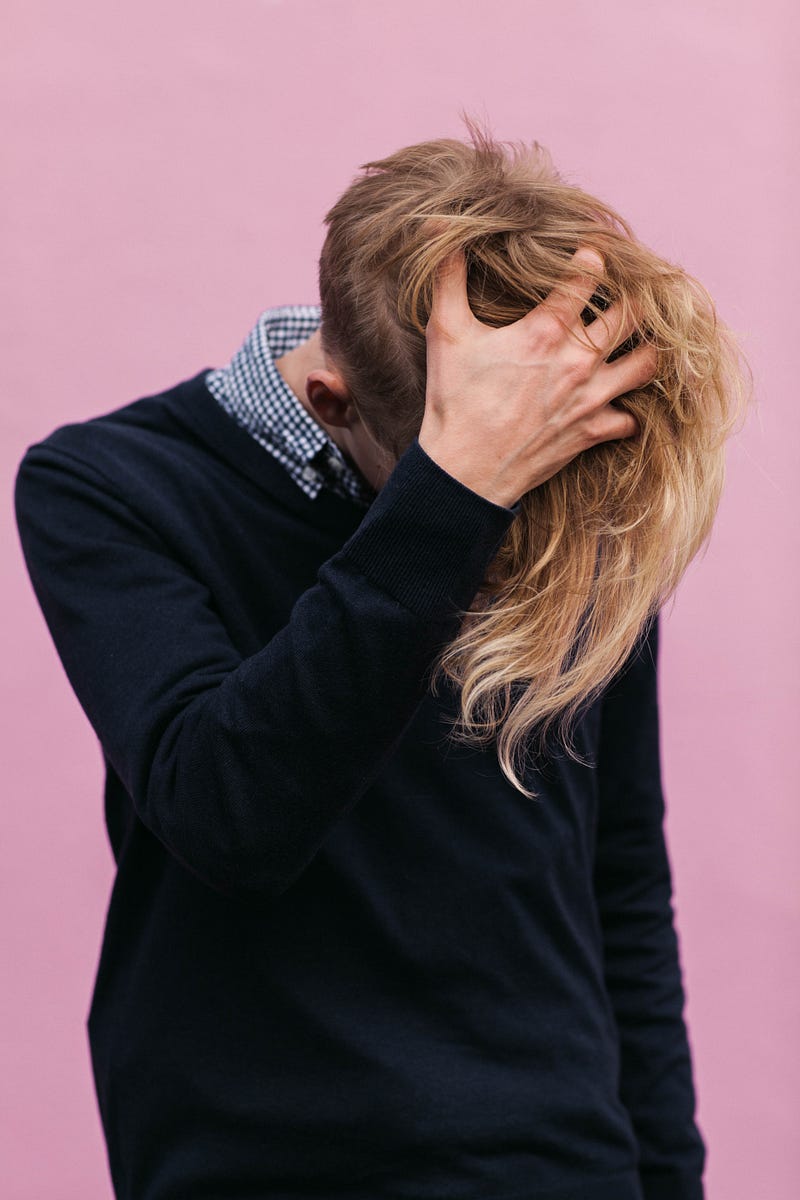
“Hey, I’m totally a man, right?”
The question was clearly getting irritating. What was a fun joke during a slumber party was evidently becoming a sp-edy tick that I couldn’t shake. Girls were dumping chocolate spread and syrup on pancakes and groggily answering calls coordinating pick-ups. And I was having the beginnings of a mild form of gender dysphoria.
I don’t remember whatever game or topic of conversation had led to me being reimagined as a man by a group of 11 years-old girls. What mattered in the moment was the sensation of being labeled in a surprising way. And liking it.
I know that this isn’t exactly a sentiment cis women are excluded from. Plenty of lesbians want to express themselves in butch-coded ways. In Bechdel’s Fun House, Alison and her father bond over the gender non-conforming aspect of their homosexuality in a moment that almost paints such expression as inherent to being gay. Some women pack, and bind, and use he/him pronouns. And for them, that’s just a part of being a woman who loves women.
I can’t help but think that this has something to do with our gendered expectations for who we are meant to be attracted to. If you’re a woman attracted to women, and all the cute girls you meet throughout your childhood drool over big, muscly jocks, you may unconsciously develop an association between yourself and those kinds of dudes. You may imagine yourself to be one, even begin to map this imagined body over your own.
But I wonder if it works the other way around, too.
I’m attracted to people of many genders. And yet, when I get drunk in my room on Saturday nights and decide to search the internet for potential suitors that I will never follow up with sober, I always look for feminine people. And I think I know where that started.
So, when I was 18, I went to a party where I ran into a girl with whom I’d had some common interests beforehand. She was there with a few of her female friends and all of them were way further along than I was. The second I got into that circle, I somehow became the center of attention- Is it warm in here? I’m gonna move on.
You get it though, right? Lots of girls, lots of touching, lots of attention. Okay, cool.
Now, here’s the thing. I’m very much on the demi spectrum. I wasn’t attracted to any of these girls, because frankly, I wasn’t capable of being so at that time. So this evening wasn’t exciting to me from that perspective. Sexually, this moment was almost completely irrelevant to me. So why does it stick out to me? Why do I get a little high thinking about it eight years later? I’m a feminine presenting person: men I barely know express interest in me too. Often in creepy ways, but not always. And I’ve become alternately annoyed and offput by it, frankly. But I like when women do it.
It’s because I felt like a man.
I don’t think of myself as a man, not at this moment anyway. But there was a brief moment last year where I began considering HRT, just enough to make myself more androgynous. When I lean into masculine dress, I’m more often than not identifiable as a gay woman rather than a bisexual enby, and I fear that the language I’m trying to speak can’t be communicated with pure expression.
Additionally, I don’t want to express myself as purely butch. Not because men won’t be interested in me if I do, but because I enjoy my feminine expression. I’ve always wanted long hair, I love the smoothness of my skin, I’m shockingly into heels and lipstick (which is a new development).
Despite this, my discomfort with being read as a woman is clammy and stifling. Womanhood is a shape that I can’t hold without my pants falling down.
So, what about manhood?
In a strange way, my attraction toward men remains largely hypothetical. From afar, I simply know my brain can’t stop lingering around some of them from time to time. And yet, when I guy is interested in me, my response is generally of disgust or irritation.
Because, I’m not a woman, idiot! Don’t you get that?
It’s stupid, it’s childish, it’s heteronormative, and it’s binary (ugh).
But that’s how it feels.
And yet, I’m clearly interested in men. A lot. Just trust me on that, please. Even if I’m not interested in myself being interested in them.
And so, if, hypothetically, I wanted to imagine myself with a man, what kind of man would that make me?
What kind of man wants men to be attracted to them?
(Did this bitch really just come out as a gay trans man?)
Well, no. Thanks for participating though.
But I don’t think it’s a coincidence that so many trans people are gay. Nor is it inexplicable that so many bi/pansexuals experience their attractions to different genders very differently.
There is a particular model of masculinity that I acknowledge in myself in my most confused ‘gender fuck’ moments.
And he’s not a muscly jock.
Maybe I’m too hard on myself as a woman. I’ve been thinking of myself as genderfluid, after all: sometimes feeling masculine or feminine, sometimes genderless and sometimes androgynous.
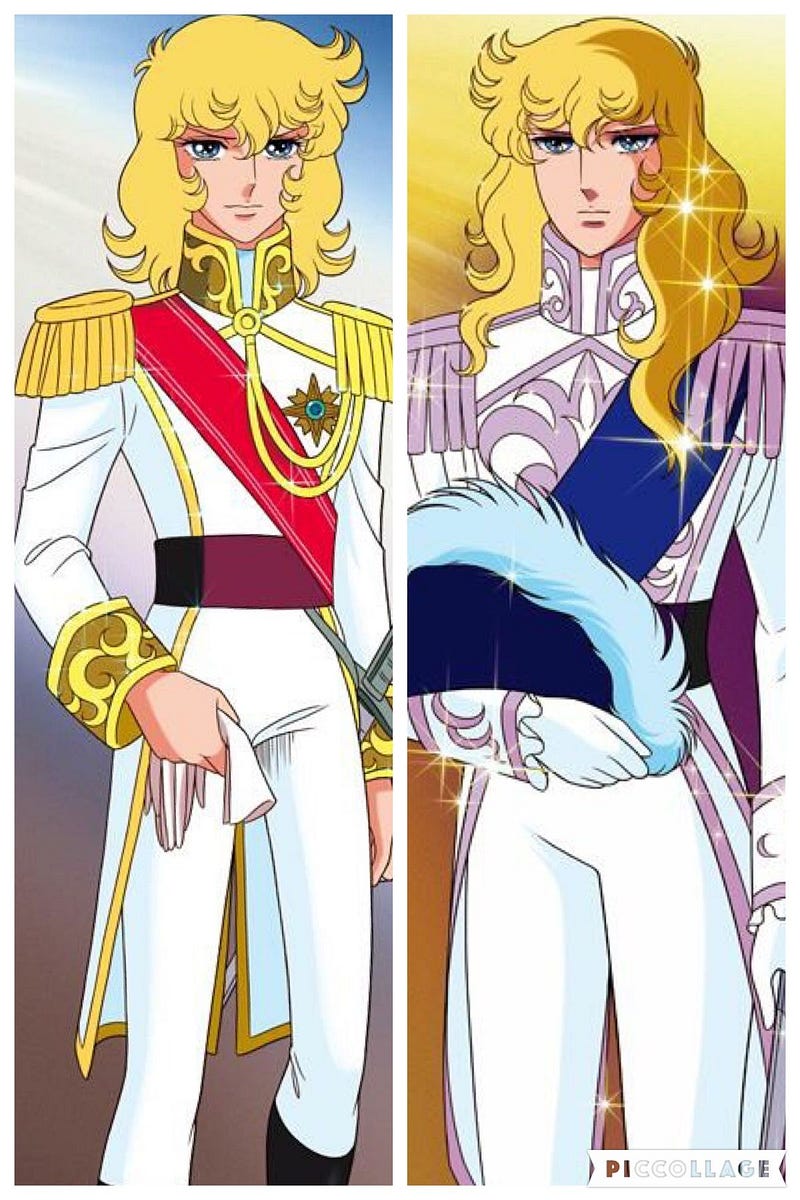
There are times when I genuinely wish I could call myself a woman. Usually, that’s when I’m wearing a sweater vest or look like Lady Oscar.
(Okay, I never look like Lady Oscar. I’m sorry I lied.)
But again, I associate this aesthetic with swooning ladies and making guys jealous of my swordplay skills. Is my entire gender identity about successful bisexual mating strategy? Well, arguably that’s a component of all gender identity and expression. But like all social constructs, I doubt it stops there.
For the moment, thinking of myself as a man feels like a malicious lie. Even though a petulant, sp-edy kid in me is begging for it.
Because that little snot-nosed shit doesn’t know what he’s talking about. I know that there is a difference between wanting to be someone and being that someone.
At least I think I know that.


