
Although Rare, You Can Die From Drinking Too Much Water, And It Just Happened to an Indiana Woman
With the prolonged summer heatwave, a caveat to rehydrating must be made.
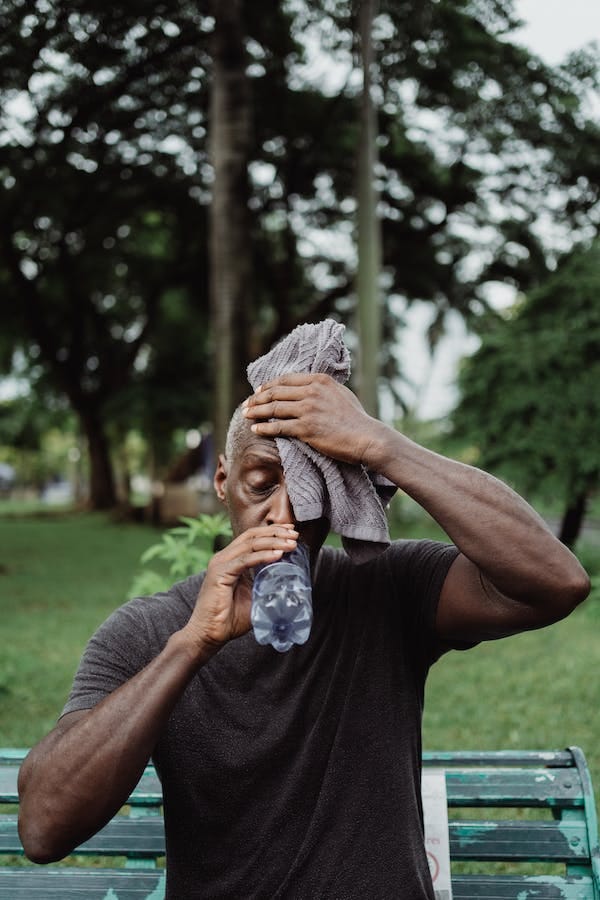
You can get too much of a good thing. You could have asked Ashley Summers, but sadly she died after drinking too much water. The Indiana woman was out on a lake celebrating the Fourth of July with her family and felt “dehydrated.” She drank nearly one-half gallon of water in 20 minutes. Summers fainted in her garage and was rushed to a hospital, where doctors told the Summers family their loved one died from water toxicity.
Although rare, it can happen, and everyone needs to know why. Water toxicity or intoxication can happen when we rehydrate with water only. When dehydrated, water is the principal substance that needs rapid replacement. But it is not the only one. When we sweat, we also lose important, and vital, electrolytes. Electrolytes are essential minerals — like sodium, calcium, and potassium — that are vital to many key functions in the body.
Symptoms of electrolyte imbalance are similar to dehydration: Fatigue, headache, nausea, blood pressure changes, muscle cramps, low energy, and simply not feeling well. Electrolytes are essential to optimal nervous system function, heart, kidneys, and muscles. If they are not replaced, but water is, the blood level of sodium may get dangerously low. This can ultimately result in loss of consciousness, seizures, coma, and even death.
Although we don’t know the health history of Ms. Summers, the speed with which she consumed the water was dangerous. Drinking water too fast, without concomitant electrolyte replacement, is a risk factor for water intoxication. Since I like to fish in the Gulf of Mexico off the coast of Florida, I have personal experience with dehydration. Although being on the water is about five degrees cooler than the land, depending upon the wind and cloud cover, it is still hot.
Today, for example, as I write this, it is 96 degrees, 65% humidity, and a dew point of 78 degrees. (Any dew point above 72 is uncomfortable.) The heat-humidity index makes it feel like 106. The temperature might be lower here than in Texas or Arizona, but our humidity is generally higher. Thus, it still feels very hot, and you can dehydrate quickly.
My other risk factors for dehydration are my age, (74), and my Crohn’s disease. Older folks have impaired thirst sensation, so it is easier for them not to notice dehydration symptoms. And since Crohn’s disease patients have frequent bouts of diarrhea, we are also more prone to dehydration symptoms.
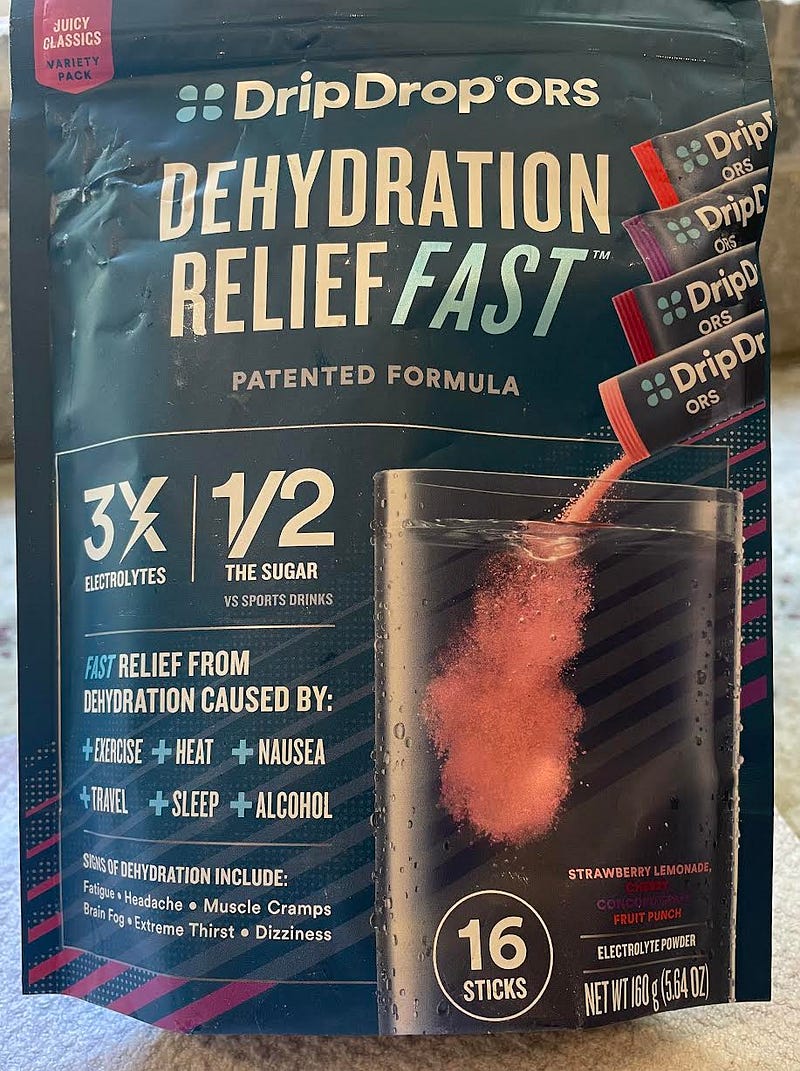
To combat my dehydration while fishing, I add one-two packet of the above product to 64 ounces of water in a thermos, mixed with some ice. During the summer, I may also have another 12–24 ounces of fluids. There are many types and brands of electrolytes. Each packet has 7 grams of added sugar and only 35 calories. Some products have Stevia, but I’m not too fond of the taste, and some sugar replacement is necessary too.
In comparison, Gatorade, and many other “sports” drinks, have too much sugar. 12 ounces of Gatorade has 36 grams of added sugar and 80 calories. That’s too much. I take other preventive measures like skin coverings from the sun and lots of sunscreens. I may also hose off using fresh water during the day to help control overheating.
Stages of Dehydration
At first, we will be thirsty. But the following are other signs of mild to moderate dehydration:
- Dry or sticky mouth.
- You are not peeing very much.
- Dark yellow pee.
- Dry, cool skin.
- Headache.
- Muscle cramps
Moderate to severe dehydration symptoms may overlap with the above but may quickly and subtly progress to:
- Not urinating, or very dark yellow or amber-colored urine.
- Dry, shriveled skin.
- Irritability or confusion.
- Dizziness or lightheadedness.
- Rapid heartbeat.
- Rapid breathing.
- Sunken eyes.
- Listlessness.
Conclusions:
- Overheating and dehydration are common during summer, particularly with prolonged exercise and/or outside exposure.
- It is not enough to drink water. Electrolytes need to be replaced too. And water, in particular, and by itself, should not be drunk too rapidly.
- Older individuals and those with chronic diseases are more susceptible to dehydration symptoms and illnesses.
- Even young, healthy individuals can suffer from water intoxication, including death if they drink too much water too fast, and without electrolyte replacements.
- Sugar replacement is helpful in combatting dehydration, but sugary sports drinks contain much more sugar than is necessary.
We can debate whether this is the hottest summer ever, or if it is due to man-made climate change. However, there is no debate about how dangerous the side effects are on us and what is the best way to prevent and treat them.
I am a retired MD passionate about culture, medicine, health, sports, and food.
Get an email whenever I publish by clicking this link:https://davidmokotoff.medium.com/subscribe
I will never spam you or give out your address.


