avatarChristopher Hecox

Free AI web copilot to create summaries, insights and extended knowledge, download it at here

4228

Abstract

g from the smallest consumers to the largest banks. In essence, there is no hiding from monetary policy.</p><p id="0ae6">The flow of impact from the monetary policy is straightforward. Higher interest rates mean consumers are purchasing fewer iPhones. Small companies with operating lines of credit for business expenses are spending less on YouTube advertising. Individuals with higher credit card rates are buying fewer products through amazon. These examples provide a better explanation for the recent earnings reports for these three large companies. It isn’t enough to only be innovative; they all need to maneuver around economic obstacles.</p><figure id="804c"><img src="https://cdn-images-1.readmedium.com/v2/resize:fit:800/0*2JUO558zitH6etWd"><figcaption>Photo by <a href="https://unsplash.com/@jamesyarema?utm_source=medium&amp;utm_medium=referral">James Yarema</a> on <a href="https://unsplash.com?utm_source=medium&amp;utm_medium=referral">Unsplash</a></figcaption></figure><p id="3cf2">It is a consequential sequence of events that compounds into a snowball effect. Furthermore, this effect becomes exacerbated when the employees are also customers. Recent news indicates that large companies are laying off thousands of workers to lower expenses. These layoffs result in less money for spending, less borrowing, and less growth. It is evident that one change in a single area has had an enormous impact on the economy, which resurfaces the original question of whether these companies are innovative enough to survive.</p><p id="2f6c">Innovation comes in more forms than is often given credit. The public recognizes innovation as the ability to create new products. However, people overlook the innovation required to survive an economic downturn. Innovation is present in companies trying to produce creative ideas with fewer employees. There are ideas within companies to help determine whom to keep and whom to fire in an economic downturn. The public would admire novel propositions that allow a company to retain employees during an economic downturn.</p><figure id="e29c"><img src="https://cdn-images-1.readmedium.com/v2/resize:fit:800/0*jBmy5FUvsKpbc5zE"><figcaption>Photo by <a href="https://unsplash.com/@freestocks?utm_source=medium&amp;utm_medium=referral">freestocks</a> on <a href="https://unsplash.com?utm_source=medium&amp;utm_medium=referral">Unsplash</a></figcaption></figure><p id="08c1">Netflix and Lego are companies that pursued innovative solutions to survive a downturn.¹¹ In 2008, Netflix didn’t have the content quality it has today, and it certainly didn’t have the market share. During this period, ‘Netflix and Chill’ didn’t exist, and Netflixxing wasn’t a verb yet. With a financial crisis looming, they launched a streaming service and developed partnerships with companies like Xbox to utilize their service. Meanwhile, the recession in the U.S. impacted Lego to the point where they decided to expand into markets outside of the U.S. This allowed them to flourish in countries with steady economies while the U.S. economy dwindled.¹¹</p><p id="c619">The recent earnings reports for Amazon, Apple, and Alphabet are far from indicative of giants who are about to fall. The release of poor earnings is not uncommon, and most companies manage to bounce back in the upcoming quarter or year. However, these reports, and the current economic state, should remind investors that no company is too large to fail. Without a crystal ball, it is unfeasible to see what the economy will be like in 1 year. Companies should be concerned with what the economy and market will be like in 5 years. This level of foresight separates the winners from the losers and provides companies ample time to develop and test innovative solutions to future problems.</p><h2 id="f3fb">References:</h2><ol><li>Business Model Navigator.<i> Blockbuster. <a href="https://businessmodelnavigator.com/case-firm?id=18"></a></i><a href="https://businessmodelnavigator.com/case-firm?id=18">https://businessmodelnavigator.com/case-firm?id=18</a></li><li>CNBC make it. <i>Netflix didn’t kill Blockbuster — how Netflix almost lost the movie rental wars.</i> <a href="https://www.cnbc.com/2020/09/22/how-netflix-almost-lost

Options

-the-movie-rental-wars-to-blockbuster.html#:~:text=By%202010%2C%20Blockbuster%20was%20forced,subscribers%20and%20started%20expanding%20overseas">https://www.cnbc.com/2020/09/22/how-netflix-almost-lost-the-movie-rental-wars-to-blockbuster.html#:~:text=By%202010%2C%20Blockbuster%20was%20forced,subscribers%20and%20started%20expanding%20overseas</a>.</li><li>Forbes. <i>A Look Back At Why Blockbuster Really Failed And Why It Didn’t Have To. <a href="https://www.forbes.com/sites/gregsatell/2014/09/05/a-look-back-at-why-blockbuster-really-failed-and-why-it-didnt-have-to/?sh=58d790981d64"></a></i><a href="https://www.forbes.com/sites/gregsatell/2014/09/05/a-look-back-at-why-blockbuster-really-failed-and-why-it-didnt-have-to/?sh=58d790981d64">https://www.forbes.com/sites/gregsatell/2014/09/05/a-look-back-at-why-blockbuster-really-failed-and-why-it-didnt-have-to/?sh=58d790981d64</a></li><li>CNBC. <i>Alphabet misses on earnings and revenue as YouTube falls short. <a href="https://www.cnbc.com/2023/02/02/alphabet-googl-earnings-q4-2022.html"></a></i><a href="https://www.cnbc.com/2023/02/02/alphabet-googl-earnings-q4-2022.html">https://www.cnbc.com/2023/02/02/alphabet-googl-earnings-q4-2022.html</a></li><li>Alphabet Earnings Release. <i>Alphabet Announces Fourth Quarter and Fiscal Year 2022 Results. <a href="https://abc.xyz/investor/static/pdf/2022Q4_alphabet_earnings_release.pdf?cache=9de1a6b"></a></i><a href="https://abc.xyz/investor/static/pdf/2022Q4_alphabet_earnings_release.pdf?cache=9de1a6b">https://abc.xyz/investor/static/pdf/2022Q4_alphabet_earnings_release.pdf?cache=9de1a6b</a></li><li>CNBC. <i>Apple sales drop 5% in largest quarterly revenue decline since 2016. <a href="https://www.cnbc.com/2023/02/02/apple-aapl-earnings-q1-2023.html"></a></i><a href="https://www.cnbc.com/2023/02/02/apple-aapl-earnings-q1-2023.html">https://www.cnbc.com/2023/02/02/apple-aapl-earnings-q1-2023.html</a></li><li>Yahoo Money. <i>Amazon stock drops after revenue beat, EPS miss. <a href="https://money.yahoo.com/amazon-stock-drops-after-revenue-beat-eps-miss-150219157.html"></a></i><a href="https://money.yahoo.com/amazon-stock-drops-after-revenue-beat-eps-miss-150219157.html">https://money.yahoo.com/amazon-stock-drops-after-revenue-beat-eps-miss-150219157.html</a></li><li>Federal Reserve. <i>Policy Tools</i>. <a href="https://www.federalreserve.gov/monetarypolicy/openmarket.htm">https://www.federalreserve.gov/monetarypolicy/openmarket.htm</a></li><li>U.S. Inflation Calculator. <i>Historical Inflation Rates: 1914–2023. <a href="https://www.usinflationcalculator.com/inflation/historical-inflation-rates/"></a></i><a href="https://www.usinflationcalculator.com/inflation/historical-inflation-rates/">https://www.usinflationcalculator.com/inflation/historical-inflation-rates/</a></li><li>CNBC. <i>Federal Reserve approves first interest rate hike in more than three years, sees six more ahead. <a href="https://www.cnbc.com/2022/03/16/federal-reserve-meeting.html"></a></i><a href="https://www.cnbc.com/2022/03/16/federal-reserve-meeting.html">https://www.cnbc.com/2022/03/16/federal-reserve-meeting.html</a></li><li>Hubspot. <i>How These 7 Companies Thrived During the Recession. <a href="https://blog.hubspot.com/marketing/companies-that-thrived-during-the-recession"></a></i><a href="https://blog.hubspot.com/marketing/companies-that-thrived-during-the-recession">https://blog.hubspot.com/marketing/companies-that-thrived-during-the-recession</a></li></ol><h2 id="3d65">Further Reading</h2><div id="0857" class="link-block"> <a href="https://www2.deloitte.com/us/en/insights/economy/us-economic-forecast/united-states-outlook-analysis.html"> <div> <div> <h2>United States Economic Forecast Q4 2022</h2> <div><h3>The real case for a recession in the United States involves the Federal Reserve's actions to slow the economy. And…</h3></div> <div><p>www2.deloitte.com</p></div> </div> <div> <div style="background-image: url(https://miro.readmedium.com/v2/resize:fit:320/0*8cUK6SWbZwoVNCgM)"></div> </div> </div> </a> </div></article></body>

Alphabet, Amazon, Apple. All Giants Fall
Photo by Mitchell Luo on Unsplash

Since 2000, at least five large companies have toppled — Blockbuster, Polaroid, Toy R Us, Compaq, and Kodak. Whether it be from economic strains or failure to innovate, history has shown time and time again that no company is too large to be toppled. Companies aren’t just competing against competitors, but they are also competing against economic and political barriers.

Blockbuster had 9,094 stores and employed 84,300 people at its highest point.¹ Polaroid was a household name for decades with its popular instant film cameras. With greater than 1,000 stores, Toys R Us was one of the largest toy store chains in the world. Similarly, the largest film company worldwide at one time was Kodak. These are brands that spent decades as successful companies. However, they no longer reign, and their failures will make educational case studies for years.

Photo by Hikmet on Unsplash

It is difficult to fathom a world without Google, Apple, or Amazon; there was a time when it was difficult to imagine a world without Blockbuster. Blockbuster filed for bankruptcy in 2010 after a series of poor decisions. It had spent the last decade attempting to succeed after turning down a partnership deal with Netflix in 2000. By 2010, Blockbuster failed to pay off $1 billion in debt, and Netflix hit 20 million subscribers.² Blockbuster earned a large portion of revenue from customer late fees, which is not what Netflix subscribers experienced. Profit at Blockbuster was also severely impacted when it removed late fees to become more attractive and attempted to operate online.³ Blockbuster could no longer keep up with its competitors.

All three of these giants recently released their earnings reports indicating missed revenue and growth projections for the 4th quarter of 2022. Alphabet, the parent company of Google, missed its $76.53 billion expected revenue target by $480 million.⁴ YouTube advertising and Google Cloud are responsible for much of this loss due to their revenue not meeting expectations.⁵ For the first time in six years, Apple experienced a decline in quarterly revenue from fewer sales.⁶ Amazon witnessed share prices drop when Earnings Per Share were $0.03 instead of $0.17 despite meeting its net sales expectation. Altogether, Amazon shares lost approximately 47% of their value in 2022.⁷

Photo by Maxim Hopman on Unsplash

These companies are very innovative, but is that enough?

The Federal Reserve has been tightening down the U.S. economy by raising rates at every opportunity since March 17, 2022.⁸ They attempt to reduce inflation by making borrowing more expensive and abating cost growth. Before March 17, the Federal Reserve had not raised rates for three years⁸, but inflation had climbed to 8.5%.⁹ This rate was far above the 2% annual inflation the Federal Reserve typically aimed for, and prices were getting out of control. The Federal Reserve raised rates and agreed to continue increasing them in the remaining six meetings of 2022.¹⁰ Companies are already beginning to feel this impact through a bullwhip effect stretching from the smallest consumers to the largest banks. In essence, there is no hiding from monetary policy.

The flow of impact from the monetary policy is straightforward. Higher interest rates mean consumers are purchasing fewer iPhones. Small companies with operating lines of credit for business expenses are spending less on YouTube advertising. Individuals with higher credit card rates are buying fewer products through amazon. These examples provide a better explanation for the recent earnings reports for these three large companies. It isn’t enough to only be innovative; they all need to maneuver around economic obstacles.
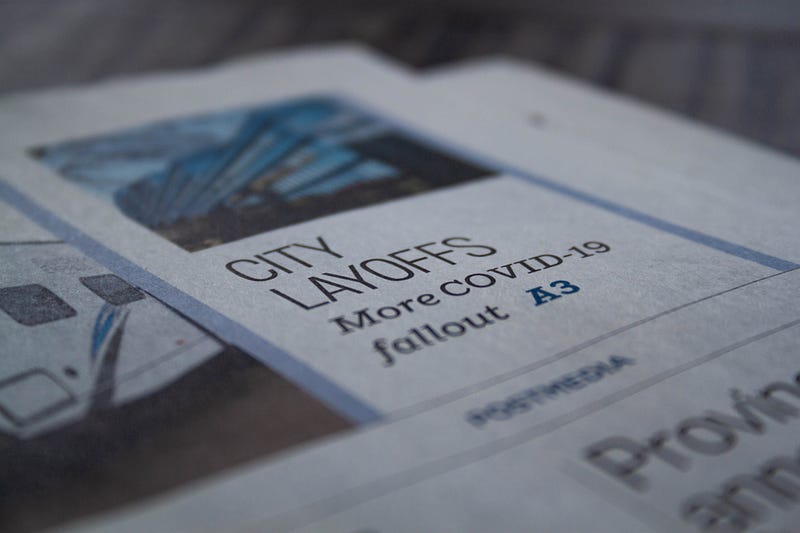
Photo by James Yarema on Unsplash

It is a consequential sequence of events that compounds into a snowball effect. Furthermore, this effect becomes exacerbated when the employees are also customers. Recent news indicates that large companies are laying off thousands of workers to lower expenses. These layoffs result in less money for spending, less borrowing, and less growth. It is evident that one change in a single area has had an enormous impact on the economy, which resurfaces the original question of whether these companies are innovative enough to survive.

Innovation comes in more forms than is often given credit. The public recognizes innovation as the ability to create new products. However, people overlook the innovation required to survive an economic downturn. Innovation is present in companies trying to produce creative ideas with fewer employees. There are ideas within companies to help determine whom to keep and whom to fire in an economic downturn. The public would admire novel propositions that allow a company to retain employees during an economic downturn.
Photo by freestocks on Unsplash

Netflix and Lego are companies that pursued innovative solutions to survive a downturn.¹¹ In 2008, Netflix didn’t have the content quality it has today, and it certainly didn’t have the market share. During this period, ‘Netflix and Chill’ didn’t exist, and Netflixxing wasn’t a verb yet. With a financial crisis looming, they launched a streaming service and developed partnerships with companies like Xbox to utilize their service. Meanwhile, the recession in the U.S. impacted Lego to the point where they decided to expand into markets outside of the U.S. This allowed them to flourish in countries with steady economies while the U.S. economy dwindled.¹¹

The recent earnings reports for Amazon, Apple, and Alphabet are far from indicative of giants who are about to fall. The release of poor earnings is not uncommon, and most companies manage to bounce back in the upcoming quarter or year. However, these reports, and the current economic state, should remind investors that no company is too large to fail. Without a crystal ball, it is unfeasible to see what the economy will be like in 1 year. Companies should be concerned with what the economy and market will be like in 5 years. This level of foresight separates the winners from the losers and provides companies ample time to develop and test innovative solutions to future problems.

References:

  1. Business Model Navigator. Blockbuster. https://businessmodelnavigator.com/case-firm?id=18
  2. CNBC make it. Netflix didn’t kill Blockbuster — how Netflix almost lost the movie rental wars. https://www.cnbc.com/2020/09/22/how-netflix-almost-lost-the-movie-rental-wars-to-blockbuster.html#:~:text=By%202010%2C%20Blockbuster%20was%20forced,subscribers%20and%20started%20expanding%20overseas.
  3. Forbes. A Look Back At Why Blockbuster Really Failed And Why It Didn’t Have To. https://www.forbes.com/sites/gregsatell/2014/09/05/a-look-back-at-why-blockbuster-really-failed-and-why-it-didnt-have-to/?sh=58d790981d64
  4. CNBC. Alphabet misses on earnings and revenue as YouTube falls short. https://www.cnbc.com/2023/02/02/alphabet-googl-earnings-q4-2022.html
  5. Alphabet Earnings Release. Alphabet Announces Fourth Quarter and Fiscal Year 2022 Results. https://abc.xyz/investor/static/pdf/2022Q4_alphabet_earnings_release.pdf?cache=9de1a6b
  6. CNBC. Apple sales drop 5% in largest quarterly revenue decline since 2016. https://www.cnbc.com/2023/02/02/apple-aapl-earnings-q1-2023.html
  7. Yahoo Money. Amazon stock drops after revenue beat, EPS miss. https://money.yahoo.com/amazon-stock-drops-after-revenue-beat-eps-miss-150219157.html
  8. Federal Reserve. Policy Tools. https://www.federalreserve.gov/monetarypolicy/openmarket.htm
  9. U.S. Inflation Calculator. Historical Inflation Rates: 1914–2023. https://www.usinflationcalculator.com/inflation/historical-inflation-rates/
  10. CNBC. Federal Reserve approves first interest rate hike in more than three years, sees six more ahead. https://www.cnbc.com/2022/03/16/federal-reserve-meeting.html
  11. Hubspot. How These 7 Companies Thrived During the Recession. https://blog.hubspot.com/marketing/companies-that-thrived-during-the-recession

Further Reading

Business
Finance
Innovation
Investing
Money
Recommended from ReadMedium