
Alleged Incident of Apache County Sheriff Trespassing and Break-In Raises Concerns in Vernon, AZ
An incident in Vernon, AZ, on March 27th, 2023, involving Apache County Sheriffs allegedly trespassing and breaking into a locked gated property within the Concholakeland Homeowners Association (HOA) under the guise of a property welfare check has raised questions about law enforcement’s authority and individual property rights.
The Incident:
https://youtu.be/OuwVSTiVZjc
https://youtu.be/Qa6giFqt5UM
https://youtube.com/shorts/q6UdGHGj348?feature=share
https://youtube.com/shorts/b3JtmHsxmnY?feature=share
https://youtu.be/MgXT5CrLsYc
According to reports, law enforcement officers from the Apache County Sheriff’s responded to a reported welfare check on a shed located within the Concholakeland HOA in Vernon, AZ. The shed in question was said to have been unoccupied for years,
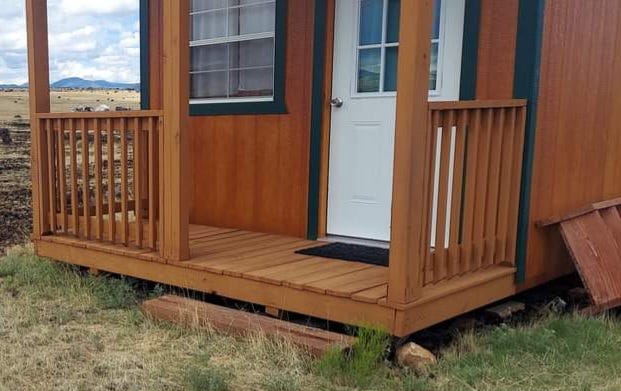
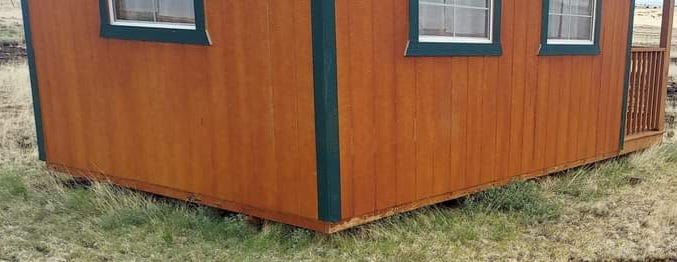
leading many to question the necessity of the welfare check.
Alleged Trespassing and Break-In:
It is alleged that the law enforcement officers, without obtaining proper authorization such as a search warrant or consent from the HOA, broke down and entered the locked gate to access the property. This act has been deemed by many as an unlawful trespassing and break-in, as entering private property without permission is generally considered a violation of property rights.
Legal Justification for Welfare Checks:
Welfare checks are conducted by law enforcement to ensure the safety and well-being of individuals. When there is credible information or evidence suggesting that someone's life or safety may be at risk, law enforcement may be allowed to enter the property to perform a welfare check, even without explicit permission or a warrant. However, in cases where there is no immediate danger or indication of potential harm, the necessity of breaking and entering may be questioned.
A welfare check is a request for the police to check on the well-being of a person who may be in danger, such as a child, an elderly person, or a person with a disability. The police may enter the person's home without a warrant if they have reasonable grounds to believe that the person is in immediate need of assistance¹.
Source: (1) Public Access Case Lookup - Arizona. https://apps.supremecourt.az.gov/publicaccess/. (2) Timothy B. v. Department of Child Safety :: 2022 :: Arizona Supreme .... https://law.justia.com/cases/arizona/supreme-court/2022/cv-20-0318-pr.html.
HOA's Responsibilities:
As a private non-profit corporation, the Concholakeland HOA is responsible for the maintenance and governance of the community. While HOAs have certain rights and responsibilities over their properties, they are still subject to laws and regulations, including those related to privacy and property rights.
Legal Implications:
The incident has sparked discussions about the balance between law enforcement's duty to ensure public safety and individual property rights. Unlawful trespassing and unauthorized entry can have legal consequences for law enforcement officers, and property owners have the right to protect their property from unwarranted intrusion.
On March 28th, the situation in Vernon, AZ, escalated further when a second visit from law enforcement occurred. Reports suggest that six Apache County Sheriff’s officers arrived in three trucks and once again broke and entered through the locked gate of the private-maintained non-county road within the Concholakeland HOA. This repeat incident has caused further concern among residents and raised questions about the use of force and authority.
https://youtu.be/I66Ow5paCi8
https://youtu.be/dqtQMMT6LH4
https://youtu.be/_licxWYUT9U
https://youtu.be/YI8IXaSobjw
During this encounter, residents were taken aback when the officers threatened them with potential arrest for "blocking" their private-maintained HOA street. Residents were baffled by the accusation as they were merely seeking to protect their property rights and ensure their privacy. The incident has further deepened the rift between law enforcement and the community, as residents argue that their private property should not be subject to unauthorized intrusion.
Side note about Road
Public VS Private:
The distinction between a public easement and a private road lies in ownership, access, and usage rights. Here's a breakdown of each:
1. Public Easement: - A public easement is a legal right granted to the public by a property owner to use a specific portion of their land for a particular purpose, such as a road, pathway, or utility access. - The property owner retains ownership of the land but grants the public the right to use it for the designated purpose, which is usually established through legal agreements, dedications, or historical usage. - Public easements are typically maintained and controlled by governmental entities, such as a city or county, and are subject to public regulations and maintenance.
2. Private Road: - A private road is a roadway located on private property and is not dedicated or intended for public use. It is owned and maintained by a private entity or group, such as a homeowners association (HOA) or an individual property owner. - Access to a private road is restricted, and the owner has the authority to determine who can use the road and under what conditions. - Private roads are not typically maintained by government agencies and are subject to the rules and regulations set by the private entity that owns the road.
Factors that Determine Public Easement vs. Private Road: - Ownership: Public easements are usually created through formal agreements or dedicated to public use by the property owner. Private roads are owned by private individuals or entities. - Usage: Public easements are intended for the public’s use, while private roads are restricted to specific individuals or residents. - Maintenance: Public easements are generally maintained by governmental agencies or public entities. In contrast, private roads are maintained by the private owner or the HOA responsible for the property.
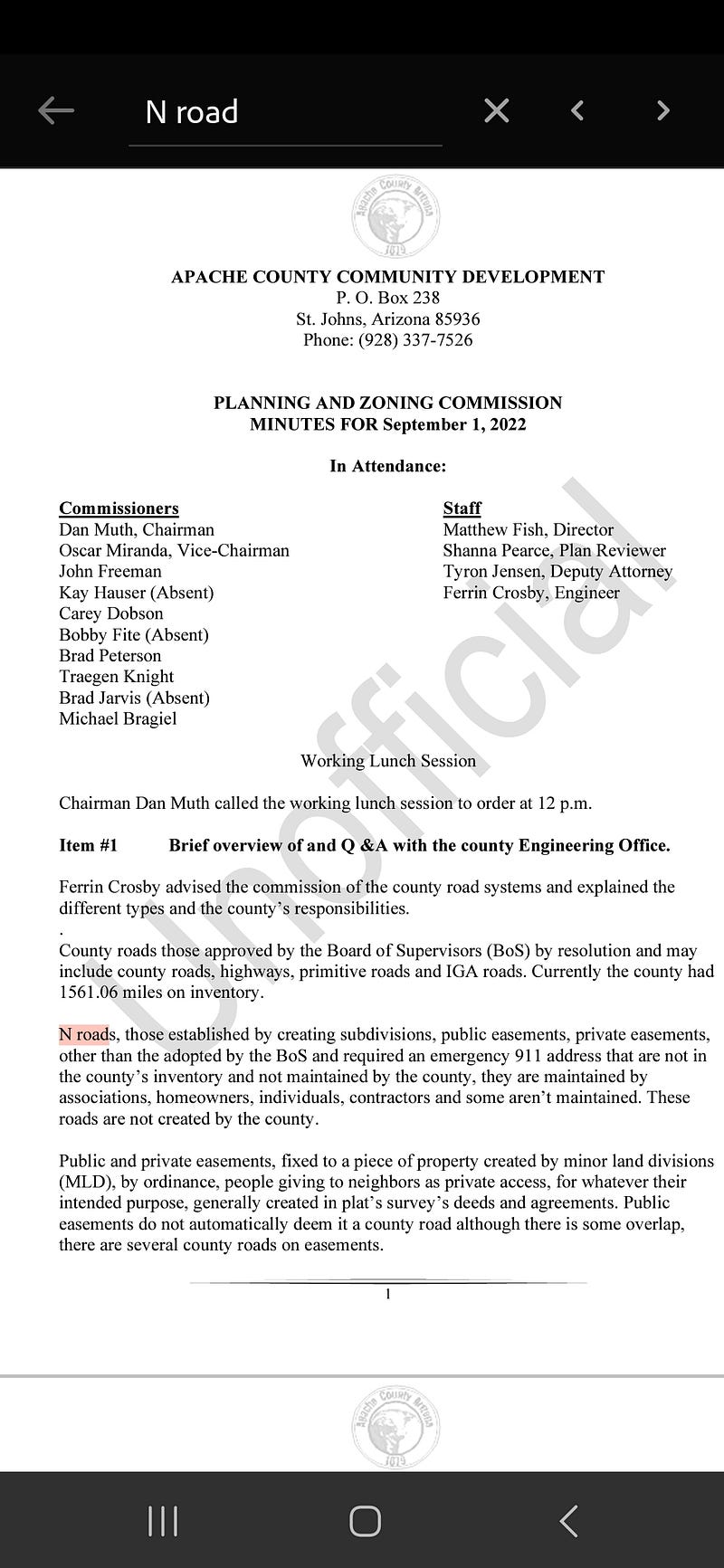
“County roads those approved by the Board of Supervisors (BoS) by resolution and may include county roads, highways, primitive roads and IGA roads. Currently the county had 1561.06 miles on inventory. N roads, those established by creating subdivisions, public easements, private easements, other than the adopted by the BoS and required an emergency 911 address that are not in the county’s inventory and not maintained by the county, they are maintained by associations, homeowners, individuals, contractors and some aren’t maintained. These roads are not created by the county. “ — Ferrin Crosby County Engineer - Engineering
In light of the county engineer's statement regarding N roads, which are not part of the county's inventory and are maintained by private entities like associations, homeowners, individuals, contractors, or others, the justification for the Apache County Sheriff's Office to break down the gate on the N3543 road within the Concholakeland Homeowners Association (HOA) becomes even more dubious.
The county engineer's clarification emphasizes that N roads, including N3543, are private roads that fall outside the purview of the county's maintenance and ownership. As such, the responsibility for access control measures, like the gate in question, lies with the HOA and its members, provided they comply with the HOA's governing documents and local laws.
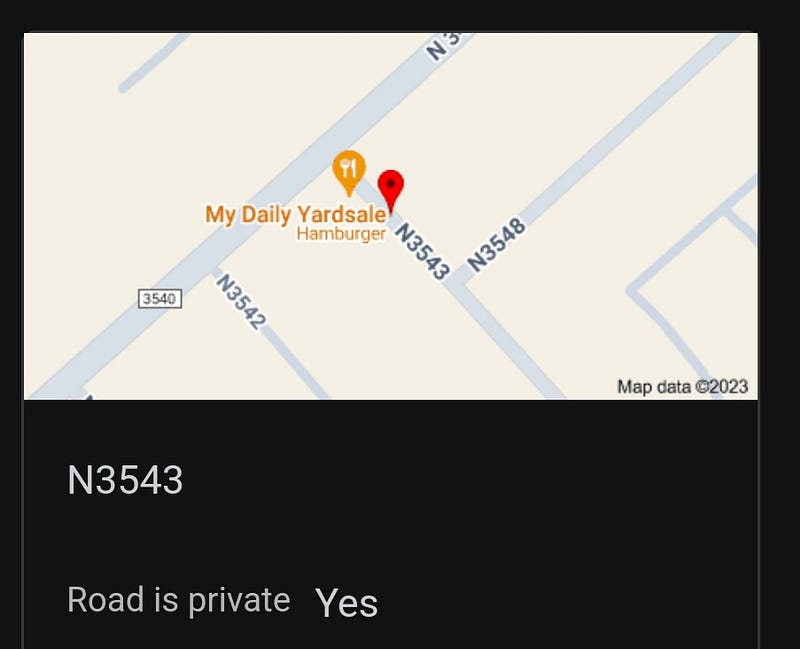
Given the private nature of the N3543 road and the absence of county involvement in its maintenance, law enforcement officers, including the Sheriff’s Office, are obligated to adhere to legal procedures and obtain proper authorization before entering private property or taking actions like breaking down gates. Unless there are immediate safety concerns or exigent circumstances that warrant immediate action, the Sheriff would generally require a valid reason to enter the private road without the owner’s consent.
The incident involving the locked gate on N3543 has ignited a heated debate about property rights and law enforcement's scope of authority over private roads within homeowners association-controlled communities. Residents of Concholakeland HOA are expressing deep concern over potential violations of their property rights and privacy, and they are seeking clarity on the justification for the Sheriff's actions.
As the situation unfolds, the Concholakeland HOA is taking measures to protect its members' rights and interests by seeking legal advice from qualified attorneys experienced in property law and HOA matters. The HOA is actively engaging in discussions with law enforcement representatives and county officials to address the situation and find a resolution that respects the principles of justice and individual liberties.
This incident has broader implications for property rights, homeowners associations, and the boundaries of law enforcement's actions regarding private roads in Arizona. It is vital for all parties involved to approach the situation with transparency, respect, and a commitment to finding a fair resolution that upholds the rights of property owners and ensures the proper interpretation of laws applicable to private roads within HOAs. As the community strives for resolution, open dialogue and adherence to legal procedures will play a pivotal role in safeguarding the integrity of property rights within private communities.
The repeated break-ins and subsequent threats of arrest have ignited calls for a thorough investigation into the actions of law enforcement and their compliance with due process and legal requirements. Community members are seeking clarity on the legal basis for these intrusive actions, especially given the absence of any emergency or credible safety concerns.
The Concholakeland HOA, as the governing entity responsible for maintaining the community, has been caught in the midst of this tumultuous situation. Residents are now urging the HOA to take a proactive role in safeguarding their property rights and exploring possible legal remedies against the alleged unauthorized intrusions.
In response to the growing unrest, community leaders and HOA representatives are calling for an HOA meeting to address the concerns of the residents and establish a path towards amicable resolution. The meeting aims to bring together residents and legal experts to foster open dialogue and seek clarity on the boundaries of law enforcement authority during welfare checks.
As the incident continues to garner attention and spark debates surrounding property rights, privacy, and law enforcement's jurisdiction, it remains essential for all parties involved to approach the situation with restraint and respect for the rule of law. Both the community and law enforcement must work together to find common ground and uphold the principles of justice and individual liberties in order to move forward towards a more harmonious future.
Conclusion:
As new information comes to light in the ongoing incident in Vernon, AZ, involving alleged police actions during a welfare check at the Concholakeland HOA, the importance of understanding law enforcement's authority and respecting individual property rights becomes increasingly significant.
The repeated visits by law enforcement to the locked-gated private property, despite the absence of immediate safety concerns, have heightened community concerns and ignited discussions about the proper procedures for conducting welfare checks. Residents are demanding transparency and accountability from law enforcement officials to clarify the basis for their actions and address potential violations of property rights.
As investigations into the incident continue, all parties involved, including law enforcement, the Concholakeland HOA, and community members, must prioritize open dialogue and adherence to legal protocols. Seeking legal guidance is imperative to ensure that all actions align with the laws and regulations governing welfare checks and property rights.
The incident has prompted a call for constructive engagement between residents, law enforcement representatives, and legal experts. A collaborative effort to examine the boundaries of law enforcement authority and the rights of property owners is crucial in order to prevent future misunderstandings and protect individual liberties.
As the community seeks answers and resolution, a commitment to upholding the principles of justice, public safety, and individual rights should guide the way forward. It is essential for all parties to work together towards fostering trust and understanding, thus laying the foundation for a more harmonious relationship between law enforcement and the community they serve.
https://www.facebook.com/profile.php?id=100088213236355&mibextid=ZbWKwL
new incident and information
Ongoing Dispute in Concholakeland Subdivision Raises Questions About Property Rights and Law… https://readmedium.com/ongoing-dispute-in-concholakeland-subdivision-raises-questions-about-property-rights-and-law-8dabe0b47258