
All Suffering Is Desiring or Resisting Change
Accept life is fragile, and your emotional pain will disappear
A man was gifted a plate by his wife. It had beautiful drawings. The man was an antique dealer. Every day at the market, he would eat lunch from his plate.
Soon, his wife passed away. The man was grieving, but he still ate from his favorite plate every day. One day, the plate fell down and broke into a thousand pieces. The man was devastated.
A fellow stall owner told him: “I know someone who can teach you how to fix it. But he lives far away.” The man went to seek the plate fixer. After one year of traveling, he found him. The plate fixer helped the man reassemble the pieces and the man returned home.
At first, he was happy. But the plate never felt quite the same. One day, it broke again and, again, the man was devastated.
Another stall owner told him: “I know someone who makes plates just like this one. But he lives far away.” The man went to seek the plate maker. After one year of traveling, he found him. The plate maker taught him how to make his own plate and, with it, the man went home.
At first, he was happy. But still, the plate never felt quite the same. One day, it broke again. Again, the man was devastated. But he was tired. He could not travel far anymore.
A fellow stall owner told him: “I know someone who sells plates just like this one. He has a new stall on the market.” Happy that he wouldn’t have to travel far, the man went and bought a plate just like his.
At first, he was happy. But that plate, too, never felt quite the same. One day, it broke again.
As the man looked at the broken pieces on the floor, a stranger passed by his stall. He said:
“You are lucky. It was just a plate.”
At that moment the man was enlightened.
The first of the Four Noble Truths in Buddhism is suffering. They call it ‘dukkha.’ It has many definitions, including pain, grief, sorrow, stress, unsatisfactoriness, and misery, but I think the simplest term that captures it in our modern times is ‘unhappiness.’
Our suffering isn’t physical, at least not most of the time. It’s emotional. One way or another, things don’t go how we want them to, and we face emotional pain because of it. This pain isn’t random. We inflict it upon ourselves. That’s the lesson of the above story.
All suffering is resisting or desiring change.
When change wants to affect us and we reject it, we suffer. When we wish for change and none occurs, we suffer.
Like the man in the story, we fight the current of events instead of floating in it, and each time it carries us away, we scream. We go on symbolic journeys to preserve what can’t be preserved — or to change what can’t be changed.
The man held on to his wife’s plate because it gave him a feeling of permanence in an impermanent world. He resisted change. When it broke, a change occurred without his consent, and he suffered from that too.
The great lengths he went to in order to fix and replace his plate are a series of escalating commitments in this fight. But each time he succeeded, he found permanence still wasn’t restored. Something always felt off. Only when he was too tired to continue fighting and a random stranger pointed out the vanity of his efforts could he see clearly: the only way is acceptance.
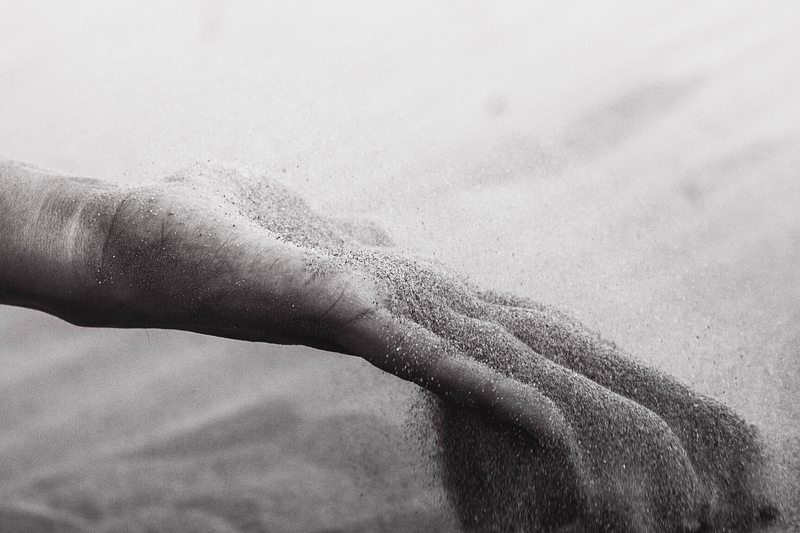
Everything in life is transient. Every human, every animal, every building, plant, and inanimate object. Every element, every atom, every speck of dust is a tiny traveler going a small distance in a long, universal journey that’s much larger than any of its individual parts.
Nothing lasts forever. Not just the material, the intangible too. Feelings change. Relationships end. Attitudes evolve. Our feelings, thoughts, opinions, they all meander through our lives and might end up opposite of where they began. Cities collapse. Conditions turn. People die.
All we have is impermanence and it’s depressing. We also rarely control when change occurs. We desperately want to, but all we can do is give our best and hope for the result we desire. As soon as we become attached, we’ve set the gears of suffering in motion. Instead, we should bend with the wind.
“Notice the stiffest tree is most easily cracked, while the bamboo or willow survive by bending with the wind.”
— Bruce Lee
The Buddhist life is a life of practicing acceptance. Acceptance is the only thing that works because change is the only constant of life. It comes when it comes, and you’ll meet it when it does. This applies to the trivial in life as much as it does to the substantial.
You slept poorly today? Okay, accept, move on. Your new job sucks? Okay, accept, move on. You missed the bus? Okay, accept, move on. Your grandfather died? Okay, accept, move on.
This isn’t to say you’ll always accept easily and move on quickly. It’s to say you can learn to always do both eventually. Accept life’s permanent impermanence and odd timing of uncomfortable change, and suffering disappears.
At the end of the day, remember you are lucky. For you’re still here, and it was just a plate.


