
Poetry/Green Health
All Hail to the Whole Leaf Kale
Natural health growing in my garden
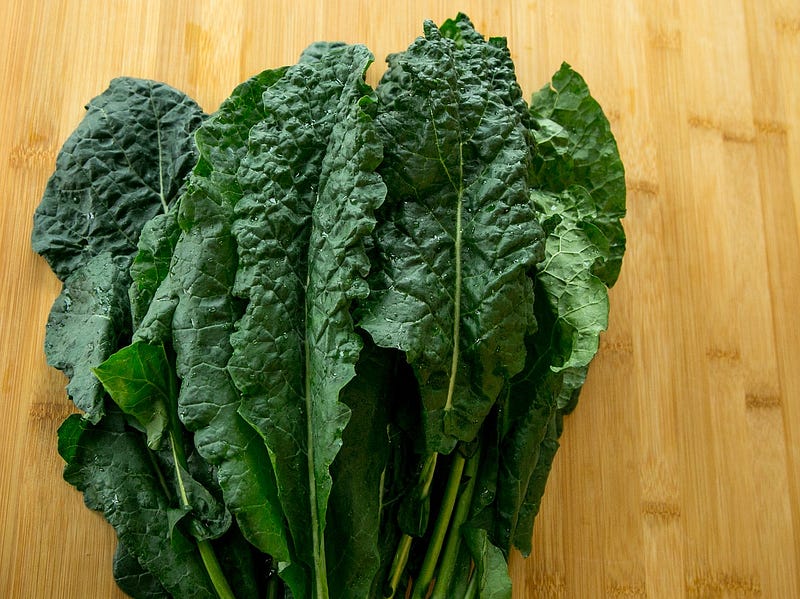
Kale is a cruciferous vegetable, please don’t confuse it with spinach, my friend
Antioxidants, Vitamins A, B, C, K, high minerals, I recommend
Leaves can be eaten raw but tough, steaming is better, a healthy foodstuff
Eat more of this if you are like me, no brussel sprouts, cabbage or broccoli!
My first harvest of kale is soaking in water as I wrote this. How could I not pick it for my acrostic poem, having picked the leaves this morning to steam later as a dinner accompaniment?
Only four letters limited how much information I could include!
Here’s more.
Kale is among the most nutrient-dense plants on the planet.
Depending on the variety, leaves are green or purple, curly or smooth. Mine is the Chamberlain variety — green and smooth — and so easy to grow!
…
A single cup of raw kale (about 67 grams or 2.4 ounces) contains
- Vitamin A: 206% of the DV (from beta-carotene)
- Vitamin K: 684% of the DV
- Vitamin C: 134% of the DV
- Vitamin B6: 9% of the DV
- Manganese: 26% of the DV
- Calcium: 9% of the DV
- Copper: 10% of the DV
- Potassium: 9% of the DV
- Magnesium: 6% of the DV
It also contains 3% or more of the DV for vitamin B1 (thiamin), vitamin B2 (riboflavin), vitamin B3 (niacin), iron and phosphorus.
(Source: healthline.com)
There’s more!
Other minerals present are iron, sulfur, and selenium.
Not to mention Vitamin E, which together with Vitamin C and selenium provide important antioxidants to support the immune system.
Kale is high in fibre, supports heart health, helps prevent cancer, is recommended for those with diabetes, promotes bone, hair, skin and eye health and aids digestion.
I may be carnivorous, but I’m not cruciferous except for kale!
Thank you for being here.
Poem inspired by Selma’s green challenge: