
.jpg)

All About Wangari Muta Maathai!
I thought that for International Women's Day I would celebrate an absolutely inspiring woman. Wangari Muta Maathai!
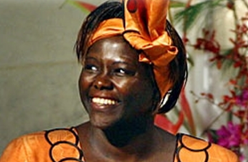
Wangari Muta Maathai was a Kenyan social, environmental, and political activist who was born in the town of Nyeri, Kenya, in 1940. She was the first African woman to be awarded the Nobel Peace Prize, in recognition of her work in promoting sustainable development, democracy, and peace.
The Green Belt Movement
Maathai was also the founder of the Green Belt Movement, an organization that focuses on environmental conservation, community empowerment, and poverty reduction.
One of the key goals of the Green Belt Movement was to combat deforestation in Kenya by planting trees and promoting environmental conservation. By the time of Maathai’s death in 2011, the Green Belt Movement had planted over 50 million trees in Kenya, making a significant impact on the environment and the lives of local communities.
Deforestation has been a major problem in Kenya, with over 70% of the country’s original forest cover lost due to logging, farming, and other activities. This has had a significant impact on the environment, causing soil erosion, water scarcity, and the loss of biodiversity. It has also had negative consequences for the livelihoods of local communities, who rely on forests for fuel, food, and other resources.
The Green Belt Movement sought to address these issues by empowering local communities, especially women, to plant trees and take an active role in environmental conservation. The organization provided training and support to rural women, encouraging them to form tree nurseries and plant trees in their communities. These trees provided a source of income, food, and firewood for local communities, while also helping to combat deforestation and soil erosion.
Over the years, the Green Belt Movement expanded its activities to include other environmental and social issues, such as promoting sustainable agriculture, advocating for women’s rights, and supporting democratic governance. However, tree planting remained a core activity, and the organization continued to plant millions of trees each year.
By the time of Maathai’s death in 2011, the Green Belt Movement had made a significant impact on the environment and the lives of local communities. The organization had planted over 50 million trees in Kenya, helping to restore degraded landscapes, combat climate change, and promote biodiversity. These trees had also provided a source of income, food, and fuel for local communities, improving their livelihoods and reducing their dependence on unsustainable resources.
As Maathai once said, “When we plant trees, we plant the seeds of peace and hope.” The Green Belt Movement is a testament to the power of these seeds, and to the vision and dedication of Wangari Muta Maathai.
Early life and Education
Born on April 1, 1940, in Nyeri, Kenya, Maathai grew up in a traditional Kikuyu community where she learned the importance of respecting the environment and the natural world. Her early life and education played a crucial role in shaping her worldview and inspiring her lifelong commitment to environmental conservation and social justice.
Maathai’s parents were subsistence farmers who instilled in her a deep appreciation for the land and the environment. She attended primary school in Nyeri before moving to St. Cecilia’s Intermediate Primary School in the nearby town of Mathari. Maathai was an excellent student, and her academic achievements earned her a scholarship to attend the Loreto High School in Limuru, where she completed her secondary education.
In 1960, Maathai received a scholarship to study in the United States, where she enrolled in Mount St. Scholastica College in Atchison, Kansas. She completed a bachelor’s degree in biology in 1964, graduating with honors. Maathai’s time in the United States exposed her to new ideas and ways of thinking, and she was inspired by the civil rights movement and the activism of African-American women.
Maathai continued her studies in the United States, earning a master’s degree in biology from the University of Pittsburgh in 1966. She then returned to Kenya to work as a research assistant at the University of Nairobi, where she began to develop her interest in environmental conservation and community development. Maathai was concerned about the rapid deforestation and degradation of Kenya’s natural resources, which she saw as a threat to the environment and to the livelihoods of local communities.
In 1971, Maathai received a scholarship to study at the University of Giessen in Germany, where she earned a Ph.D. in veterinary anatomy. She was the first woman from East or Central Africa to earn a doctorate, and her academic achievements were a source of inspiration and pride for many Kenyans. Maathai’s doctoral research focused on the role of the immune system in chickens, but she also began to think more broadly about the connections between environmental degradation and human health.
Maathai’s early life and education played a crucial role in shaping her worldview and inspiring her lifelong commitment to environmental conservation and social justice. She was deeply influenced by the values of her Kikuyu community, which emphasized the importance of respecting the land and the natural world. Her academic achievements and experiences studying in the United States and Germany exposed her to new ideas and ways of thinking, and inspired her to become a leader in the fight for environmental conservation and social justice in Kenya and around the world.
Politics
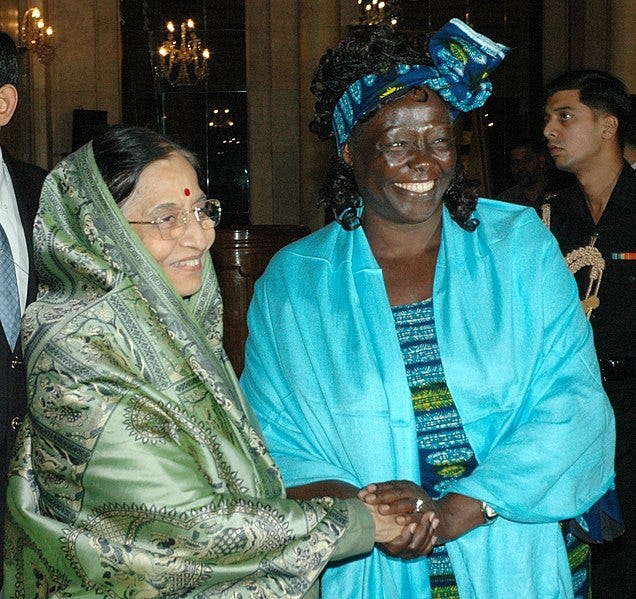
Wangari Muta Maathai was a prominent Kenyan political figure who made a significant impact during her time in parliament. Maathai was elected to the Kenyan parliament in 2002, becoming the first woman in East Africa to hold such a position. During her time in parliament, Maathai worked tirelessly to promote sustainable development, democratic governance, and environmental conservation.
As a member of parliament, Maathai used her platform to advocate for policies that would promote sustainable development and environmental conservation in Kenya. She was a vocal critic of the government’s policies on land use, forestry, and natural resource management, which she saw as contributing to environmental degradation and the marginalization of local communities. Maathai worked to promote alternative approaches that would empower communities to participate in environmental decision-making and management, such as community-based natural resource management and participatory forestry.
Maathai was also a strong advocate for democratic governance and human rights in Kenya. She was a vocal critic of corruption and impunity in the Kenyan government, and worked to promote transparency and accountability in government decision-making. Maathai was a strong supporter of the Kenyan constitution and worked to ensure that it was implemented in a way that respected the rights and freedoms of all Kenyans.
In addition to her work in parliament, Maathai was also a leader in the global environmental movement. She was a key figure in the United Nations Environment Programme (UNEP) and served as the founder and chair of the Green Belt Movement, an organization that promotes environmental conservation and community development through tree planting and other initiatives. Maathai’s work with the Green Belt Movement helped to raise awareness of environmental issues in Kenya and around the world, and inspired countless individuals and organizations to take action on environmental conservation and social justice.
Maathai’s role in parliament was a significant part of her legacy as a political and environmental leader in Kenya and around the world. She used her position to advocate for policies that would promote sustainable development, democratic governance, and environmental conservation, and worked tirelessly to empower local communities to participate in environmental decision-making and management. Maathai’s work continues to inspire individuals and organizations to take action on environmental and social issues, and her legacy remains a source of inspiration and hope for future generations.
Maathai believed that by involving women in the reforestation process, the movement could help combat poverty, promote gender equality, and empower communities to advocate for their rights. The organization has also been involved in advocacy efforts to promote sustainable development, climate change mitigation, and human rights.
Roles in Various Good Causes
Wangari Muta Maathai was a woman of many accomplishments, and her contributions to environmental conservation, sustainable development, and social justice earned her numerous awards and recognitions throughout her lifetime. One of her early affiliations was with the National Council of Women of Kenya, where she worked to promote women’s rights and empowerment. Later, she became a member of parliament and assistant minister for Environment and Natural Resources in Kenya’s government, where she continued to work on issues related to environmental conservation and sustainable development.
As a member of the National Council of Women of Kenya, Maathai advocated for policies and programs that would empower women and promote gender equality. She worked to raise awareness of the challenges facing women in Kenya, including poverty, lack of access to education and healthcare, and discrimination. Maathai’s work with the council helped to bring attention to these issues and helped to mobilize women around the country to take action on their own behalf.
Later in her career, Maathai was elected to the Kenyan parliament and appointed as assistant minister for Environment and Natural Resources. In this role, she played a key role in shaping environmental policy in Kenya and promoting sustainable development. She worked to address the challenges of deforestation and land degradation, and advocated for policies that would promote reforestation and other conservation measures. Maathai also worked to promote sustainable development and environmental education, recognizing that the long-term health and well-being of Kenya depended on a healthy environment and a sustainable economy.
Maathai’s work earned her numerous awards and recognitions throughout her lifetime. In addition to the Nobel Peace Prize, she received the United Nations Environment Programme’s Champion of the Earth Award and the Legion of Honor from the French government, among many other honors. These awards recognized Maathai’s contributions to environmental conservation, sustainable development, and social justice, and reflected the high regard in which she was held by people around the world.
In summary, Wangari Muta Maathai’s work with the National Council of Women of Kenya and in the Kenyan government reflected her commitment to promoting women’s rights, environmental conservation, and sustainable development. Her tireless efforts earned her numerous awards and recognitions, including the Nobel Peace Prize, and continue to inspire people around the world to take action on behalf of the planet and its people.
Arrested
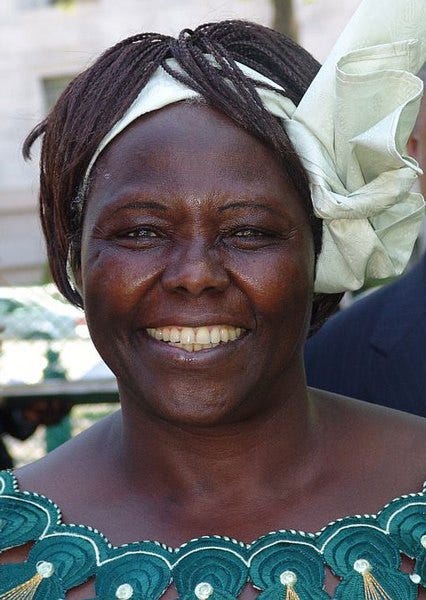
Throughout her life, Wangari Muta Maathai was a fierce advocate for environmental conservation, sustainable development, and social justice. Her activism and outspokenness often brought her into conflict with the Kenyan government, and she was arrested on several occasions for her political views and actions.
One of Maathai’s early arrests came in 1992, when she led a protest against the government’s plans to construct a 60-storey building in Uhuru Park, one of Nairobi’s few public green spaces. Maathai and her fellow protesters argued that the building would destroy the park and displace the local community. Police forcibly dispersed the protest and arrested Maathai and several others. She was charged with incitement to violence and spent a night in jail before being released on bail.
Maathai was arrested again in 1997, this time for her involvement in a protest against the government’s decision to privatize the Kenya Electricity Generating Company (KenGen). The privatization plan was criticized by environmental activists and others who argued that it would lead to higher electricity prices and greater environmental damage. Maathai was arrested along with several other protesters and charged with unlawful assembly. She spent several days in jail before being released on bail.
In 1999, Maathai was arrested once again, this time for leading a protest against the government’s plans to construct a luxury hotel and golf course on public land in Nairobi’s Karura Forest. Maathai argued that the project would destroy a valuable natural resource and displace local residents. She was arrested along with several other protesters and charged with incitement to violence. Maathai spent several days in jail before being released on bail.
Maathai’s most high-profile arrest came in 2005, when she led a protest against the government’s plans to privatize public land in the Mau Forest Complex, one of Kenya’s most important watersheds. The protest was met with a violent police response, and Maathai was beaten and arrested along with several other protesters. She was charged with incitement to violence and spent several days in jail before being released on bail. Maathai’s arrest and subsequent release sparked widespread condemnation from human rights groups and others who saw it as an attack on democracy and environmental conservation.
Wangari Muta Maathai’s activism and advocacy for environmental conservation, sustainable development, and social justice often brought her into conflict with the Kenyan government, resulting in several arrests over the course of her career. Despite the risks, Maathai continued to speak out and fight for what she believed in, inspiring countless others to do the same. Her legacy as a fearless advocate for the planet and its people continues to inspire people around the world today.
Nobel Peace Prize
Wangari Muta Maathai, was awarded the Nobel Peace Prize in 2004 for her outstanding contribution to sustainable development, democracy, and peace.
Maathai’s achievement was historic as she became the first African woman to win the coveted prize, and her work as a champion of environmental conservation and women’s rights has left an indelible mark on the world.
Maathai’s recognition by the Nobel Committee was due to her role in founding and leading the Green Belt Movement, a grassroots initiative that sought to restore Kenya’s forests and promote sustainable development. The movement, which Maathai established in 1977, mobilized rural women to plant trees and restore degraded lands, thereby reducing soil erosion, improving water quality, and promoting biodiversity.
Maathai’s Nobel Peace Prize was a recognition of her remarkable achievements in promoting sustainable development, democracy, and peace. The Nobel Committee praised her for her “holistic approach” to sustainable development, which recognized the interconnections between environmental degradation, poverty, and political oppression. They also commended her for her “courageous struggle” for democracy and human rights in Kenya, which inspired and empowered people across Africa and around the world.
Maathai’s Nobel Peace Prize also provided her with a platform to continue her work in promoting sustainable development and social justice. She used the prize money to establish the Wangari Maathai Foundation, which supports a range of initiatives that promote sustainable development, environmental conservation, and human rights. The foundation continues to promote Maathai’s vision of a just, peaceful, and sustainable future, and to inspire and empower people across Africa and around the world to take action for positive change.
Wangari Muta Maathai’s Nobel Peace Prize was a recognition of her remarkable achievements in promoting sustainable development, democracy, and peace. Her work in founding and leading the Green Belt Movement, her advocacy for environmental conservation, and her struggle for democracy and human rights in Kenya have left an enduring legacy and continue to inspire and empower people across the world.
Prize Money
The nobel prize comes with a substansial amount of prize money.
Maathai received a total of 10 million Swedish kronor, or approximately $1.4 million US dollars, as part of her Nobel Peace Prize award. She was determined to use the money to continue her work in promoting environmental conservation and social justice, and to support the initiatives and organizations that shared her vision.
One of the first things that Maathai did with the prize money was to establish the Wangari Maathai Foundation. The foundation’s main aim was to promote sustainable development, environmental conservation, and human rights. Maathai saw the foundation as a way to continue the work she had started with the Green Belt Movement and to inspire and empower others to take action for positive change.
The Wangari Maathai Foundation supports a range of initiatives that promote sustainable development and environmental conservation. The foundation works with local communities to plant trees, restore degraded lands, and promote sustainable farming practices. It also supports initiatives that promote access to clean water, education, and healthcare, and that empower women and girls to take on leadership roles in their communities.
Another way that Maathai used the Nobel Peace Prize money was to support the Pan African Green Belt Network, an initiative that she had started in 2002. The network seeks to promote environmental conservation and sustainable development across Africa, and to empower communities to take action for positive change. Maathai saw the network as a way to promote the exchange of ideas and best practices across the continent, and to build a stronger movement for environmental conservation and social justice.
Maathai also used some of the prize money to support the Green Belt Movement, the organization that she had founded in 1977. The Green Belt Movement continues to promote environmental conservation and social justice in Kenya and across Africa, and to inspire and empower women to take on leadership roles in their communities. The organization has planted over 51 million trees since its inception, and has worked with thousands of women to promote sustainable development and environmental conservation.
Other Recognition
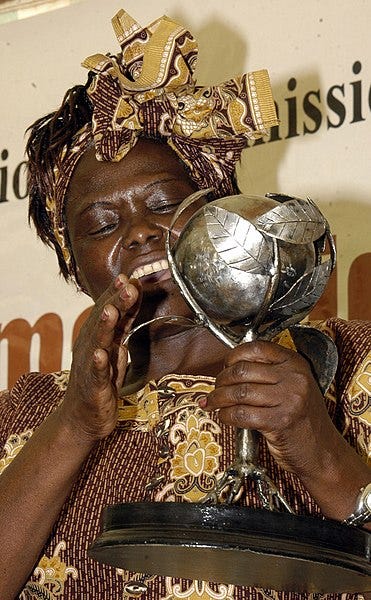
In addition to the Nobel Peace Prize, Maathai was recognized for her contributions to environmental conservation, sustainable development, and social justice by a number of organizations and governments around the world.
One of the most prestigious awards that Maathai received was the United Nations Environment Programme’s Champion of the Earth Award in 2006. The award recognizes individuals who have made outstanding contributions to environmental conservation and sustainable development. Maathai was honored for her tireless work in promoting environmental conservation in Kenya and across Africa, and for inspiring and empowering communities to take action for positive change.
The Champion of the Earth Award was a fitting tribute to Maathai’s lifelong commitment to environmental conservation and sustainable development. Maathai founded the Green Belt Movement in 1977, which aimed to promote reforestation and environmental conservation in Kenya. The movement has since planted over 51 million trees, and has inspired similar initiatives across Africa and around the world.
Maathai’s contributions to environmental conservation and sustainable development were also recognized by the French government, which awarded her the Legion of Honor in 2006. The Legion of Honor is the highest award that can be bestowed upon an individual in France, and is awarded for outstanding achievements in a wide range of fields, including science, art, and politics.
Maathai was recognized for her contributions to the promotion of sustainable development and environmental conservation, as well as for her work in promoting democracy and human rights in Kenya. The award was a testament to Maathai’s global impact and her tireless efforts to create a more just, peaceful, and sustainable world.
Maathai was also the recipient of numerous other awards and recognitions throughout her life, including the Right Livelihood Award in 1984, the Sophie Prize in 1991, and the Nelson Mandela Award for Health and Human Rights in 1992. These awards recognized Maathai’s contributions to a wide range of fields, including environmental conservation, sustainable development, human rights, and democracy.
Wangari Muta Maathai was a highly respected and honored environmental and political activist, whose contributions to sustainable development, environmental conservation, and social justice were recognized by numerous organizations and governments around the world.
Her awards and recognitions, including the United Nations Environment Programme’s Champion of the Earth Award and the Legion of Honor from the French government, were a testament to her tireless efforts to create a more just, peaceful, and sustainable world for all.
TLDR:
Throughout her life, Maathai was a champion of peace and nonviolence. She believed that environmental degradation, poverty, and conflict were interconnected issues that required a holistic approach to address. She won the Nobel Peace Prize and used the money to further he work planting trees and inproving conditions for people.
Wangari Maathai’s legacy continues to inspire people around the world to work towards environmental conservation, social justice, and sustainable development. Her life and work serve as a reminder that one person can make a significant impact on the world and that women’s voices and leadership are essential to creating positive change.

If you enjoyed this article and would like to support me while becoming a medium member and being able to read unlimited medium, Please consider becoming a member via my affiliated link: