
Aliteracy Can Kill You, Literally
Because, you can hide stuffs from some people by putting them in writing
Come Before Winter and Share My Hope is a book I read in the early 1990s. In it, author and pastor Dr Charles Swindoll recited a short poem about (thank God) a fictional Jimmy Brown.
Shed a tear for Jimmy Brown Poor Jimmy is no more For what he thought was H20 Was not, but H2S04
During our first Chemistry lessons, we learned that H2O is the chemical symbol for water while H2SO4 symbolizes sulphuric acid. Under normal conditions both liquids are colorless and save for give-away fumes emanating from the latter while in storage, it is very easy to gulp down the acid when you meant to slake your thirst with water. This story has stayed with me, ever since. It underscores the importance of reading the small print, reading in between the lines and also cultivating a lifelong habit of healthy reading. Some years back, one of my professors had the cause to chide his students. Along with other postgraduates, I was in one of his lectures when he paused to reprimand us. “I know how to get at you, because you people don’t read. If I want to hide anything from any of you, all I need do is to put it in writing.” Even then, I’ve always been a voracious reader. But I had to concur that what my venerable professor just uttered then was true. After leaving his class on that day, I resolved to redouble on my reading and hopefully comprehension rates. I’ve been hard at work to ensure that that negative prediction never come true in my daily life experiences.

These days, computer hardware and software are designed to be intuitive and user friendly. The catch is always, “If all else fail, consult your manual.” Unlike what obtained in the early days of computer and later on mobile telephony where users have to log about thick user manuals, nowadays, almost every laptop and mobile phone comes “ready-to-go”, once out of its shipping package. I can still recall when I was progressively poisoning myself to death with paracetamol until a colleague at work warned me against the risk I was taking. Until then, I never read or follow the prescriptions on the off-the-counter tablets I was overdosing on. Of course, I never repeat that mistake again. In like manner, there has been several instances where my professor’s advice has more than served me well. Recently, I had to pour through a few pages of legal documents pursuant to an agreement that I needed to sign with a business partner. My eyes ran over every line before handling it over to my lawyer for legal inputs. The long and short of that experience is that I could have blindly signed a legal agreement where many of the clauses were to my disadvantage. I always remember that -particular professor with gratitude. The age-long concern has always been how to instill good reading habits in children starting from their infant early reading days. No time is this more necessary than now when both young and old are faced with many distractions. The temptation to endlessly keep on “amusing ourselves to death” is ever present. No thanks to the glitter of Facebook, Instagram and all the others that are ever on hand to entertain, inform and misinform us to endless distractions.

If you are reading this piece, then in all likelihood, you are not one of those afflicted with this malady.
What is aliteracy?
Aliteracy is defined as the quality or state of being able to read but uninterested in doing so. In the past, aliteracy is common with young people especially boys. In these fast paced and troubled pandemic times, how do we get adults interested in reading again? How do we save adult educated illiterates from regressing into aliteracy?
What are the holdbacks?
- The greatest of the holdbacks is that the benefits of reading are always long term and oftentimes, not immediate. Those who want to hold on for long term benefits in the age of immediate self-gratification are always in the minority.
- It is also true that success in life or in any undertaking is not necessarily determined by how much one has read. It was Nassim Nicholas Taleb that coined the term Intellectual Yet Idiot (IYI) to describe this irony. Without proper balance and in conspiracy with national politics and other institutional misplacement of priorities, it is possible for one to be an encyclopedia of knowledge and still be struggling to survive. None of us will love to be an Albert Einstein if all we will ever have for our labors is world changing impact at the price of personal abject poverty.
- People afflicted with aliteracy are always apathetic and do out rightly reject any motivation directed towards getting them to change.
- There are constant and ever increasing invasions of all forms of media with the profitable from among being buried in a deluge of information trash. The myriad of media output in many formats from ever inventive outlets offer people other means of securing information apart from reading. Talk of Twitter, YouTube, cable news, Facebook, Instagram, instant messaging gossip mills and countless others.
Some useful solution approaches
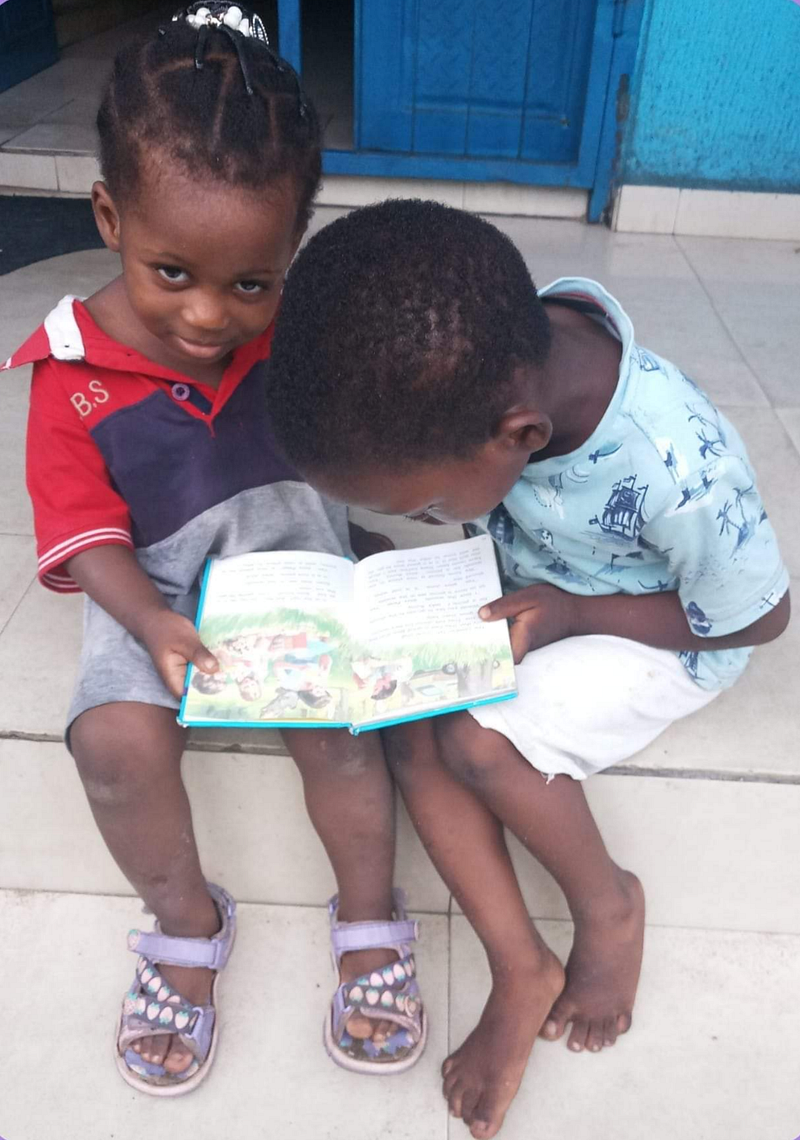
- Start as much as possible to catch them young and get the disinclined to read just a few pages at a time.
- Remind the hesitant that, at times the hard part comes before the sweet part. This is what I will call the coconut principle of life’s niceties. The beginning chapters of some books may be hard to immediately decipher by beginners. By persisting for a few more pages, the message and the beauty of what the author is sharing do often begin to come through.
- Join a books club. Many of such clubs abound on the social media. Carry Libraries of books with collections running into hundreds and thousands can easily be accommodated and carried on everywhere in mobile phones and other portable reading devices.
- Whenever possible, always try to connect what you read to real life issues. Some of the lessons learnt can be easily used to solve some of life’s immediate and pressing challenges.
- Reading is a veritable tool for discovering the larger world, liberating our souls, discovering and developing innate leadership potentials.
- In medicine, it has been proved that reading stimulates the brain and helps to ward off dementia and some of other diseases associated with old age.
- Reading expands our knowledge. You already know that of course.
- We develop and deepen our analytical, thinking and decision making skills through reading.
- It goes without saying that reading leads to better writing skills. For any aspiring writer to nurse zero appetite for other authors’ works is akin to aspiring to be a Shakespeare without first learning the alphabet. It’s ironic, some aspiring authors loathe reading and see it as an unavoidable necessity.
- Reading comes along with so much fun and entertainment.
Cultivating healthy reading habits is vital for life and survival. Good reading habits have the potential benefits of affording all higher quality standards of living. Reading is a veritable tool for discovering the larger world, liberating our souls, discovering and developing innate leadership potentials.
SOURCES: Copyright by © Charles R. Swindoll, Come Before Winter and Share My Hope, Tyndale House, 1988 Copyright by © Neil Postman, Amusing Ourselves to Death — Public Discourse in the Age of Show Business, Penguin Books, 1984
Webster Dictionary for Android, 2020 Edition