
Philosophy
Alfred North Whitehead’s Natural Theology
Another brilliant philosopher suppressed by academia
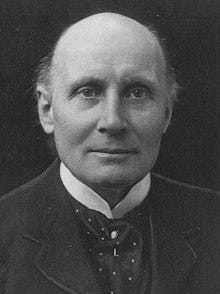
Whitehead started off his academic life as a professor of mathematics. With Bertrand Russell, he wrote Principia Mathematica, perhaps the most dense book ever written. But like Ludwig Wittgenstein, Whitehead abandoned Russell’s analytical, reductionist view of the world and became a philosophy professor. In a series of books beginning with The Concept of Nature (1920), Whitehead developed the method of process philosophy. Central to his philosophy is that reality needs to be understood as a series of states within constant processes. Whitehead thus called into question the basic assumptions of science, and even of all of Western civilization. He planted seeds of thought that have transformed science and society, but his ideas are now unfairly ignored.
Whitehead’s career switch to philosophy, was, he said, inspired by his wife’s vivid appreciation of beauty and capacity for love. From her vital force, he realized that there was more to appreciate beyond the confines of logic and science. Whitehead’s dramatic transformation from mathematician to philosopher, from a professor teaching mathematics and logic to a professor sharply critical of logical and scientific reductionism, is unparalleled in academia. The themes and direction of Whitehead’s philosophy are similar to those of Henri Bergson, but there’s no evidence of any interactions between the two.
The Quest to Understand the Ultimate Categories
Immanuel Kant’s Copernican revolution had reset the foundation of philosophical inquiry. That the mind is active in structuring experience was, by 1900, accepted by all except for some within analytical philosophy. Whitehead accepted the basic idea of Kant’s Categories, but he did not like that Kant had left open the possibility that the human mind’s structures might not mirror the structure of reality. Whitehead thought that the successes of science in discovering truths about the world must indicate that the structures imposed by the human mind on experience must emulate structures found in reality. Evolutionary theory backed up Whitehead’s idea: Wouldn’t the human species develop mental abilities in concord with how reality is? This gave Whitehead the hope that it was possible to attain an understanding of the structure of reality itself.
Whitehead’s method was to start with an understanding of a particular region of experience and then take the concepts discovered in that region and use reason and “free imagination” to see if those concepts could be generalized to describe other regions of experience. Whitehead described the method by using the analogy of an airplane flight (a new technology at that time). The flight starts from the ground of experience, elevates into the air of imaginative generalization, and lands again for new observations now enhanced by rational interpretation. It’s important to realize that Whitehead is not talking about flights of fancy beyond reason. His point is that good explorers of reality need to be imaginative in their thinking.
The region of experience from which Whitehead preferred to start was biology. Similar to Bergson, he saw life and its dynamic, vital processes as a key to understanding all of reality. Whitehead referred to his method as the “philosophy of organism.” Being organisms, we human beings can use our own flow of dynamic experiences as a great place to begin our flight of discovery. To the positivists who dismissed metaphysics (the philosophy of the nature of reality), Whitehead countered that everyone has metaphysical beliefs; such beliefs are unavoidable. Every scientific man (sic), Whitehead said, feels he has to say he dislikes metaphysics to preserve his reputation, but that what he means is he dislikes having his metaphysics criticized. Indeed, the positivists, analyticals, and scientists all operate based on a system of metaphysical beliefs that guide their thinking. The fashion to deny that truth, rampant in Whitehead’s time and still present today, is sheer conceit. Whitehead said that as long as metaphysics is grounded in logical principles of coherence and consistency, rather than undisciplined speculation, it was healthy and necessary.
Against the Metaphysical Assumption of Reductionist Materialism
Whitehead pointed out that it is a common metaphysical belief that reality can be reduced to a collection of fundamental units of matter independent of one another. Whitehead rejected that positivist assumption in favor of a process view of reality that looked at events as primary, all events being interrelated and interdependent. He proposed his event-based or process metaphysics as a replacement for the reductionist, materialist metaphysics of classical Newtonian physics. He identified four metaphysical assumptions in reductionist materialism: that particles of matter retain their essential identity through time, that each particle’s essential identity is self-contained and independent of relations with other particles, that each particle has a definite location in time and space, and that the state of each particle in a specific time is completely determined by prior causes.
Anyone familiar with advances in physics in the last century will recognize that most in the field now agree with Whitehead’s idea that these metaphysical assumptions are false. Whitehead was aware when he was writing in the 1920s that quantum physics was beginning to question these assumptions. He was still ahead of the curve and, in one way, still is. Being consistent with his idea that concepts discovered in one region of experience can be applied to other regions, Whitehead was keenly interested in applying the concepts in nonclassical physics to other areas of reality. He saw a correspondence between the reductionist tendency in physics to consider particles in isolation from each other and people’s growing sense of alienation from the natural world.
Whitehead traced people’s alienation back to the rise of the modern mechanistic view of the world in 1600s philosophy. That tendency, from Hobbes and Descartes on down, led to what Whitehead called “the bifurcation of nature”: separating the world of experience from the world of objects. Whitehead is agreeing with the German idealists on the need to reconnect with nature. He called the reductionist, mechanistic view strained and paradoxical. He questioned if the standardized concepts of science were too limiting and narrow for science itself. They certainly were too limiting and narrow for our lives. Process philosophy overcomes this false separation, denying neither the world of experience nor the world of objects.
For us the red glow of the sunset should be as much part of nature as are the molecules and electric waves by which men (sic) of science would explain the phenomenon. It is for natural philosophy to analyze how these various elements of nature are connected. (The Concept of Nature, 29)
Process and Reality
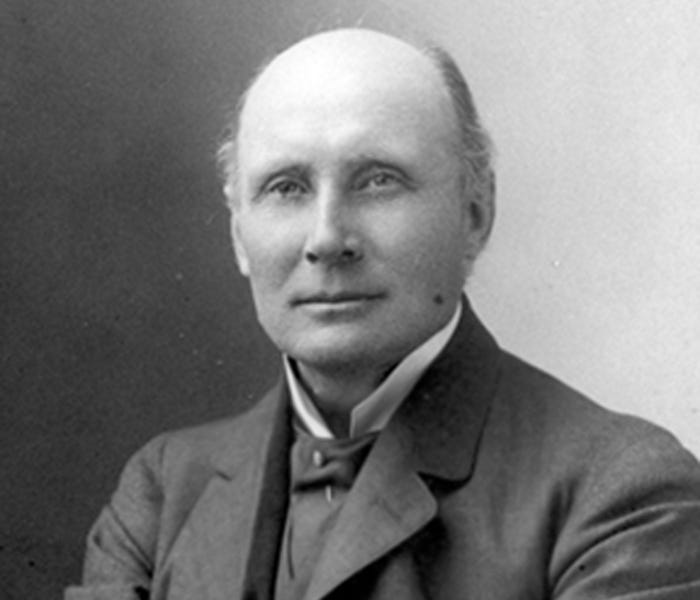
Reality is always in process, always changing in an indivisible flow of time. The fundamental units of reality are not material particles but events or momentary actions. Whitehead calls events the “actual entities” of reality. Actual entities range from the single vibration of an electron to a single thought within your stream of consciousness and everything in between and beyond. The temporal extension of an event is as much a part of any entity’s identity as is its spatial extension, though science had only considered spatial extension. The only actual entity that could be atemporal, or without extension in time, would be God. Everything else would be temporal occasions of experience. When we perceive an object in the world, what Whitehead’s event-based philosophy tells us we are perceiving is a composite of many occasions of experience that have occurred over time. What an object is, then, is how it became what it is. For each actual entity, its being is constituted by its becoming.
Seeing reality as temporal process allows us to see how actual entities are interrelated, not separate things. Every entity in the universe has its particular character that comes from its relationship with everything else. Other philosophers discuss the importance of understanding objects within their context, but Whitehead takes the idea to the level of existence itself. Actual entities are all affected by each other. Again ahead of the curve, Whitehead wrote in 1925 that, in a sense, every entity is everywhere at all times and every location involves an aspect of itself in every other location. Therefore, every spatiotemporal standpoint mirrors the world, and reality is a web of interconnected events. Whitehead’s conception was met with astonishment at the time, yet at the same time, theoretical physics was beginning to confirm his conception, and it is now widely accepted within physics that it is at least a possibility (for example, the theories of quantum entanglement and the wave function).
Whitehead’s interest wasn’t in physics per se but in a mix of biology and philosophy. For him, the interconnectedness of actual entities manifested in subjective feeling. This is where Whitehead’s philosophy loses some people because he states that every entity in reality has subjective experience and can be said to have some level of awareness and feeling. Not only humans but also all organisms, even single-celled organisms, have feelings. One way to understand what Whitehead is saying is to avoid overly anthropomorphizing it as conscious self-awareness but instead see it as every organism responding to its environment and seeking out conditions more conducive to its health and survival. This fits with Whitehead’s statements that electrons are not passive entities but are active entities that react to their environment. Here, too, multiple theories in physics describe electrons and other subatomic particles in ways that Whitehead would find familiar.
Ultimately, for Whitehead, the web of interconnected events and the actual entities in it are all characterized by creativity. Similar to Bergson, Whitehead saw everything as lively and continually evolving. Entities come into existence, their becoming a process of self-creation reacting to their immediate past in synthesis with their environment. The universe is dynamic, constantly creating and changing. Entities are aware and interconnected. Nothing can be considered in isolation because particular entities form societies of larger entities. This last idea by Whitehead is the same as the current scientific idea of ecosystems: communities of organisms interacting as a system.


