
Alexei Navalny: The Voice of Russian Opposition Passes Away in Prison!
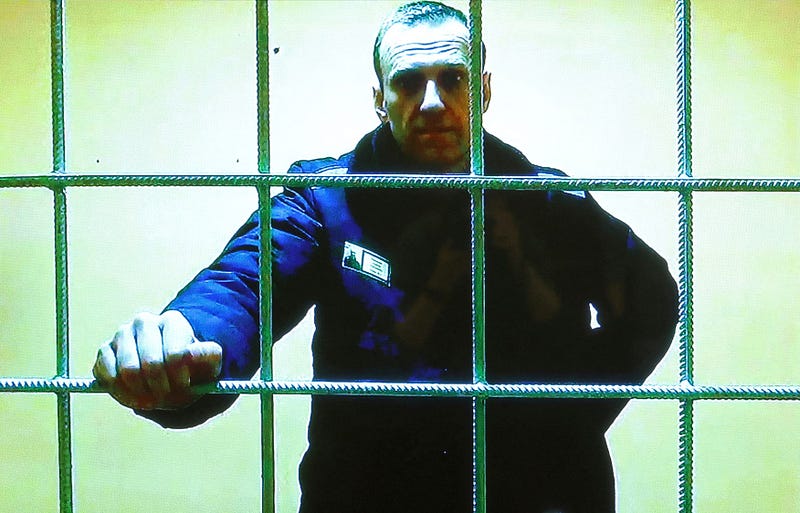
In a stark testament to the perilous state of political dissent in Russia, Alexei Navalny, the nation’s most vociferous critic of Vladimir Putin, has died under suspicious circumstances in a prison cell, as reported by Russian media and the Yamalo-Nenets penal colony’s service on February 16, 2024. Navalny, a figure synonymous with the opposition movement against Putin’s regime, faced his demise in Correctional Colony No. 3, shortly after experiencing sudden illness post a routine walk, leading to immediate unconsciousness. Despite the prompt arrival of medical personnel and subsequent emergency measures, Navalny’s life could not be saved, with his death confirmed by attending emergency doctors. This event, as announced by the penitentiary administration, is now under investigation, with President Putin being promptly informed of Navalny’s death, highlighting the gravity of the situation within the highest echelons of Russian power.
Navalny’s journey from a small village west of Moscow to becoming Putin’s most formidable adversary encapsulates a narrative of resilience, courage, and an unwavering commitment to political reform and anti-corruption. His activism, particularly his investigative work into high-level corruption and his candidature for the mayoralty of Moscow, not only garnered significant domestic attention but also placed him on the international stage as a beacon of democratic resistance against Putin’s authoritarian rule. The incident in August 2020, where Navalny was poisoned with a Soviet-era nerve agent, Novichok, and subsequently placed in a coma during a flight from Siberia to Moscow, underscores the extreme risks he faced. Despite the Kremlin’s denial of involvement and Navalny’s miraculous recovery in Berlin after months of rehabilitation, his return to Russia and consequent arrest and conviction on politically motivated charges underscored his resolve to challenge Putin’s regime from within, despite the evident personal risks.
The Russian government’s response to Navalny’s death, particularly through Kremlin spokesperson Dmitri Peskov’s remarks, suggests a dispassionate adherence to procedural norms, deflecting any deeper inquiry into the cause of death, including speculation around a blood clot, and indicating that no additional directives are warranted at this juncture. This stance, devoid of empathy or accountability, exemplifies the Kremlin’s longstanding approach to dealing with political dissent and criticism.
A quick heads-up: Medium’s been tweaking its algorithms and it’s getting trickier for my stories to land in your feed. So, if you enjoy my work, please make some noise! Hit that clap button, light up the highlights, or drop a comment. Every interaction helps keep the stories flowing. Thanks for your support!
The death of Alexei Navalny not only marks a tragic end to a life of political activism and unwavering dissent against an increasingly authoritarian regime but also signals a chilling milestone for political opposition in Russia. Navalny’s legacy, characterized by a fearless confrontation of corruption and authoritarianism, poses a significant challenge to the Kremlin’s narrative and raises critical questions about the future of political dissent and the pursuit of democratic ideals in Putin’s Russia. As the international community grapples with the implications of Navalny’s death, the resilience and determination of Russia’s opposition movement, alongside the global response to this egregious event, will undoubtedly play a pivotal role in shaping the trajectory of Russian politics and the broader struggle for democracy and human rights on the international stage.
Following the tragic demise of Alexei Navalny, it is crucial to delve into the series of events that led to his poisoning and subsequent arrest, placing him in direct confrontation with Putin’s Russia. Navalny’s ascent as the principal opponent to the Kremlin was marked by his relentless pursuit of exposing systemic corruption and advocating for political reforms. His endeavors were not just limited to vocal criticism; Navalny employed investigative journalism and social media platforms to reveal the depths of corruption entrenched within the Russian government and its oligarchs, actions that inevitably painted a target on his back.
Navalny’s significant impact on the political landscape in Russia was notably amplified through his candidature in the Moscow mayoral election and his founding of the Anti-Corruption Foundation, which sought to expose corrupt practices among Russia’s political elite. These actions, while elevating Navalny as a beacon of hope for democratic opposition, simultaneously escalated his risk of reprisal from the state.
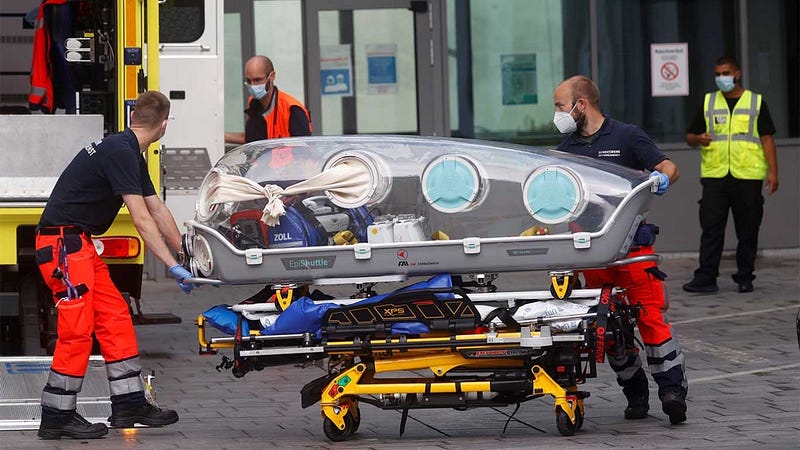
The culmination of Navalny’s confrontations with the Kremlin reached a perilous peak in August 2020, during a flight from Siberia to Moscow. Navalny suddenly fell ill and was subsequently placed in a coma. It was later confirmed by German medical experts that he had been poisoned with Novichok, a lethal nerve agent developed during the Soviet era. This method of silencing him bore the hallmarks of state involvement, echoing past instances where critics of the Russian government found themselves in grave danger under mysterious circumstances. Despite the Kremlin’s vehement denial of any involvement, the international community widely viewed this as an audacious attempt to eliminate one of Putin’s most vocal critics.
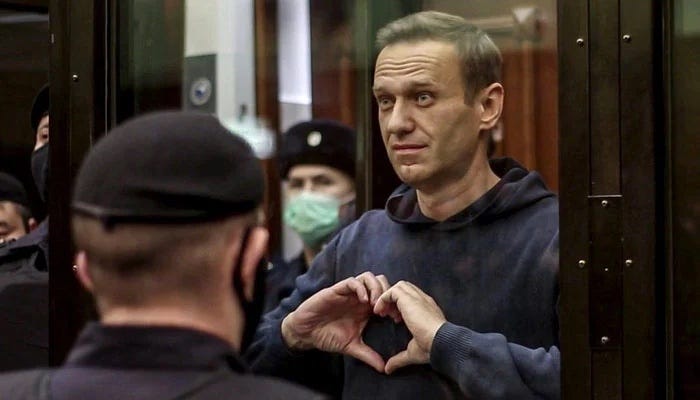
Navalny’s decision to return to Russia in January 2021, after recovering from the assassination attempt, was a testament to his indomitable spirit and commitment to his cause. However, this return was met with immediate arrest upon his arrival, under charges that were widely condemned as politically motivated. This arrest led to his sentencing and subsequent imprisonment, effectively removing him from the political arena and silencing his voice through judicial means.
Navalny’s journey from an anti-corruption blogger to becoming the symbol of resistance against Putin’s regime encapsulates the fraught path of political dissent in Russia. His poisoning and arrest underscore the extreme lengths to which the Russian government will go to suppress opposition voices. Navalny’s story is not just a personal tragedy but a glaring reflection of the current state of freedom of speech, political activism, and the rule of law in Russia. It serves as a stark reminder of the dangers faced by those who dare to stand up against entrenched power structures in pursuit of a more transparent, accountable, and democratic society.
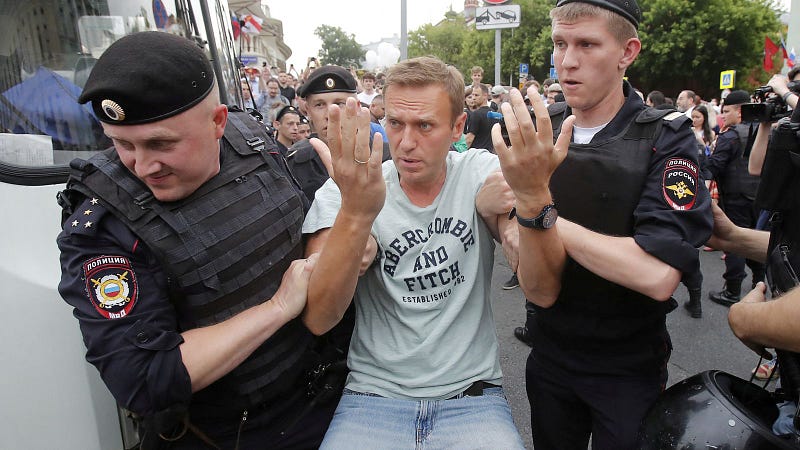
The tragic end of Alexei Navalny falls into a disturbing pattern of incidents where critics and opponents of the Russian government have met with untimely and suspicious deaths. These incidents have raised suspicions of Kremlin involvement, highlighting the perilous environment for dissenters in Russia and abroad. Below is a list of some of the most notable cases:
- **Sergei Magnitsky**: A tax lawyer who uncovered a massive tax fraud involving Russian government officials, died in a Moscow prison under suspicious circumstances after being denied medical treatment in 2009.
- **Alexander Litvinenko**: A former FSB officer and outspoken critic of Putin, who fled to the UK, was fatally poisoned with radioactive polonium-210 in London in 2006. A British inquiry later concluded that his murder was likely approved by President Putin.
- **Boris Nemtsov**: A former deputy prime minister turned opposition leader, was shot dead near the Kremlin in 2015. Nemtsov was a vocal critic of Putin’s policies, including the military intervention in Ukraine.
- **Anna Politkovskaya**: An investigative journalist known for her critical coverage of the Chechen war and human rights abuses, was shot dead in her apartment building in Moscow in 2006.
- **Natalia Estemirova**: A human rights activist and journalist who investigated abductions and murders in Chechnya, was abducted and later found shot dead in 2009.
- **Anastasia Baburova**: A journalist for Novaya Gazeta who was shot and killed in Moscow alongside human rights lawyer Stanislav Markelov, who was representing victims of Russian military abuses, in 2009.
- **Viktor Yushchenko**: The Ukrainian presidential candidate was poisoned with dioxin during his campaign in 2004, leading to severe disfigurement. Although he survived, the incident was widely suspected to be an assassination attempt linked to his pro-Western policies.
- **Sergei Skripal**: A former Russian military intelligence officer, who acted as a double agent for the UK’s intelligence services, was poisoned with the nerve agent Novichok in Salisbury, England, in 2018. He and his daughter survived the attack, which the UK government attributed to Russian military intelligence.
These cases represent a tragic loss of life and serve as a chilling testament to the dangers faced by those who challenge the authority and policies of the Russian government. The pattern of silencing dissent through extreme measures has drawn international condemnation and increased scrutiny of Russia’s commitment to human rights and the rule of law.