
Alev Lytle Croutier: “HAREM: The World Behind the Veil” (1989) Abbeville Press
All you want to know about an enigmatic institution and then some.
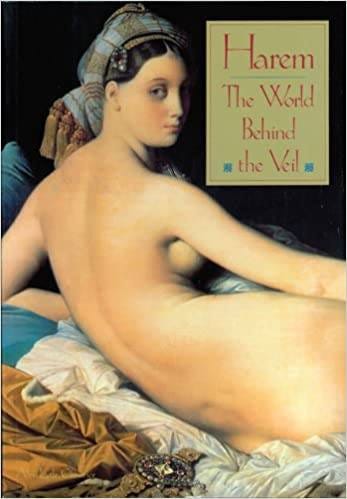
There are books you better read in one sitting; otherwise you’ll start to lose the story flow, the narrative thread. Pamuk and Faulkner come to mind.
There are also books that are pure content: it doesn’t matter if I read them on my Kindle, if I read them as a hardback or paperback, or even listen to them as an audiobook.
Croutier’s lavishly illustrated and magnificently produced book on Harem can be read in one sitting if you like. But it also invites you for repeated visits to its inner garden so you can unfold one fragrant fact after another about this enigmatic institution. Reading this book in any other format would simply be not the same reading and lose a lot from its perfection.
Alev Croutier, an art historian and a filmmaker, did something unique with this work: she interweaved her family history with the story, characters, and anecdotes of Harem. She produced a rich tapestry of social history that fuses the fibers of art history, literature, social commentary, history, and personal memory (with family photos) into a very satisfying reading experience.
This book is such a guilty pleasure…
I usually underline the books I read aggressively and take notes on page margins. But this book is such a lovely flower to behold (a work of art in itself, really) that I couldn’t bring myself to deface it with my pencil.
The book offers three main sections: “The Grand Harem,” “Harem Life in the City,” and “West Meets East.”
The first section focuses on the inside story of the famous Ottoman Harem in Istanbul. Here you can learn what the odalisques wore and ate, how the Sultans picked their favorites, and the lives of the real rulers of the Harem: Sultanas (the Sultan’s wife). and Valide Sultans (the Sultan’s mother).
The role of the eunuchs, the plots, conspiracies and bloodletting behind the palace walls, the symbolism and politics of this hermetically sealed world, they are all in here, every page illustrated with drawings, paintings, and photos.
The second section (“Ordinary Harem”) looks at Harem not only as a palace enigma but also as a cultural institution that became part and parcel of the way regular folks lived. This section is a commentary on the concept of “mahremiyet” (privacy) through the way Ottoman husbands and wives lived their daily lives.
The third section is a multi-layered look at the concept of “Orientalism” and how the Harem fed both the Western imagination and a whole century of Western art and Hollywood productions until very recently.
This book is such a guilty pleasure: its anachronistic subject matter is nothing to yearn for. For me, those were not the good old days but the bad old days. Yet the well-written details are so mesmerizing (and frankly, at times so juicy) that I could not help myself going from one page to the next eagerly, as though I were reading a who-dun-it volume.
I know I’ll be going back to this indispensable volume of Ottoman cultural history frequently, on each beautiful page hesitating whether to underline a sentence or write a comment on the page margin or not. I probably will refrain.
Well done Alev Croutier. You have created an “authority volume” that will no doubt survive the challenge of time comfortably.


