
Alberobello. What’s So Special About This Little Italian Town?
The name seems to mean one thing, but if one digs deeper…
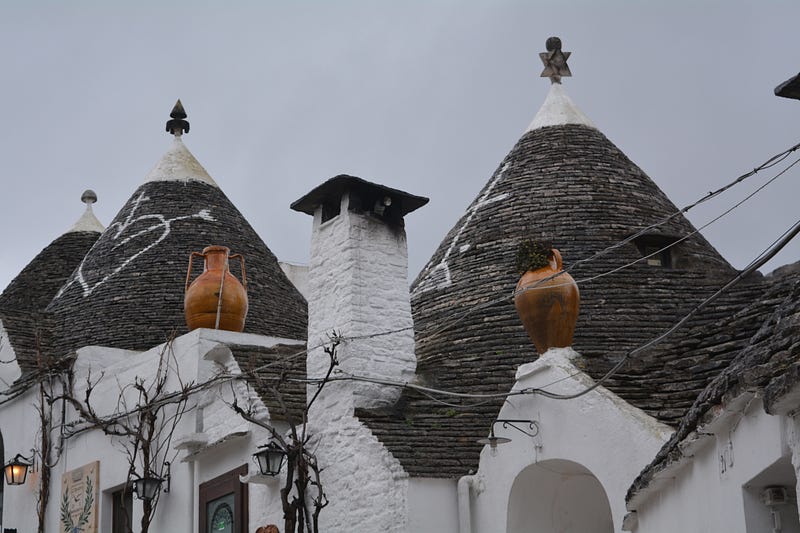
Alberobello is a small town in Southern Italy (Puglia) that very few people have probably heard of, even though it is a Unesco World Heritage site since 1996, and it is totally worth seeing. The name literally means “beautiful tree” (“albero” — tree; “bello” — beautiful).
Just like the name might suggest, this little town is quite charming. It has all these peculiar houses that made me think I was rather visiting a fictional place and not a real one.
And, I definitely had the feeling while there that all the dwellings might have belonged to relatives of the Hobbits, rather than real people.
The houses are whitewashed and have conical-shaped roofs that seem to be made of gingerbread. Hey, don’t worry, I’m not mixing my stories here (also, the roofs are actually made of stone, and there’s no gingerbread in sight), but the whole place really gives you the feeling that you’ve just stepped into the setting of a fairy-tale or maybe an entire mix of them.
I was there some years ago, and Alberobello had little shops with traditional things for sale. While going in to look at (or buy) some of the knickknacks, I could also admire the Trulli architecture from the inside (apparently these little houses are typical for the whole area; they are called Trulli houses and were built without the use of mortar).
And it’s funny, they seemed to be like the Tardis, that weird telephone booth from “Doctor Who” which seemed quite small-sized from the outside but was so damn spacious inside.
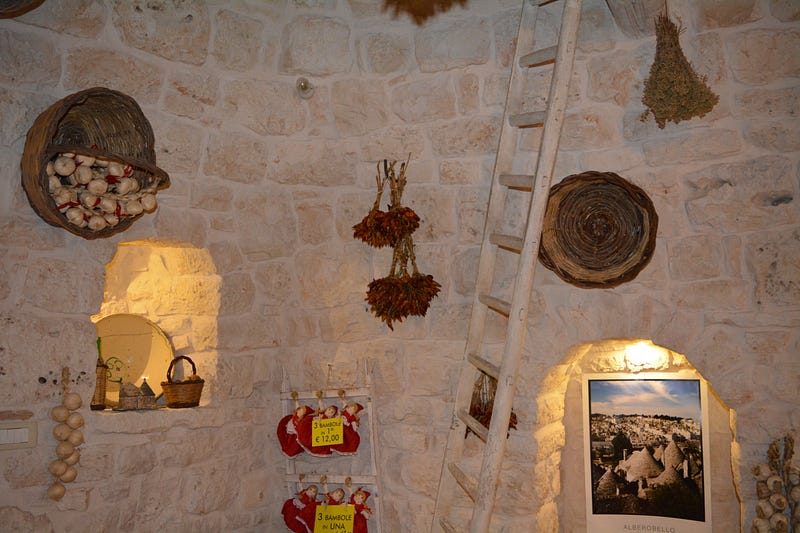
I was fortunate enough to go into one of these shops and when I asked the vendor some details about his merchandise, he was friendly and answered all my questions. And, I must have said something that impressed him as he took us to some stairs that led to the roof assuring us that the view was great from there.
So, yeah, we took the chance and went on the roof of his “big-little house” and could see all the other dwellings from above. And, I must say, that was quite the view.
His nice gesture also showed me that talking to locals can actually get you a long way in terms of getting better acquainted with a place and it’s well worth not staying quiet (and being your usual shy self) in the corner while being on holiday.
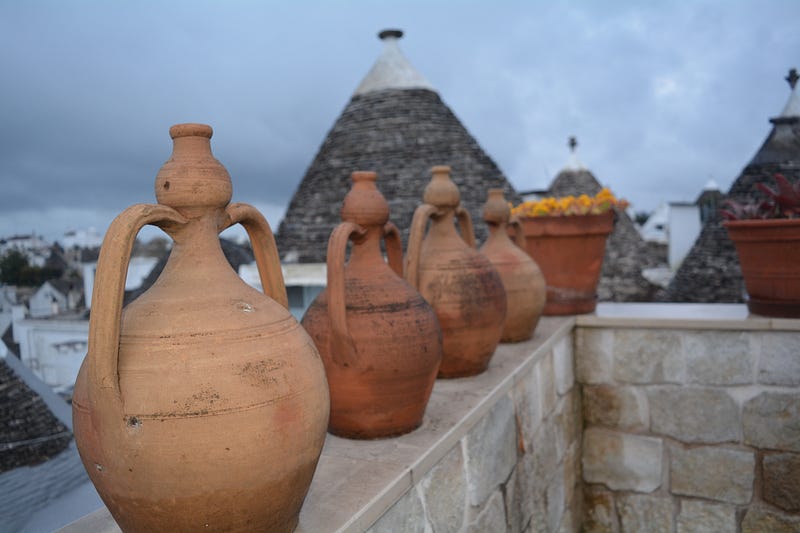
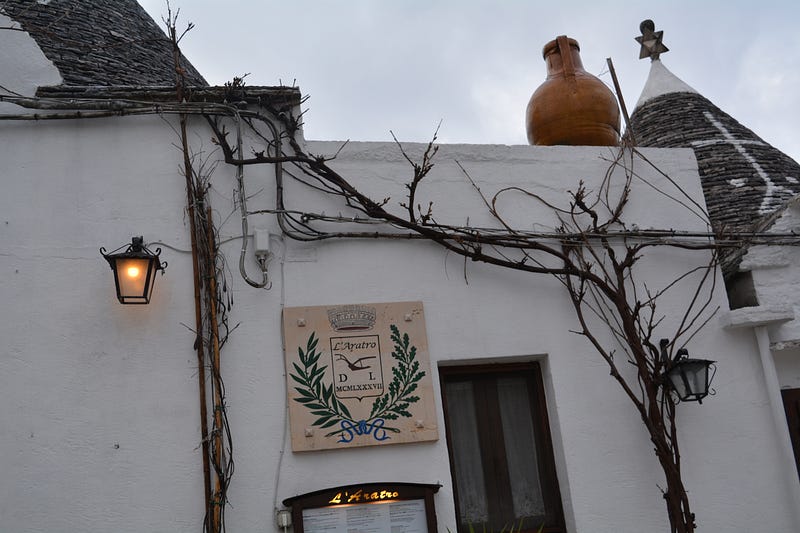
Since we were in a Mediterranean country, there were amphorae everywhere, some even on the roofs. I loved them all and would have stopped every two seconds to take pictures of them. Unfortunately our time there was limited as we had to go back to Bari and had to catch the last train (Bari was approximately one hour away), so I had to stop after taking just a few.
As no tree had actually stood out while I visited this little town, I got curious about its name. After some digging, I found a possible explanation, but it, unfortunately, had nothing to do with beautiful trees or positive vibes at all. The meaning of the name was, if not exactly lost in translation, rather “swept-under-the-carpet in translation”, if I may adapt the saying so.
So, here’s the explanation.
The name comes from the Latin “Sylva Alboris Belli” which if translated word by word means “The Forest of the War Tree”. Therefore “belli”, which turned to “bello” in the name, stands for “war”, rather than “beautiful”.
So, the literal translation of the name is actually misleading.
Legend has it that hundreds of years ago there was an oak forest in the area and in this forest, there was a secular tree which was called “the war tree” because its wood was used to make guns. Apparently, it’s the name of this wood that is at the origin of the name of the little town and not any beautiful tree.
Well, I decided to ignore the history in this particular instance and didn’t investigate why the ancient people from this place needed guns and what their feuds were all about. I also chose to focus on the “bello” meaning and I was happier for that.
Dwelling on hatred doesn’t do anyone any good, so yeah, this collective amnesia for touristic purposes might have turned the visitors’ focus from conflicts to whatever they could discover that could qualify as beautiful around. And that’s not such a bad thing after all, is it?
If you enjoy reading stories like these and want to support me as a writer, you can sign up for Medium using my referral code.


