
Akira Toriyama: Bye Cha! to the Great Master of Manga
A Japanese cartoonist who left a great legacy to the world
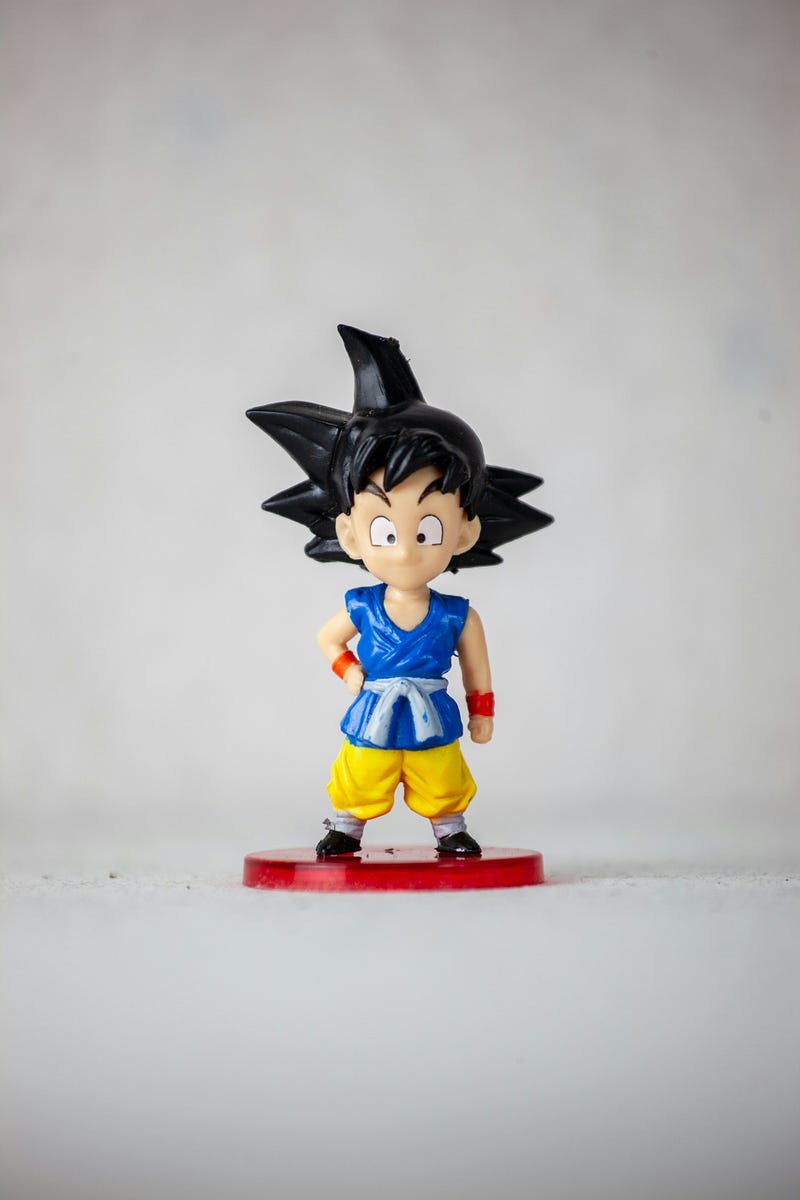
The news of the passing of Japanese manga artist Akira Toriyama (1955–2024) saddened his fans. Details of his death have not been disclosed, but some of his acquaintances say he was due to undergo surgery for a brain tumour in February this year.
What surprised me was the reaction of my European friends. While none of them had contacted me after the Noto earthquake on the 1st of January, my Whatsapp and messengers were filled with condolences as soon as the news of Akira Toriyama’s death was announced. Apparently, his death shook them more strongly than any natural disaster in Japan. Why?
Because Akira Toriyama’s work was an integral part of their childhood, a great source of inspiration, and one of the elements that make ‘who they are’ today. In fact, many friends who sent me messages are now designers, artists, or other creative professionals. Akira Toriyama’s works have had an influence on them that goes beyond nostalgia for their childhood.
What about myself as a Japanese person? How have Akira Toriyama’s works influenced Japanese society? I would like to write about a few of such impacts.
I will not use Akira Toriyama’s portrait in this article. This is the least respect I can pay to this master who disliked being seen by the media and preferred a quiet environment to continue his creative work. He would prefer to be remembered for his creations rather than his face.
‘Dr. SLUMP’ changed the life of girls with glasses
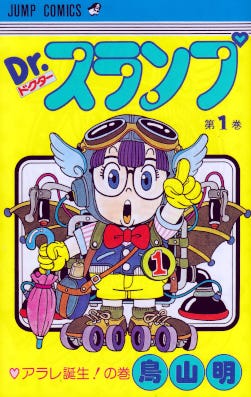
Dr. SLUMP is a gag manga about the crazy life of Arale Norimaki, a girl-shaped android created by Senbei Norimaki, an inventor living in Penguin Village. 236 episodes were written between 1980 and 1984, and the manga has been broadcast as a TV animation since 1981.
Senbei Norimaki means nori-wrapped flat rice cracker and Arale Norimaki nori-wrapped cubic rice cracker. Their names are very easy for Japanese children to remember.
In this manga, the sun and the moon talk, aliens appear, and nonsense events occur one after another. However, among these, Arale Norimaki is the most outstanding character. The fact that this work, which was created as a boys’ manga, attracted girls and adults alike is primarily due to Arale’s charm. Here are three unique characteristics of hers:
First, as an android, Arale Norimaki has superhuman strength. She is so powerful that when asked who would win in a fight between Dragon Ball’s Son Goku (see below) and Arale Norimaki, Akira Toriyama replied that he thought Arale would be stronger.
Secondly, Arale Norimaki’s hobby is poking poo with a stick. Needless to say, such a girl character did not exist at the time (in fact, another famous girl character with the same hobby as Arale has appeared in recent years, but that is a topic for another article). The reason for Arale’s fascination with poo is that she is an android and therefore does not empty her bowels. However, the sight of Arale, a pretty girl, poking poo with a big smile on her face was new to us at the time.
Thirdly, a significant feature of her appearance is her large glasses. Until then, it was thought that glasses on girls were not very pretty, but Arale Norimaki’s cute and fashionable appearance changed the public’s mind and gave girls confidence. In fact, Akira Toriyama adopted the idea, because he thought it would be a funny joke that an android would need glasses, but he said he was happy if it benefited the public.
Also, Akira Toriyama was a manga artist who disliked depicting romance and avoided such scenes as much as possible. This has freed women from the societal notion that the main concern of girls and women should be romance.
By the way, the term Bye Cha!, which I used in the title of this article, was used by Arale Norimaki to mean bye-bye, and was used in everyday life by many people in Japan in the 1980s.
The ‘Dragon Ball’ series has gained fans all over the world
After the success of Dr. SLUMP, Akira Toriyama’s next project was Dragon Ball, published between 1984 and 1995. The story is about Son Goku, a boy with a tail who lives deep in the mountains and meets a girl called Bulma. He learns that if he collects seven balls called Dragon Balls, a divine dragon will grant him his wish, and he sets off on a journey with Bulma.
The manga has sold more than 160 million copies in Japan, while Japan’s total population is 126 million, and 260 million copies worldwide. It was also adapted into an anime, which became an international hit and was broadcast in 80 countries.
It was at this time that Akira Toriyama became so famous that he stopped appearing in the mass media. As I later became an editor and started to know inside stories, I also heard that Akira Toriyama was fed up with the constant production of the Dragon Ball sequel series. The popularity was so great, and the demand was so constant that he had no choice but to keep drawing. Arthur Conan Doyle, who made Sherlock Holmes fall off a cliff, would probably sympathise with him.
As for Dragon Ball, I wasn’t as enthralled with it as I was with Dr. SLUMP when I watched it on TV, because I wasn’t interested in the fight scenes. I saw it as a manga for boys. Nevertheless, when I started to travel to European countries, I was impressed to see that even small bookshops there stocked all the Dragon Ball volumes and that Son Goku was always present at cosplay events. I also met several European men who said their first love was Bulma (yes, you are not alone).
In one interview, Akira Toriyama explained why he made the Super Saiyan’s hair white in the manga. He said it became too much trouble to paint his hair black, but this was apparently a lie. He didn’t want people to realise the tremendous effort he had put in. No matter how fed up he was with drawing Dragon Ball, he never cut corners on his work. He remained sincere to himself as a creator and to his fans.
‘Dragon Quest’, the video game that led me to Europe
Thanks to the success of the above two works, Akira Toriyama became one of Japan’s leading manga artists. When asked to design characters for the 1986 video game Dragon Quest, he readily accepted, assuming that it should be a one-off job.
However, Dragon Quest became another explosive hit, and the sequel series even caused social problems, with children skipping school to queue up on launch day (I was among them and have no regret) and older children who couldn’t buy the software robbed younger ones of it. In hindsight, the combination of Yuji Horii’s emotive scenario, Akira Toriyama’s captivating character designs and Koichi Sugiyama’s beautiful music made it a no-brainer that many children wanted the game.
As the name suggests, Dragon Quest is a story in which the protagonist eventually slays a dragon, but to do so, he visits different places and meets various people, learning things and helping others. It is set in a world with European features. It later transpired that the producers were heavily inspired by fantasy novels by J. R. R. Tolkien and others.
As I have written in another article, this video game laid the foundations for what I am today. Through this game, I experienced the beauty of walking through strange lands, meeting new people, learning skills and empathising with others. That world was supported by the fascinating visuals created by Akira Toriyama.
What is Akira Toriyama’s work for you?

Many of you should already be familiar with Akira Toriyama’s work. Some may only vaguely remember it, while others, like me, may have had their lives defined by it. Please tell me how you perceive it in the comments section.
Perhaps I should have mentioned the peculiarity of Akira Toriyama’s drawings, but I believe you can see it in his work. No one had ever drawn anything like his work before, and no matter how talented a cartoonist or illustrator is, they say it is challenging to copy his drawings.
Even though manga is still seen as something for children in many countries, at least in Japan, Akira Toriyama is a true artist everyone highly regards. His creations have had and will continue to profoundly influence society. Bye Cha, and arigatou, Toriyama sensei! We will love your work forever.


