
Mature Flâneur Down Under
Akaroa: French New Zealand
Quelle surprise!
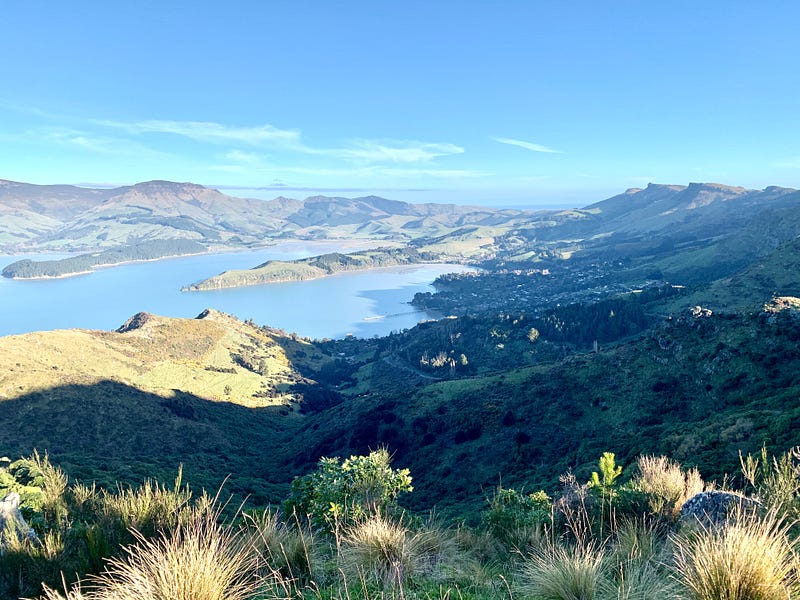
Just south of Christchurch, which is flat as a mat, the land rises in a dramatic forest-covered ridge like a great, green wall. On the other side of that wall is the Banks Peninsula which sticks out into the South Pacific and resembles a giant, wrinkled toe, covered in grass — all 440 square miles of it. The roughly oval shape of this mountainous area reveals its origin as the cones of two contiguous volcanos which erupted between eleven and eight million years ago. Eons of rising and falling sea levels, wind and rain sculpted these cones as if on the wheel of a divine potter — a potter with violent tendencies, who every now and then dashed the cones to the floor, leaving them cracked and broken apart, yet strangely all the more beautiful for the apparent violence done to them. The center of each cone is now a dramatic harbour, surrounded by rugged hills but for a single outlet to the ocean.
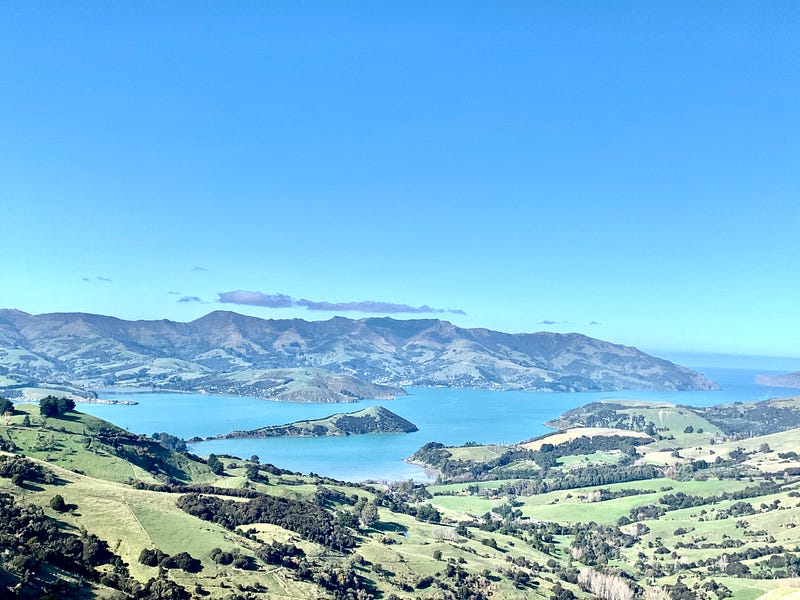
On the shore of the largest of these two craters rests the little village of Akaroa, the first permanent European settlement on the peninsula. Remarkably, it was founded not by the English, but by the French.
Encroyable! Mais, comment est-ce arrivé? — I hear you ask, in your perfectly-accented French. Okay, I’ll tell you the story of how it happened:
In 1838, Jean François Langlois, a French whaling-ship captain, obtained a deed of purchase from a dozen Māori chiefs for the entire Banks Peninsula (£6 paid in advance, with the balance of £234 due in commodities later). He sailed back to France, document in hand, and began recruiting settlers for what was to be not just a simple support settlement for French whalers, but also the first French colony in New Zealand — a strategic step towards the French government’s grander vision of colonizing the South Pacific.
Two years later, when Langlois returned on the ship Comte de Paris with a boatload of brave French settlers, he was greeted by the English Union Jack flying in Akaroa Harbor. In 1840 England had signed the Waitangi Treaty with over 500 Māori chiefs, and New Zealand had become a British colony. The Brits knew the French were coming, and they made jolly-well sure to have the flag waving when the newcomers made land.
However, the British allowed the crestfallen immigrants to settle and build their new homes at Akaroa while the thorny legal issue of land ownership was resolved. To complicate matters for Langlois, it turned out his deed was not signed by a majority of the chiefs whose tribes inhabited the peninsula — including tribes he never even knew existed. To me it looks kind of like the chiefs Langlois thought he had duped into selling their land for cheap were actually conning him into buying what was never theirs to sell…A Māori version of selling the Eiffel Tower to a näive tourist.
In the end, rather graciously, Britain allowed the hapless French settlers to keep the land they had settled around Akaroa, on the condition they accept British citizenship, which they all did.
Avez-vous visité Akaroa?
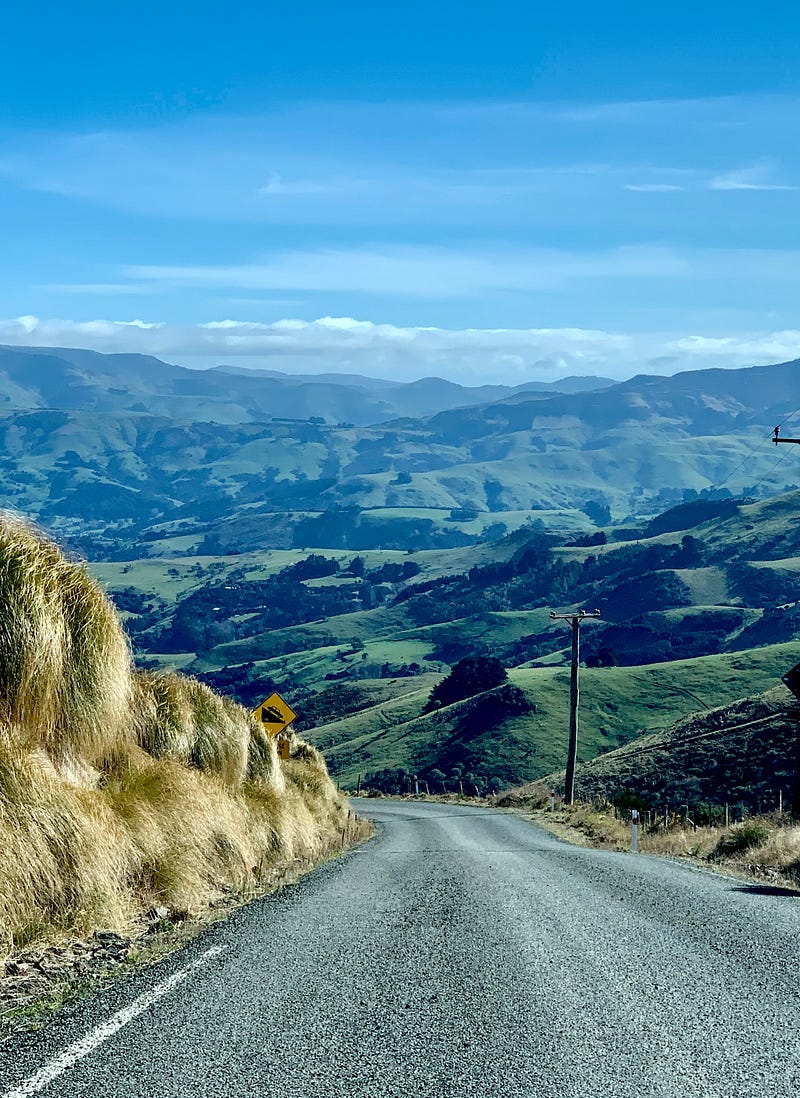
Of course we visited Akaroa! Teresa (ma jolie femme) and I haven’t been to our beloved Paris for several months, and we leapt at the chance to find just a little bit of France in the South Pacific. The drive from Christchurch, where we were staying, was a real rollercoaster ride. There’s a death-defying “summit road” that careens along the ridge-top of the Banks Peninsula to Akaroa. It was every bit as harrowing as our drives through New Zealand’s Southern Alps. Guardrails? Who needs them? Fortunately for us, there was no one else on the road that day, but for a few blasé sheep, to hear Teresa screaming from the passenger seat as we slithered around each hairpin turn.
Akaroa a-t-elle gardé son caractère français?
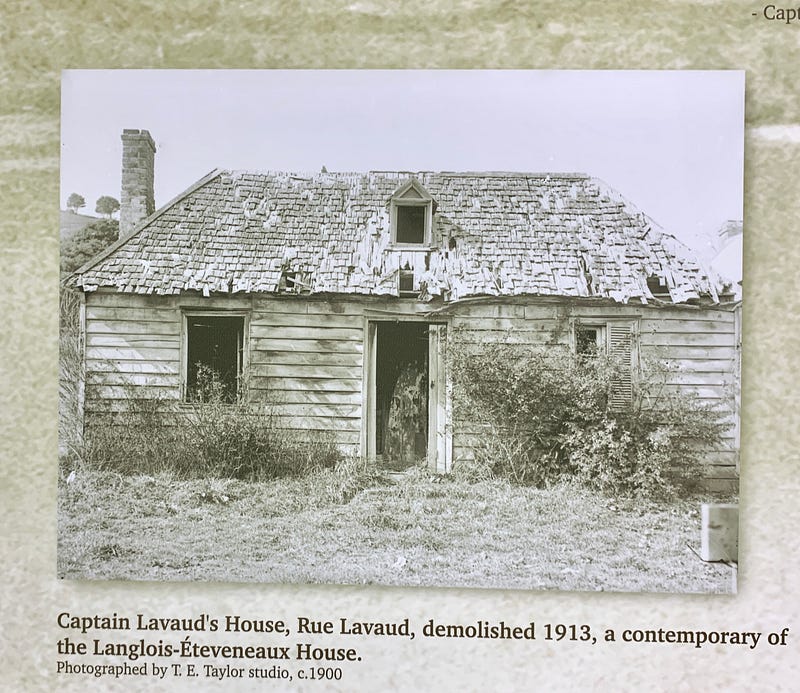
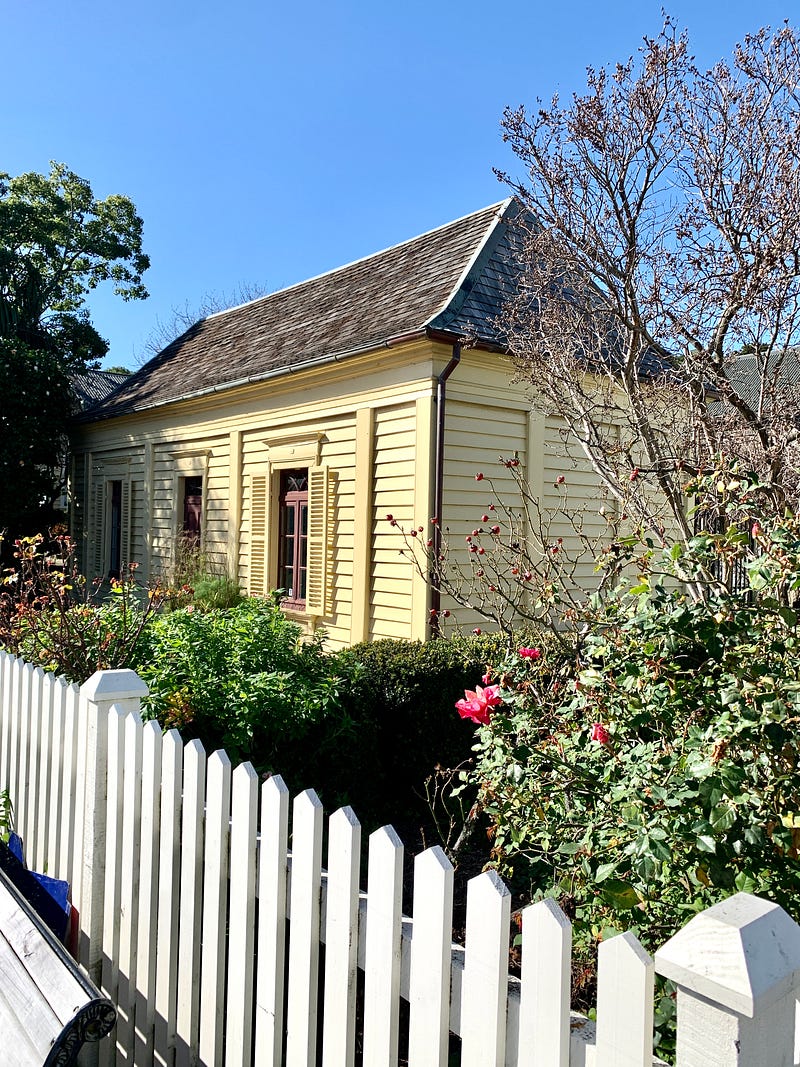
Yes, we were delighted to see how much French character the village still possessed. There were bistros and brassieres, French flags hanging in the windows. The street signs were “Rue this,” and “Rue that.” The oldest buildings had a feeling that was quite familiar — we couldn’t place it at first as French, but in the little town museum we discovered these were built in the same fashion as 1800's houses in New Orleans, a city we know well. New Orleans was a French colony when Akaroa was first settled.
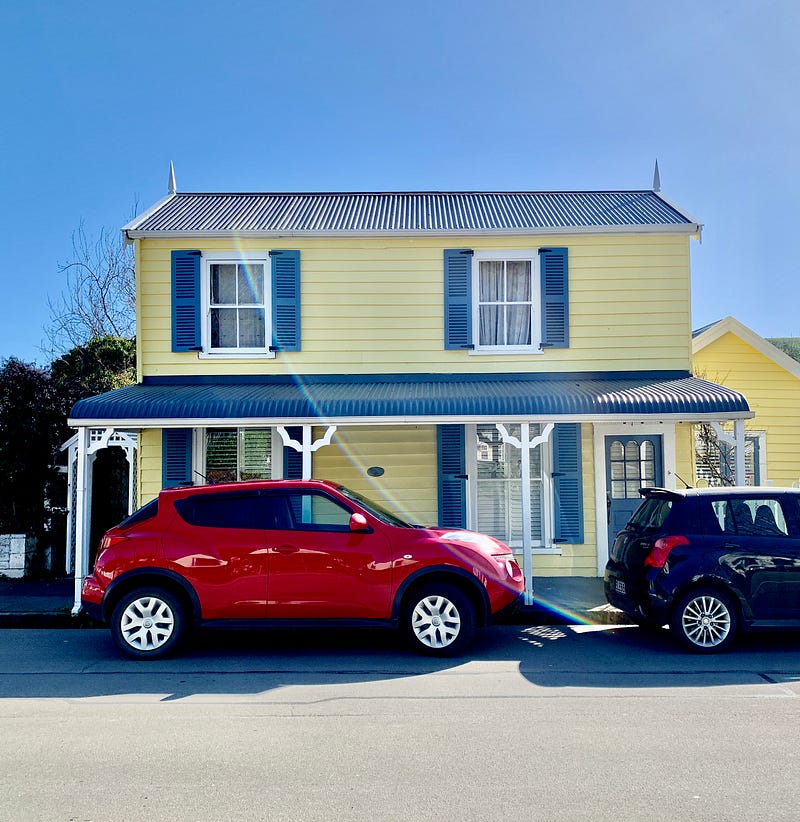
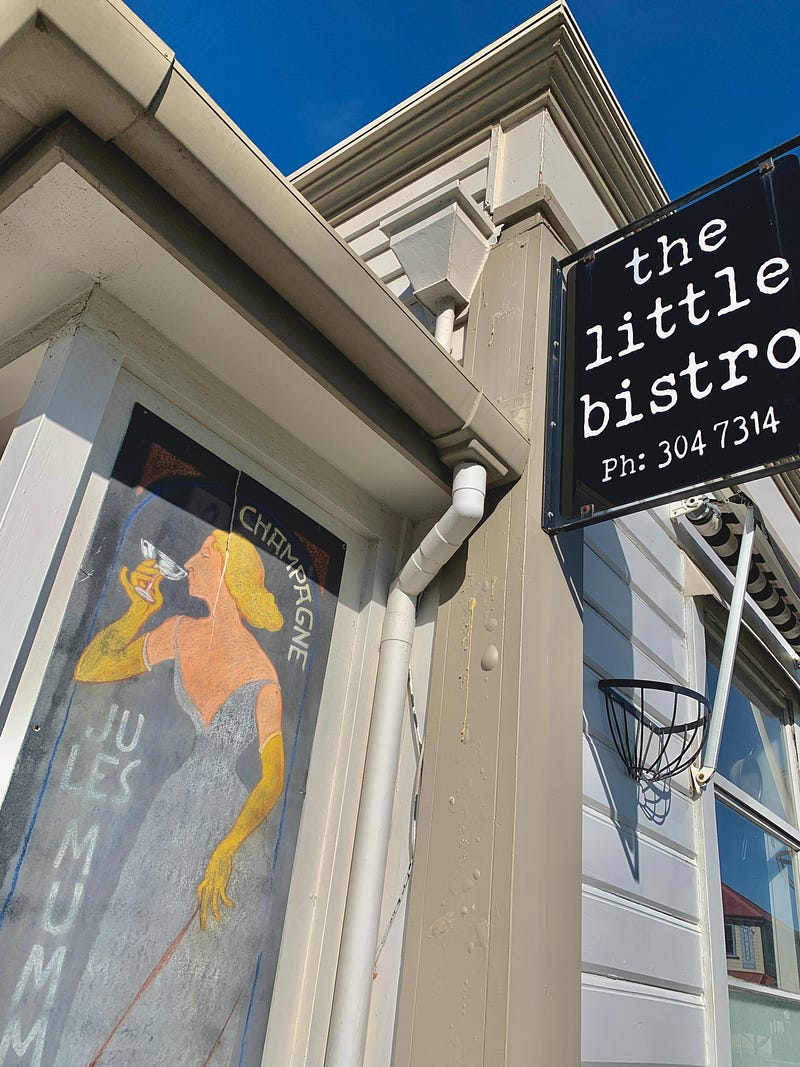
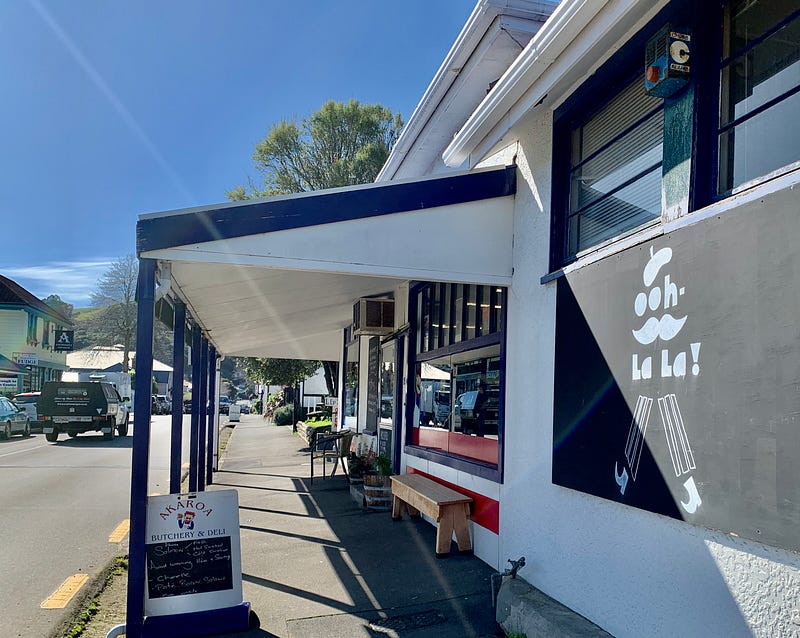
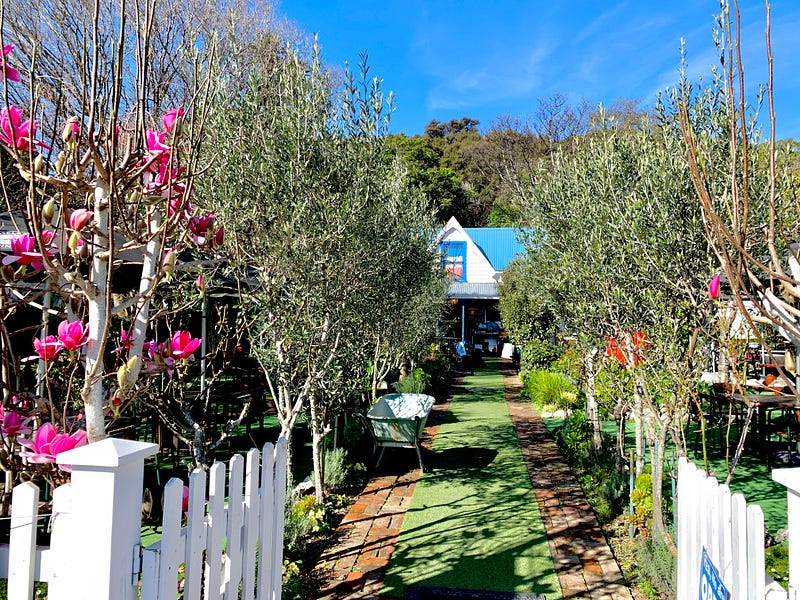
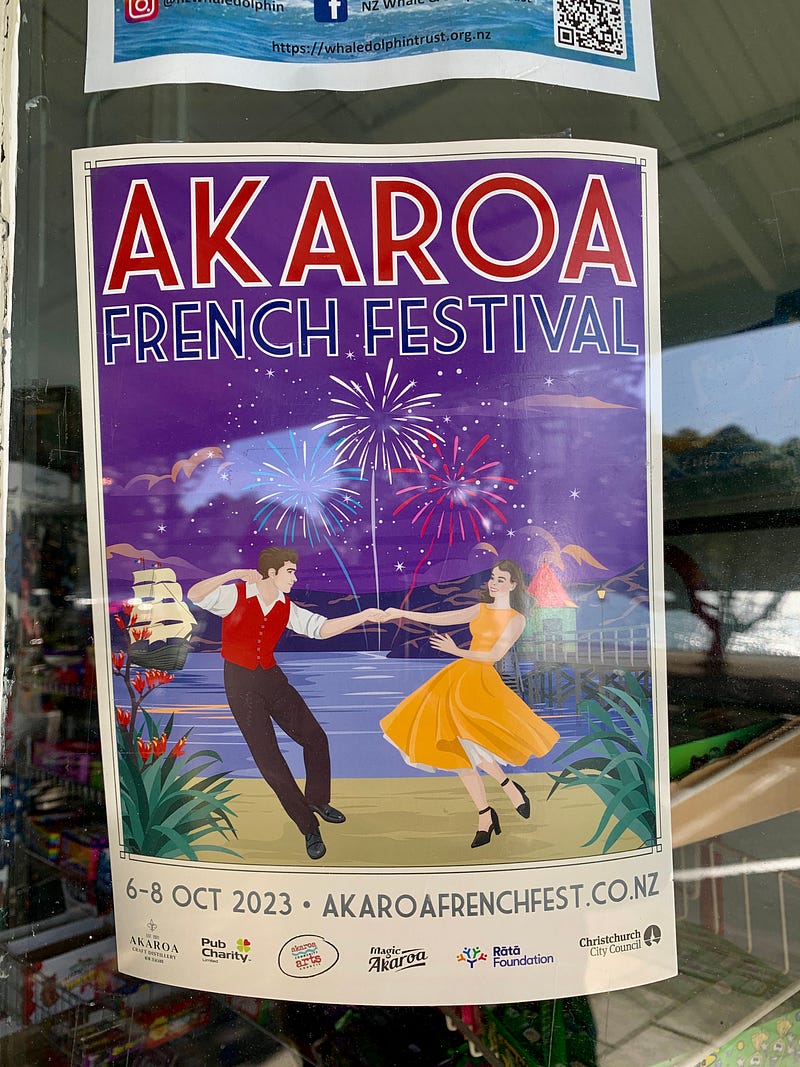
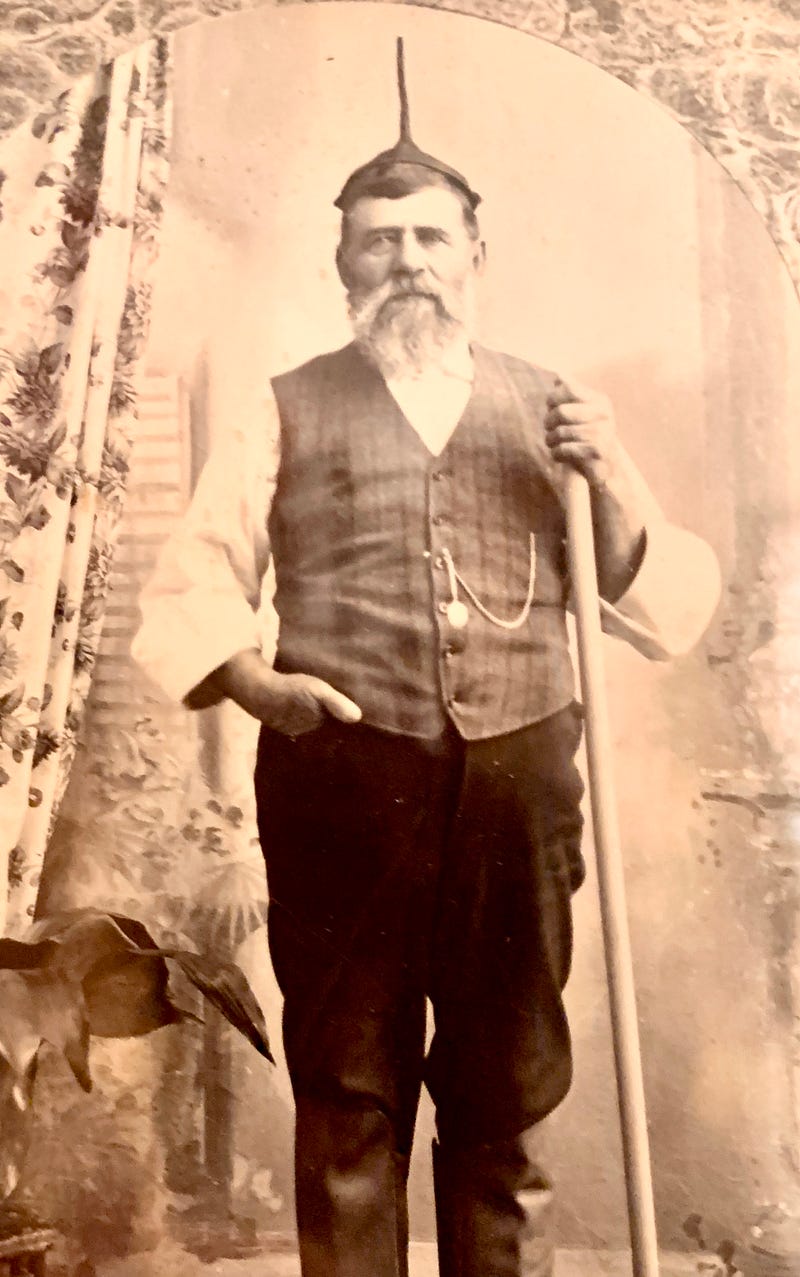
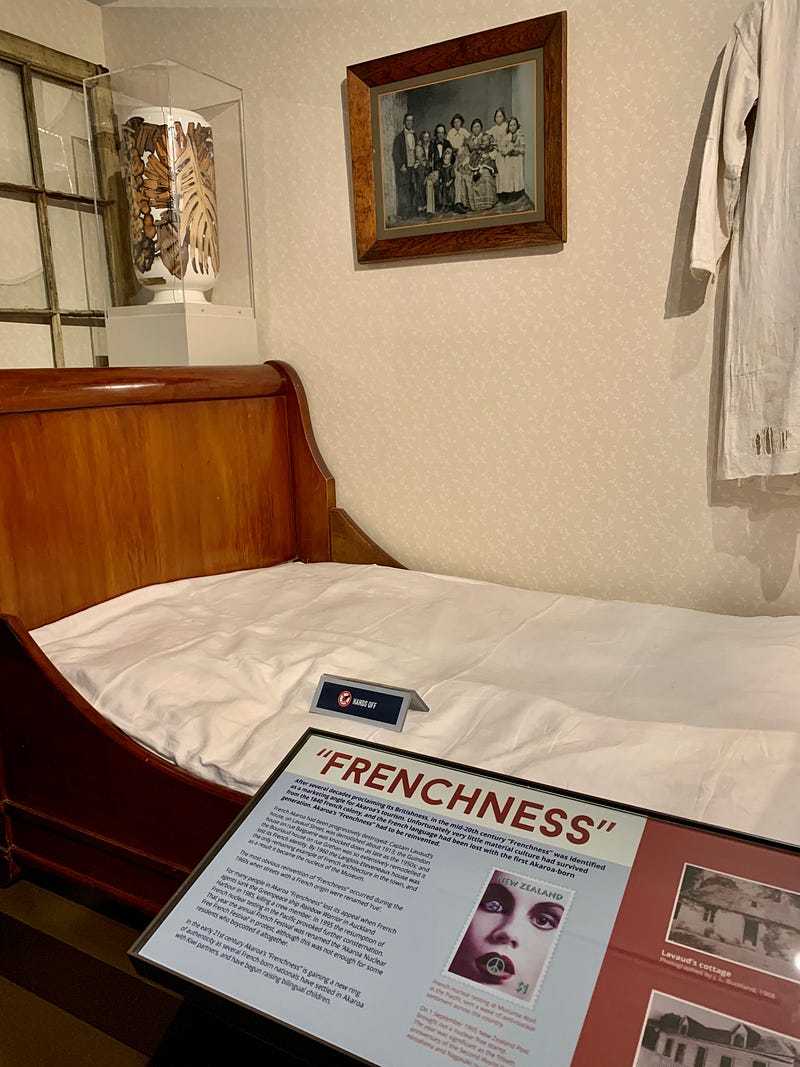
In the museum, however, we also learned that the Frenchness of Akaroa had dwindled to next to nothing during the first half of the 20th century, as newcomers moved in and fewer French families remained. Then, in the 1960s the village made the deliberate choice to start marketing its French heritage as a unique tourist asset. Old streets were renamed and reposted with their original “rue,” and an annual French festival was organized that is still running in 2023. In fact, it’s coming up soon! (Oct. 6–8).
Today, there is an association of the descendents of the 33 original settler families who arrived on the Comte de Paris which keeps French cultural heritage alive on the peninsula.
Comprenez-vous vraiment le français tres bien, ou utilisez-vous la traduction automatique?
Well, that’s an ugly question! Am I using an auto-translation tool? I won’t dignify that with an answer!
Garde ton pantalon, mec! Une dernière question: ce qui est mieux, Le France ou La Nouvelle-Zélande?
Rude! But utterly French of you to ask me to choose which country is best. That’s not so easy to do, but I can break it down for you into categories, based entirely on my subjective preferences as someone who has now travelled extensively in both countries:

Fresh Produce— France
Restaurants — France
Beaches — New Zealand
Beach Towns — France
Mountains — New Zealand
Wilderness — New Zealand
Hiking — New Zealand
Cities — France
Culture — France
Architecture — France
Friendliness — New Zealand
Wine — New Zealand
Putain!!! La Nouvelle-Zélande meilleur vin que la France? Je suis indigné! Your mothair was a hamstair and your fathair smelled of elderberries!
Whoa! Stop your sputtering! Now it’s it your turn to “garde ton pantalon, mec!” Keep your pants on, bub! The wines of New Zealand are way under-appreciated. And it’s not just my opinion. Some Bordeaux-style blends from Waiheke Island in the north of the country have beaten top French wines in blind tastings, and I’ve had Pinot Noirs from Otago Valley far more interesting than many Pinots I’ve tried in France.
I think some friendly competition between your two countries is healthy. And look, if your ego is bruised from losing a few wine tastings, think about how the New Zealanders had to really suck it up after France beat their famous All Blacks in their first Rugby World Cup 2023 match:
In fact, that reminds me I have to add…
Gracious in defeat in sporting events— New Zealand
I guess that breaks the tie, through, and New Zealand wins my personal preference list, 6–7!
Hello? Hello? I’m afraid my imaginary interlocuteur for this article has logged off…Too bad, because he would probably have been interested to know that of all the places we’ve visited in New Zealand, Akaroa is one of a handful we think we would like to come back to for a much longer stay — and maybe return for the French festival…
***
If you want evidence of how much I truly love France, please pick up my new book, Mature Flâneur: Slow Travels through Portugal, France, Italy and Norway.


