
Aimee Semple McPherson — The Enigmatic California Cult Leader and Evangelist
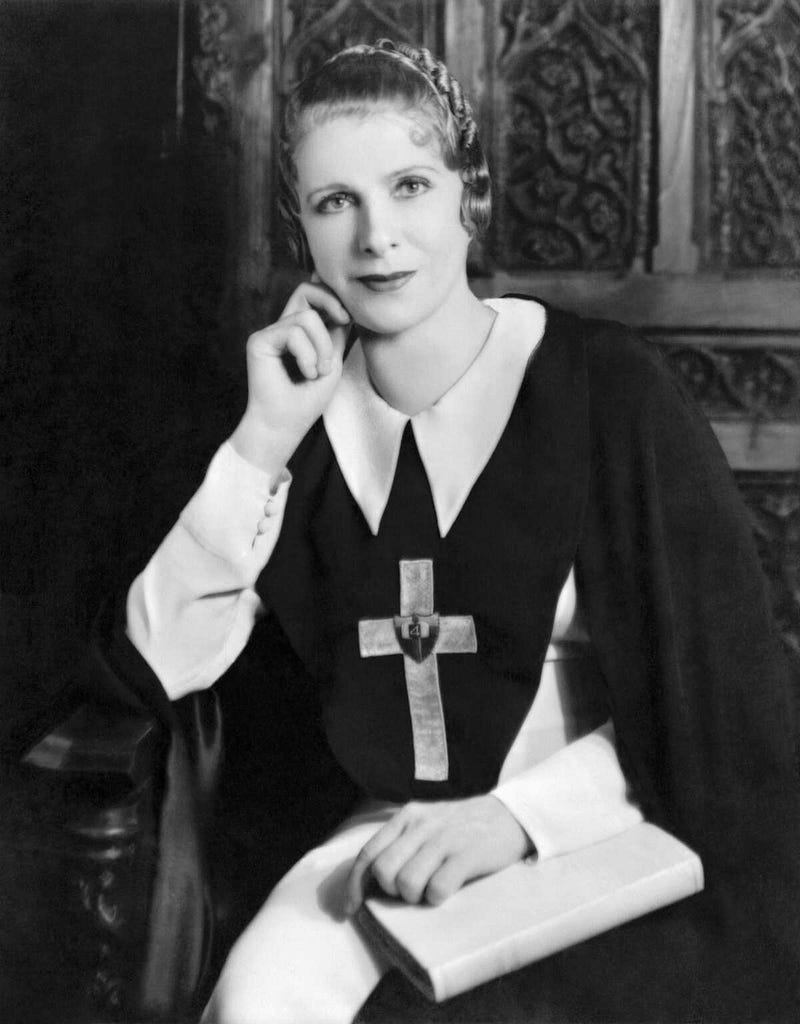
Several years ago, I found myself in an odd N. CA location, in an odd circumstance, and having 3 days with nothing to do and nowhere to go. In the strange town I found a small library with limited book selections. Most of them were boring and uninteresting. Then, across the sun filled, old barn wood paneled room, I saw her staring right back at me from a weathered book cover: Aimee Semple McPherson. I sat at the library and read about her for two hours.
She was a charismatic and controversial figure in the early 20th century, rose to prominence as a renowned evangelist and founder of the International Church of the Foursquare Gospel. Known for her dynamic preaching style and theatrical sermons, McPherson attracted a massive following, but her life was also marked by scandal, intrigue, and accusations of misconduct.
Early Life and Spiritual Awakening
Aimee Elizabeth Kennedy was born on October 9, 1890, in Salford, Ontario, Canada. Raised in a devout Christian household, she developed a deep connection to her faith from an early age. At 17, Aimee married Robert Semple, a Pentecostal missionary, and accompanied him to China on a mission trip. Tragically, Robert died of malaria, leaving Aimee a widow with an infant daughter. She found herself needing to re-group and pave a way for her new life.
Following her husband’s death, Aimee returned to the United States and began preaching across the country, gaining attention for her passionate and unconventional style. At each event, she started to amass devotees who were drawn to her like a magnet. In 1917, she married Harold McPherson, a former vaudeville performer. During their time together, Aimee acquired a strong taste for the dramatics that would only enhance her course and mission. In 1921, she and Harold divorced.
The Founding of the Foursquare Church
Aimee’s ministry reached its pinnacle when she founded the International Church of the Foursquare Gospel in 1923. The Foursquare Church emphasized four fundamental tenets of Christianity: Jesus as the Savior, Baptism in the Holy Spirit, divine healing, and the imminent return of Christ. McPherson’s ability to connect with her audience, combined with her emphasis on emotional and physical healing, drew people from all walks of life.
McPherson’s Eccentric Style
What set Aimee Semple McPherson apart was not only her theological teachings but also her theatrical and flamboyant preaching style. She incorporated elaborate stage productions, including music, lighting effects, and dramatic reenactments of biblical stories. This approach appealed to a broader audience, making her sermons more engaging and accessible.
The Angelus Temple
In 1923, McPherson dedicated the Angelus Temple in Los Angeles, a grand structure that could accommodate thousands of worshipers. The temple became the central hub of her ministry, hosting regular services, radio broadcasts, and healing sessions. McPherson’s radio show, “The Old-Fashioned Revival Hour,” reached millions of listeners, further expanding her influence.
Controversies and Scandals
Despite her success, Aimee Semple McPherson faced numerous controversies. In 1926, she disappeared for several weeks, sparking a nationwide search. The kidnapping remains one of the most intriguing and controversial episodes in her life. On May 18, McPherson vanished without a trace while swimming at Ocean Park Beach near Santa Monica. A massive search ensued, involving law enforcement and volunteers, and the nation anxiously awaited news of her whereabouts. After nearly five weeks, McPherson reappeared in Douglas, Arizona, claiming she had escaped from captors who had drugged and held her against her will. The circumstances surrounding her disappearance were shrouded in mystery, leading to skepticism and speculation. The public and the media scrutinized the events, and while McPherson continued her ministry, the questions surrounding the alleged kidnapping lingered.
Throughout her career, McPherson faced allegations of engaging in extramarital affairs, tarnishing her public image. These accusations, combined with financial scandals and internal disputes within the Foursquare Church, led to increased scrutiny of her leadership.
Despite the controversies, Aimee Semple McPherson’s legacy endures. Still a famous landmark in Los Angeles, the Foursquare Church continues to thrive as a global Pentecostal denomination, and her influence on the charismatic and evangelical movements is undeniable. McPherson’s pioneering use of media in religious outreach also set a precedent for future televangelists.
Aimee Semple McPherson remains a complex and enigmatic figure in religious history. Her impact on American Christianity is undeniable, as is the controversy that surrounded her personal and professional life.


