
AI Reimagines Mythical Creatures
A modern bestiary inspired by medieval ones.
During the Middle Ages, mythological creatures, born of the imaginations of writers and storytellers, were described. For a long time, these myths were oral and then turned into evocative texts, only later transformed into images either as miniatures or paintings. Even today, literature, film, and music draw inspiration from the creatures that populated the dreams and nightmares of our ancestors.
In recent months, several artificial intelligence models capable of transforming text into images have come out. What images will AI generate? Will it take up the ideas of our ancestors or generate new monstrous creatures? A little experiment.
Basilisk
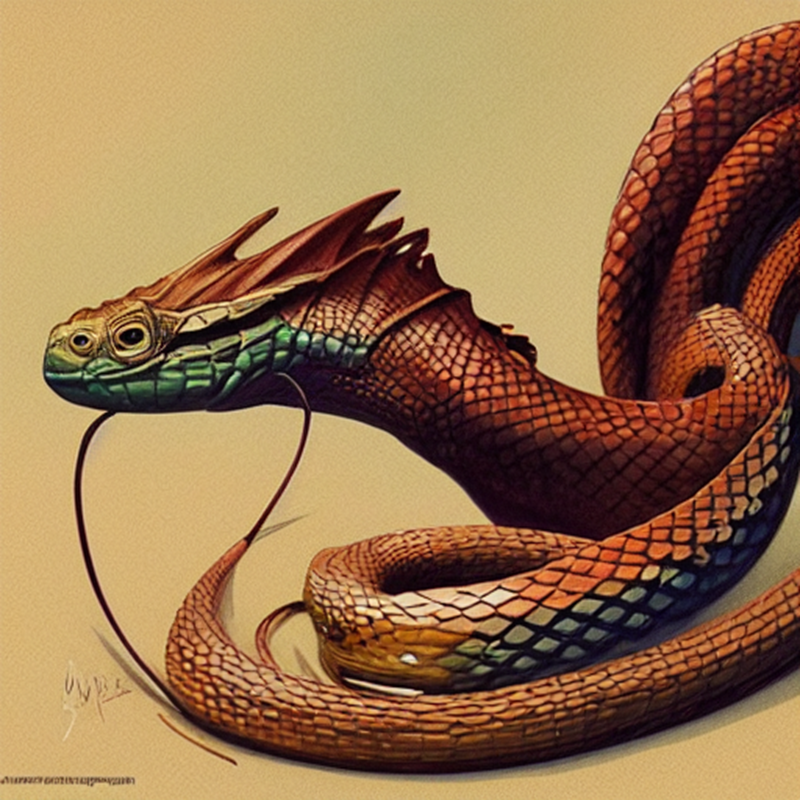
In medieval bestiaries, the basilisk was a legendary reptile capable of killing with a glance. According to some historians, it was inspired by the cobra or other Asian snakes. The name basilisk comes from the Greek basilískos meaning little king. Legend has it that it is born from a snake or toad egg that is hatched by a hen. The basilisk had a very powerful venom and according to others was capable of breathing fire.
I think in this case the AI has returned the image of a mighty serpent, in a way it looks like the serpent king described by medieval texts.
a reptile or serpent who can cause death with a glance, often described as a crested snake or as a rooster with a snake’s tailBlemmyes
Blemmyes group various species of headless men in medieval bestiaries, while the facial features were located in the chest. According to the ancients they lived in ancient Lybia or along the Nile. the etymology of the name is uncertain, it could come from the Greek blemma meaning “look, glance” or from the Bedauye language bálami (“desert people”).
I tried several styles and text prompt but none returned an image with a man with no text, and his face on his chest. In the end, I chose this one, because it was the one I liked best (though vaguely creepy).
headless people whose facial features are on their chest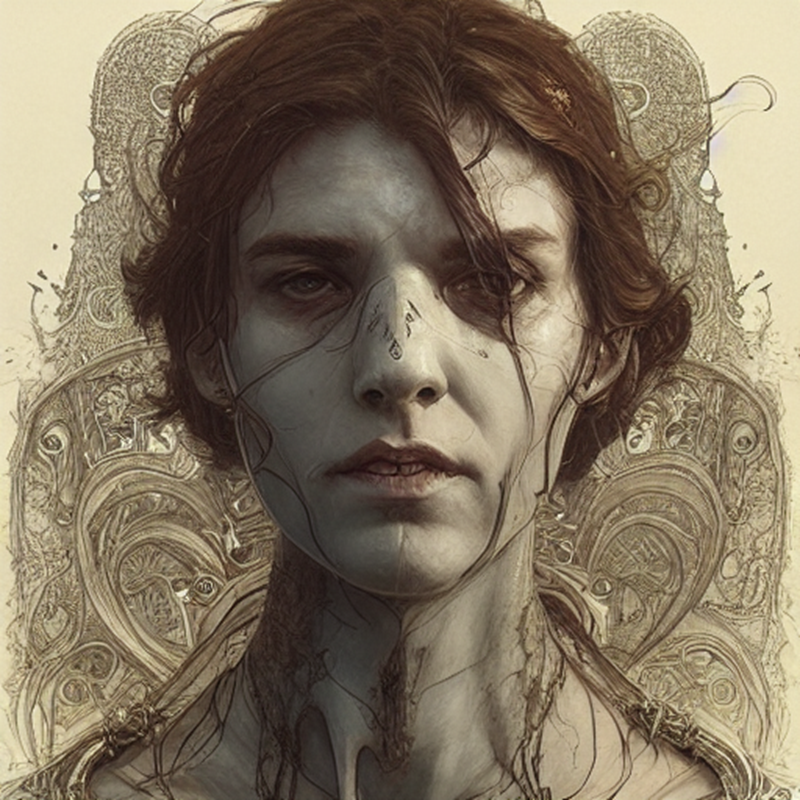
Dracontopede
Also called Draconcopedes, the name comes from Latin, and is less well-known than other medieval beasts. Described by Vincent of Beauvais (c. 1190–1264) as a beast a vast serpentine creature with the head, face, and breasts of a woman. Charles Dickens describes it as the serpent with the head of a woman that tempted Eve.
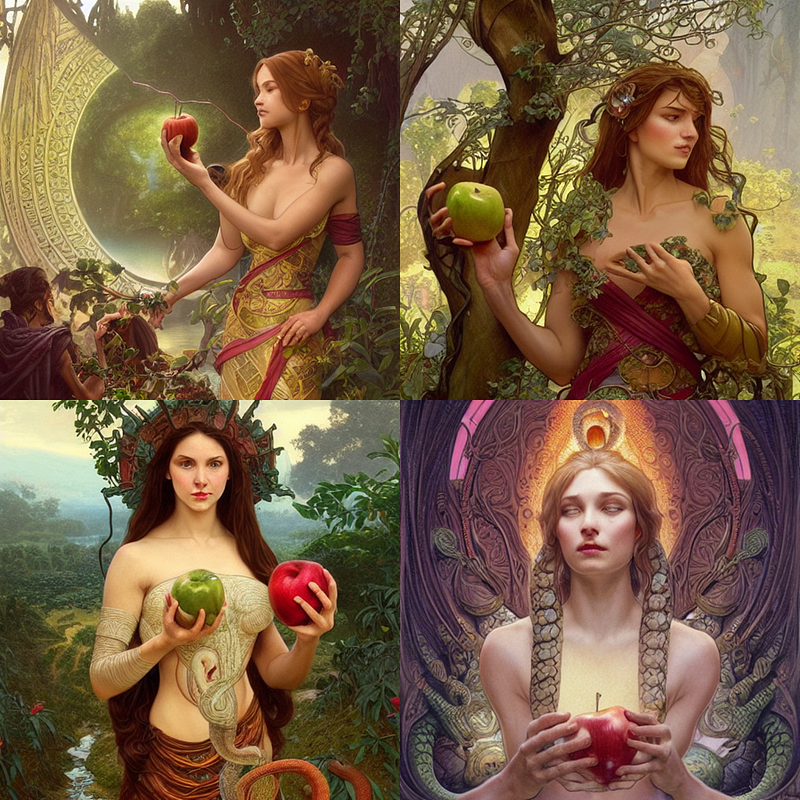
Actually, I tried different styles to get a snake with the head of a woman and an apple (kind of merging ideas). The result is not exactly what I hoped for, however, I got several interesting images and have included some of them here.
a serpent with the head of a maiden offering an apple to Eve in the garden of Even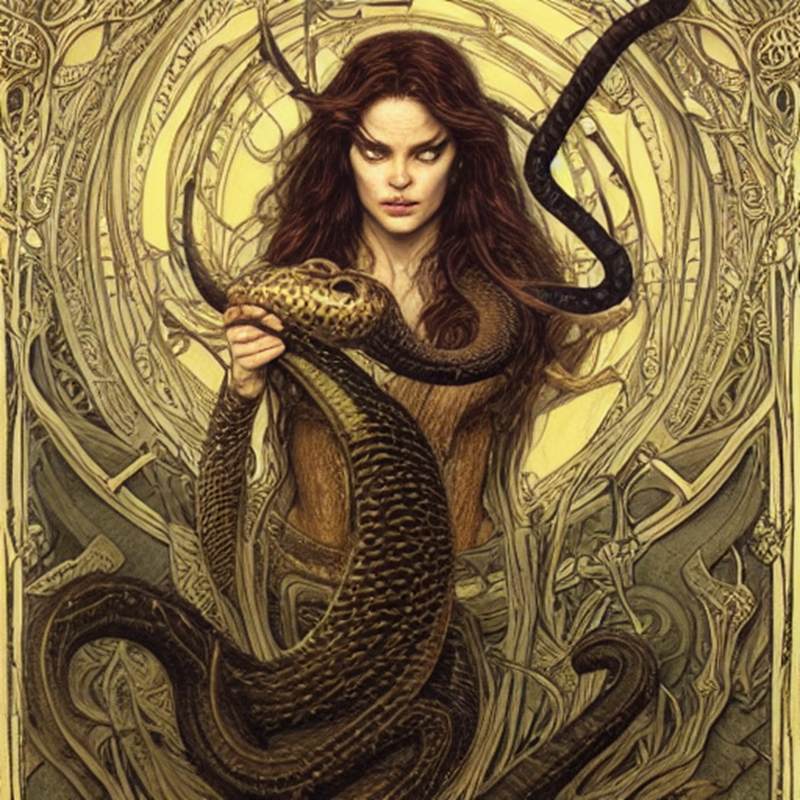
this is the one I chose, but I also generated other variations that I thought were interesting.
Dragon
The dragon, I think, needs a little introduction. After all, it is a mythological creature that has fascinated almost all cultures (both Western and Eastern). There are endless variations, but generally, almost all of them feature a large reptile that may have more or fewer wings, spit fire, or other incredible powers.
There are endless representations in books, artwork, movies, and now AI. I tried several ideas and compositions, and the one I chose seemed the best. A huge dragon towering over a city.
A giant dragon flying over a city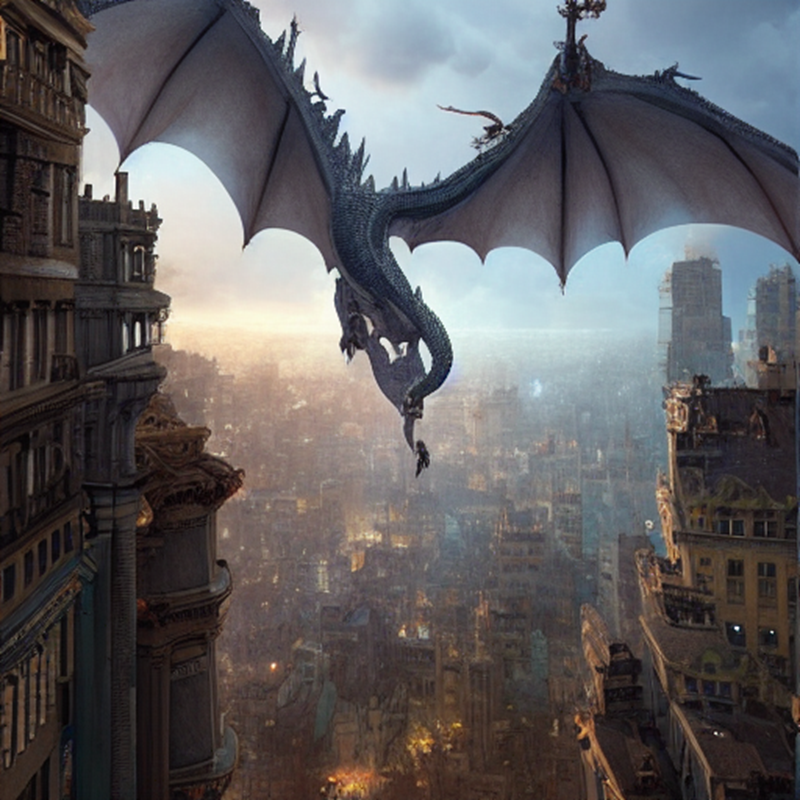
Elephant
The elephant is a creature that fascinated the people of the Middle Ages, rarely seen in European kingdoms, it was nonetheless incorporated into the bestiaries of the time (an indication of the fascination it had among scholars).
I tried to use the Oxford dictionary definition, in an attempt to see if from its description the AI could reconstruct the animal. In a certain, since it looks like an elephant, although there are somewhat odd details. I think, that the AI has, in this case, a concept of trunk and tusks and from that, it reconstructed the image.
a very large animal with thick grey skin, large ears, two curved outer teeth called tusks and a long nose called a trunk.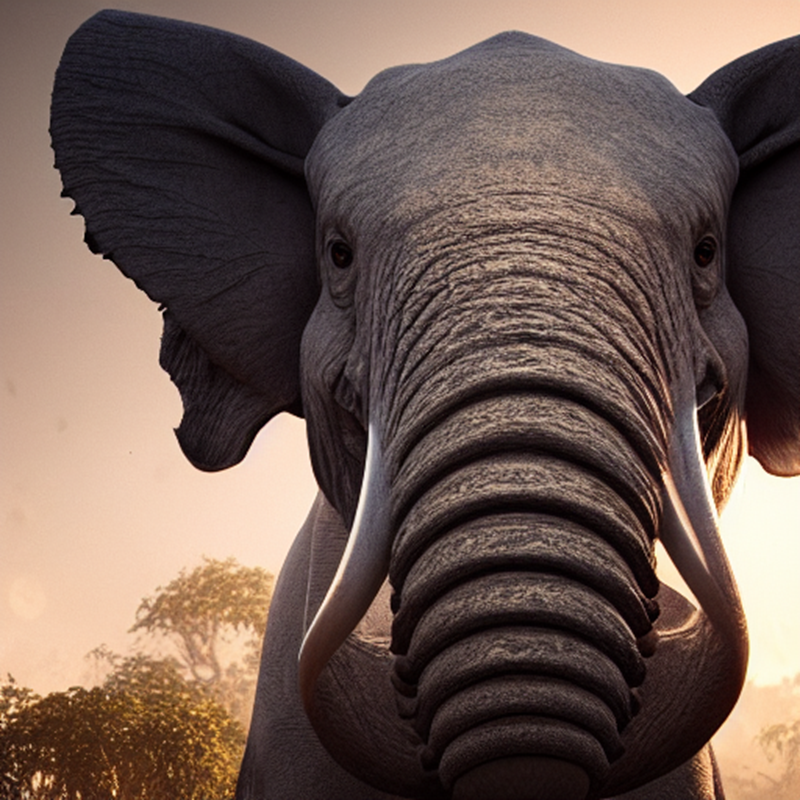
Harpy
The harpy has ancient mythology, in fact, it was already present in Greek and Roman times (the etymology is in fact Greek and then Latinized). Already present in Homeric poems, it is an almost fixed presence in medieval bestiaries. The harpy was described as half human and half bird.
They originally represented a personification of the wind and its destructive power; they also transported to hell those who had been guilty of horrible crimes. Influenced, by these descriptions I tried playing with the style to represent a harpy in a desolate, hellish environment. Occasionally, as can be seen, the AI has some problems in generating faces.
woman warrior in plate armor with bird wings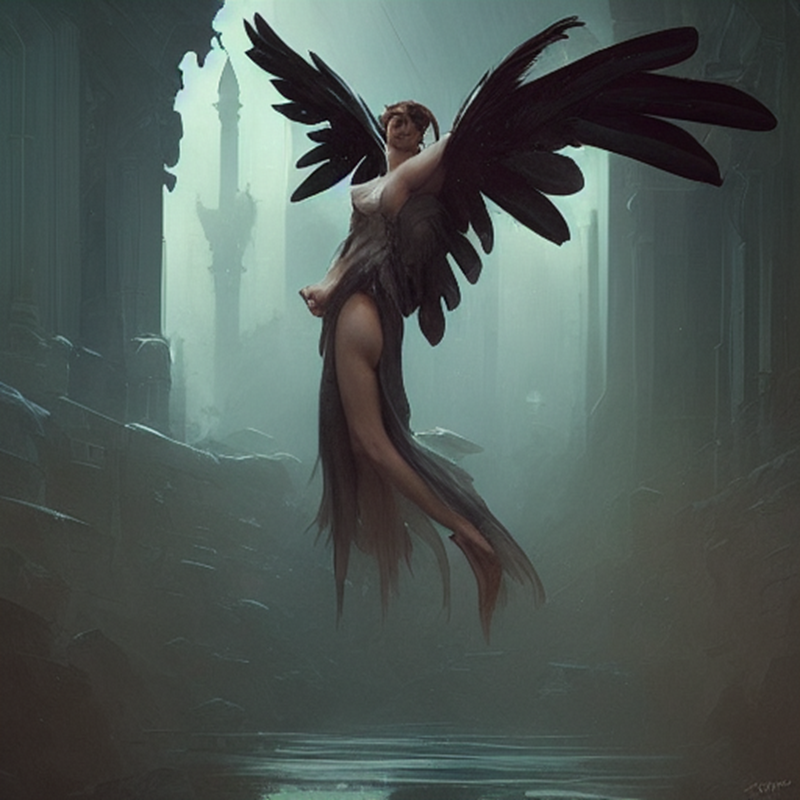
Cephalophore
The Cephalophore was a saint who carried his own head (the Greek etymology in fact means “head-carrier.”) On the one hand, he was a saint who had suffered martyrdom; on the other hand, he was featured in medieval bestiaries.
In fact, several attempts did not bring the desired result. Also because considering that in the bestiaries, it could also have a negative connotation, I tried to represent this more but the result was not ideal.
a saint or martyr who carries their own head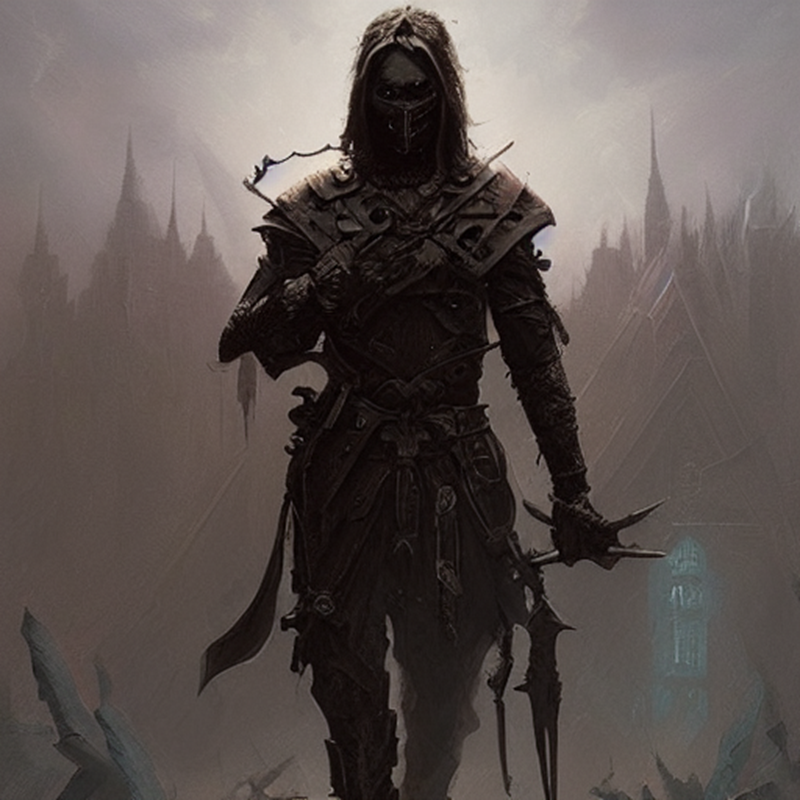
Cetus
Cetus is described in bestiaries as a sea monster that devoured Andromeda. the features resemble a whale or dolphin. There is also a constellation with the same name.
Of the various styles, I chose one that represented a kind of whale in flight over a perilous sea.
a large sea creature often depicted as a whale or shark who swallowed Jonah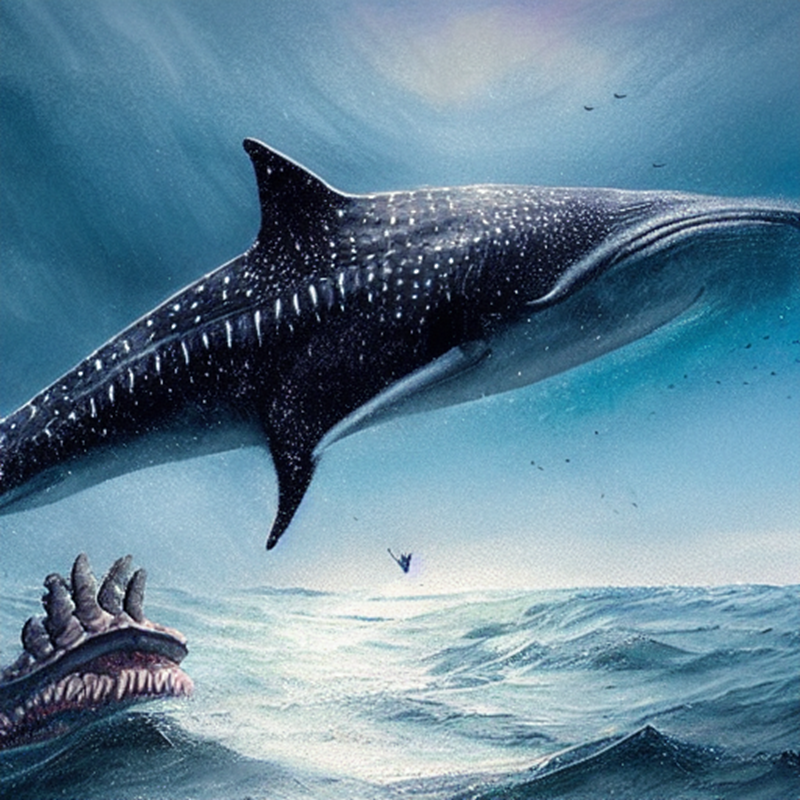
Demon
Demons were also often in medieval bestiaries. Belief about demons has ancient origins (as far back as Paleolithic times) and they are present in all religions. In Christianity, they are servants of Satan, and there are a great many demons.
evil spirits that are active in the world, often working on behalf of Satan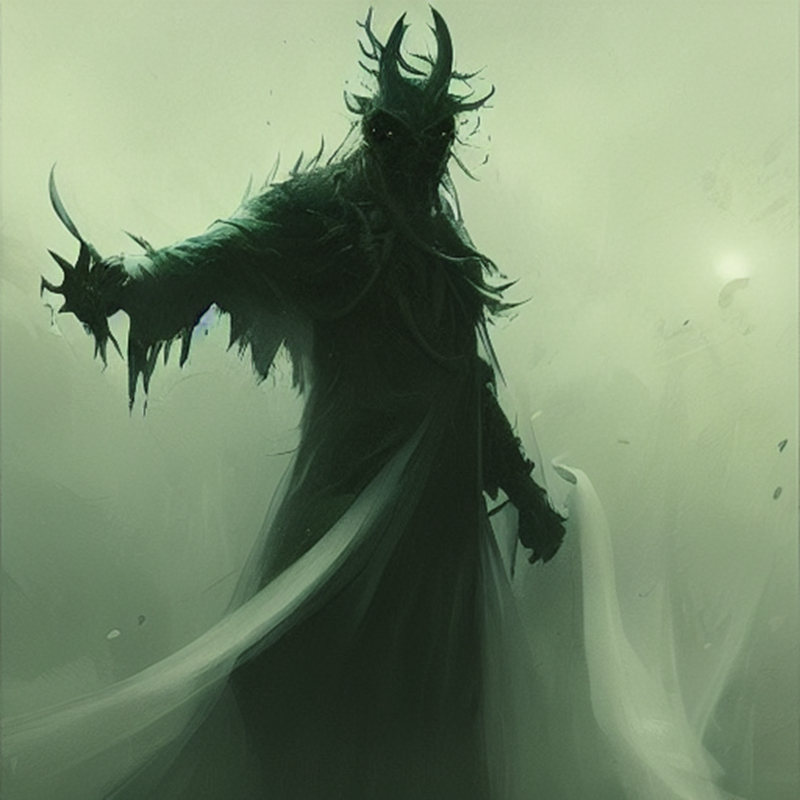
Giant
The giant is a human being of enormous size and portentous strength. The word giant is first attested in 1297 by Robert of Gloucester’s chronicle (although there are similar myths, such as the Greek Cyclopes).
Giants were seen as creatures however often monstrous and malevolent, and this is what I have focused on.
humanoids of extraordinary size, strength, and appetite, often with little intelligence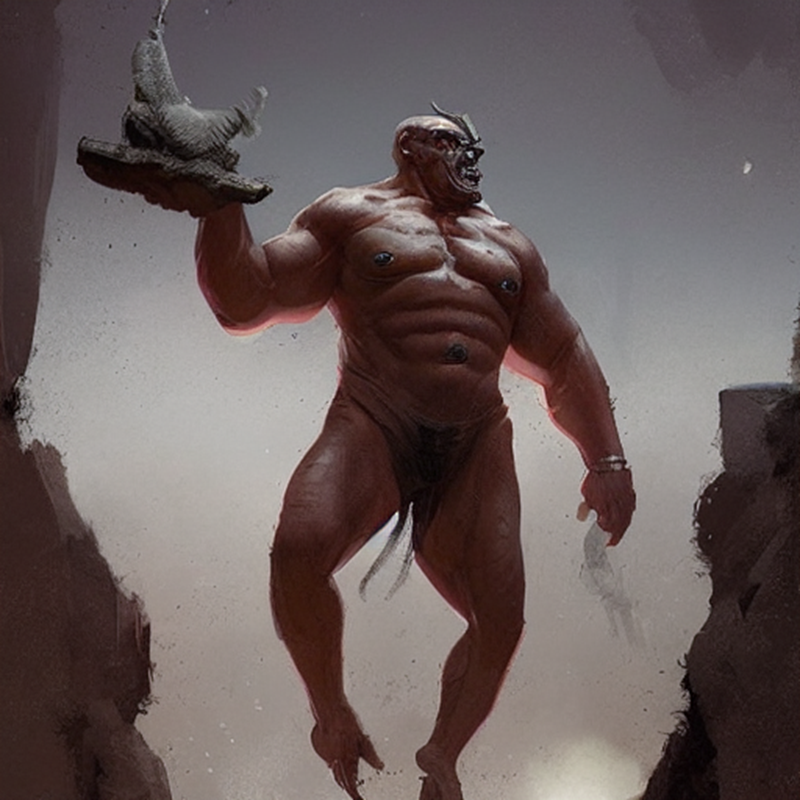
Parting thoughts
This is not the first time I have attempted projects with these patterns (I have tried drawing poems or imagining characters from the little prince, or the most beautiful words).
Artificial intelligence does not always get the desired result, even after several attempts. This probably depends on both because on finding the right combination of words and styles and whether there are similar images in the dataset with which the model was trained.
In any case, AI often generates very intriguing images, both as composition and representation, allowing room for creativity. In addition, it is possible to play with different styles, adding words, artists’ names, and other words.
Sometimes it is difficult to choose among the various images proposed which one is the best. Which creature seemed to come out best? Which one do you think best respects the imagery? Let me know in the comments.
If you have found it interesting:
You can look for my other articles, you can also subscribe to get notified when I publish articles, and you can also connect or reach me on LinkedIn. Thanks for your support!
Here is the link to my GitHub repository, where I am planning to collect code and many resources related to machine learning, artificial intelligence, and more.
Or feel free to check out some of my other articles on Medium:


