
AI-powered Development — The Good, The Bad and The Ugly
An article about AI that’s not written by AI
The dream of infinite automation and cost-optimization of workers is what stands behind the unprecedented adoption of AI-powered platforms and tools.
We may have thought blue-collar jobs would be the first to be substituted by cog and steel machines, but now it seems like AI is going straight to the jugular of the workforce, white-collar jobs and even the untouchable IT sector.
The reality of the matter is that AI is here to take some jobs and create others, whether those counts are proportional it remains to be seen. Companies may be hungry for profit but they will also adapt to adding new jobs (prompt engineer will hopefully not be an addition).
The Good
Every major breakthrough or industrial revolution has had its fair share of changes in the job market, but it’s also boosted quality of life metrics and provided new opportunities.
More productivity (10x coding || 10x bugs)
Assisted coding isn’t exactly a new thing, in a way editors providing autocomplete/suggestions were the first form of such feature. AIs like Copilot and TabNine are practical extensions that support longer formats and more contextually accurate suggestions.
Some newly added features like explain/language translation/brushes and test generation are interesting and promising yet they are rather limiting. Also Copilot itself gives the best suggestions for JavaScript code making it rather weak for real languages like Go or Rust.
Potential to automate tasks (if script.kit wasn’t enough)
Task automation is a dire topic, some debate complete automation is mandatory while others prefer doing the same mundane tasks over and over again.
Could AI generate all your reports and generate scripts to process different data sources? Technically it can.
Does it need assistance and refactoring/fixing? It kinda does.
Easier to bootstrap an MVP as a single dev (or hire second.devs)
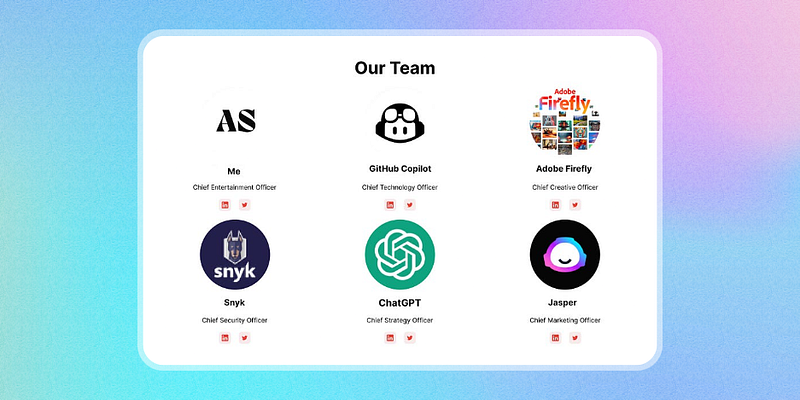
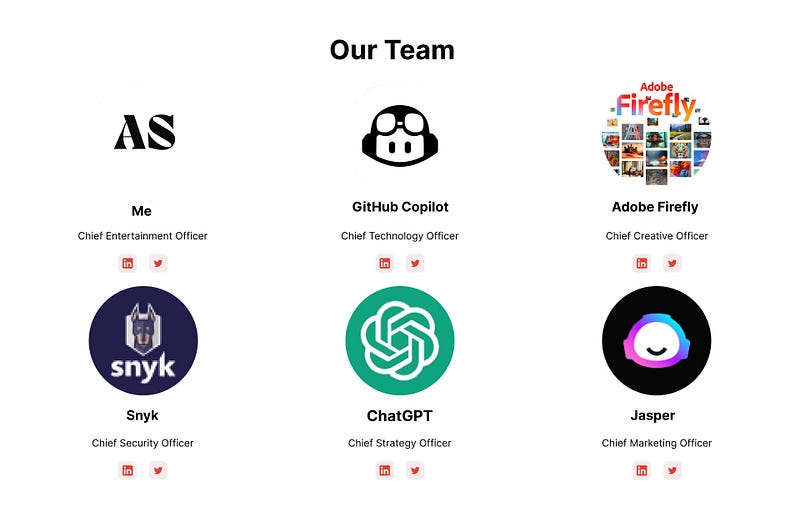
Every year the same saying goes: Building a SaaS startup is easier than ever. It would be rather weird not to be the case, but if your team looks like this I think you’re not really solving much with your product.
Opportunity to grow a following interested in AI (#norobotinfluencers)
If we think the crypto-fluencers were bad imagine they had AI-powered generation by their side back when NFTs were booming. Indeed it’s a field worth learning but constantly plugging different AI tools that “will change your life” got older quicker then “What is Web3”.
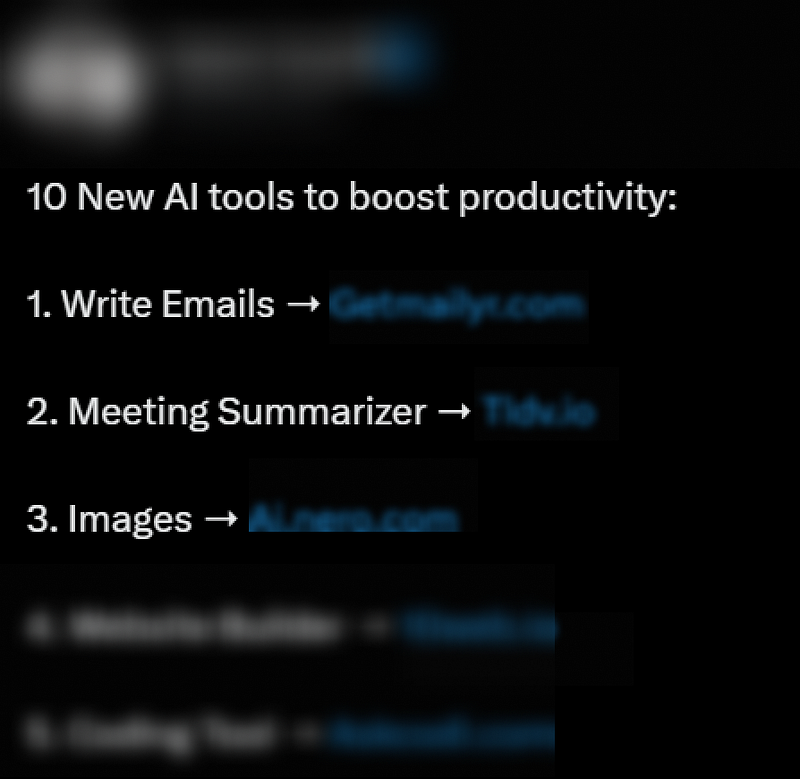
P.S.: Guilty as charged for hyping
New & promising startups to join (working like you’re at Twitter 2.0)
Joining an AI startup like it’s the .com bubble, what can go wrong? Kidding here, I think working in a fast-paced environment with high risk, high reward is great experience to have under your belt, obvs. if you can handle it financially and mentally.
The Bad
There are a couple debatably bad facts, such complete job market overhauls can cause a really volatile job market and not all AI startups will survive the economic downturns.
Decision fatigue and burnout from trying new tools
Keeping up with new tech has always been a problem for developers, there are some who still use JavaScript over TypeScript or even worse, TypeScript instead of the clearly superior Rust.
The new AI dev tools are still dev tools with a slightly larger boost to productivity, and heck most people still use VSCode nowadays instead of NeoVim (although my daily-driver is a fork of Atom).
Competitive social media
If you’re providing consistent quality content and a great personality, competition should not be a problem. Clearly I’m missing those.
It’s a well-known fact that the best moment to start a social media presence is now, unless you’ve already built a Java Time Machine with compact timezone navigation (no more IANA).
A volatile and risky job market
Following a period when society was locked at home in front of lizard-lead technology, a slight reduction of workforce was to be expected. The hundreds of thousands of jobs lost in the past year is anything but slight.
Although such volatility was not provoked by AI it does contribute by adding a whole bunch of jobs for startups that may not resist another economic downturn. Be careful when joining a product early on since it may not pan out.
Beginners using AI can lead to scary bugs or bad perf
Learning to code for the first time is often an awful experience (unless you’re using Python), being assisted by GitHub Copilot or ChatGPT and running that code will leave you dependable and lacking of the algorithmic/decision knowledge you would otherwise.
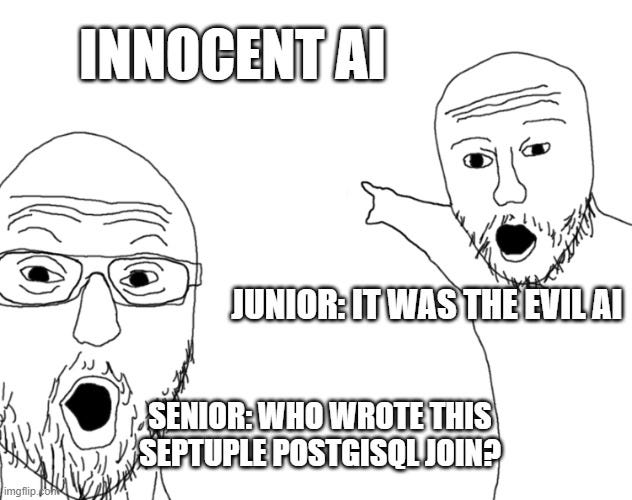
Even worse, heavily relying to generated code without much attention can lead to hard to see, yet damaging bugs, and this can be the case for juniors haphazardly copy-pasting AI code to impress their superior with their unmatched speed.
The Ugly
I saved the worst for last, and no AI won’t take all our jobs yet, but it will take over some jobs at least partially, the ugly thing is since IT is the one field that doesn’t require much physical labour, it’s more likely to be affected.
May replace some developers (only soy devs not Rustaceans since machines don’t like Rust)
With LLM-chaining and larger, more compact Codex-like models there are considerable chances that some positions will be less seeked as such workflows become more popular and developers get faster.
Complete takeover is still a few years down the line, until then we’ll likely do more pair programming assisted by AI and move to monitorization roles when that’s necessary, but some changes will definitely need manual intervention.
Major layoffs by companies looking to optimize for new tech (that or simply having overhired massively)
When tech is booming companies hire a lot to keep up with the demand, without precise calculations this leads to overhiring, when the good times end the cycle resets, AI got trendy exactly post such job crisis.
We can’t attribute any layoffs to AI displacing developers yet but when the peaked level of hype will go down some companies won’t be able to keep their employees.
Mandatory to keep up with new tooling (no worries cobolt devs are safe, no AI would wants to learn that)
JS developers should already be trained for this, either praising the new blazingly fast framework coming out daily or holding onto the sweet CoffeScript + jQuery combo.
Staying up to date on the endless stream of AI products is not a must, even if tech gets new shiny stuff every day it takes a long time until companies adopt, if ever.
The entry barrier to coding is lowered (people can simply ask ChatGPT and run the code without much knowledge)
Never give the client permissions to modify or design, even CMS access is something that shouldn’t be given lightly, imagine letting your client generate code with no prior experience. That is recipe for disaster.
Since more people are able to generate somewhat usable code, and decent solutions for algorithm interviews the entry bar and interview methods will have to change and maybe get tougher.
Safety concerns regarding running generated code
One day you decide to write a handy new encryption function for your already awesome API, instead of going through the docs you decide to give GitHub Copilot full control and it generates working code.
You say wow, AI is great! Time for some well-deserved CoD when you receive a notification that CI failed for your previous push. How can it be? The code ran well locally…
After a few moments of checking you find an inconspicuous, yet potentially fatal warning, one of the functions used to encrypt has been deprecated after it’s been proven to be broken within current computational boundaries.
You see there’s a clear replacement for it in the docs as it’s been updated and recommended for migration only a few months before, seems like AI suggestion is lacking knowledge past it’s training data and can lead to such unsafe suggestions.
Until AI code generation becomes aware of the specific version you are using and provides embeddings for that exact package, trusting AI is writing secure code blasphemous.
Let’s not forget that such tools read your code for context (until true homomorphic encryption comes around), therefore the concern of exchanging such secrets with an entity whose intentions are not exactly open nor algorithms open-source (looking at you OpenAI).
Conclusion
AI is a field with diverse, tangible applications compared to other trends in past years, its promise is immense and it will shift tech in an interesting direction so begs the question: will it take our dev jobs? Likely yes, but we won’t live to see it.
Do you have any questions or suggestions? Feel free to reach out! 🚀. If you want to stay updated on my future writings follow me on Medium or Twitter.
Disclaimer: Sizable parts of this article are satirical and no AI was used in the writing of this article to prevent potential bias