
AI is Not the Enemy
But it can be.
I’ve been asked to take pictures of unknown families in the street, been given children and dogs to hold while their parents pay the cashier — I’ve even been asked to watch someone’s purse while they went to the bathroom. It happens all the time. My husband says I should start a business called “Best Friend from High School” and charge $100 an hour.
All because my face is nondescript, safe looking, and most of the time, I’m smiling.
I’m not vain. I’m 200 pounds (plus or minus 30 depending on whether fresh catfish is in season). I’m also medium dark, have a deep black-brownish bob, and a light cream birthmark on the right side of my face. And yet, no matter where I go, people swear they went to high school with me. It’s flattering, because depending on who they think I am, there’s an element of trust. Strangers think they know me before I even open my mouth.
I have to admit that I like it.
With AI, that could change in an instant.
What is AI?
AI is artificial intelligence:
AI is, in a word, amazing. It can be used to find business solutions, it’s great for cybersecurity (it can analyze thousands of transactions a second, pointing out anomalies and detect trends that stop fraud), enhance customer service, and automate workflows. In addition, there are subsets of AI you may have heard of, such as machine learning, neural networks and deep learning. However, this is not a class, and we’re not going to go into all of that.
I will say this though — AI is not infallible, particularly in cases of human identification.
For example, during the week between Christmas and New Year, I ran into a UPS man in our community mail room. He thought I was his sister…and was getting ready to ask me what I was doing there. I couldn’t figure out why he was so stiff. He was ready to fight.
Then he apologized and showed me her picture. It was me without the birthmark…but we only saw one side of her profile. The birthmark I have could’ve been on the other side. Hopefully, she’s not a bank robber…
You see what I mean?
If real live people have problems with identification, AI will not necessarily be more accurate. After all, garbage in, garbage out (GIGO). Or we could simply say that the quality of output is determined by the quality of the input.
And there are racial components…to some people, brown and dark human beings look the same anyway. And an overzealous police officer, gunning for promotion, could put an innocent person in prison and throw away the key.
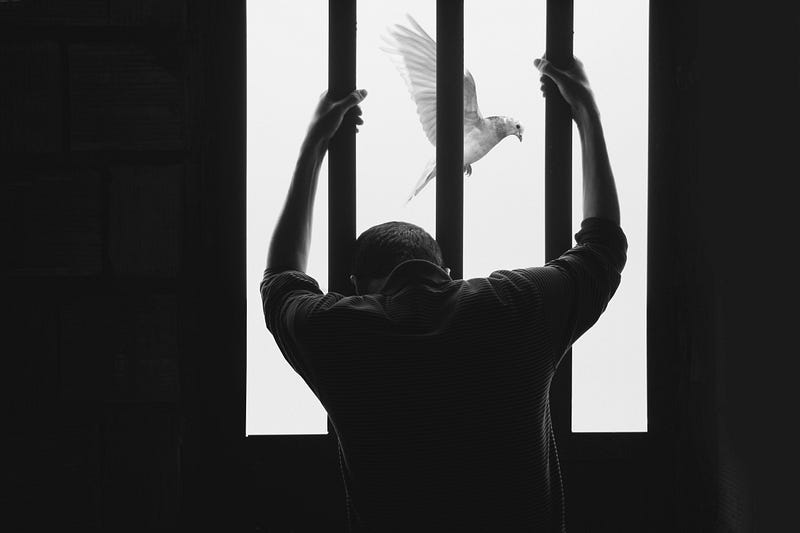
And who’s to say that it couldn’t happen to anyone, black, white, or brown? A lot of people I observe in Texas look like people I knew in California…
For that reason, IBM has a firm policy:
However, other companies have rushed in to provide AI facial identification products to law enforcement and even in areas where it is banned, it is secretly used anyway. And when that occurs, the rights of innocent people can be violated.
What are the biases of facial recognition?
As a woman of color, I have issues.
\The technology has faced backlash for years due to its proven inaccuracy, particularly with identifying the faces of people with darker skin.
The odds of false arrest are low.
But they exist. And as you can see, for someone like me they are much, much higher. My hairstyle is common, and my eyes and nose and lips are very ordinary. I accept that, and it’s perfectly OK — I am not easily offended.
But here’s what AI doesn’t get. It doesn’t necessarily analyze the scar on my forehead that I received when I ran into a stereo when I was four. I doubt that the eye of AI even “sees” it.
And that grandfather from India who’s visiting? AI doesn’t catch the twinkle in his eye when he sees his grandchildren. His ears may be shaped differently than the old rascal who filled his vehicle with gas and drove away without paying — in another state.
AI is NOT always right. But a lazy police detective may not search deeper or harder.
They’ve got AI on their side, and they think that’s enough.
So while I trust AI to see trends in retail purchasing, to analyze weather patterns in Des Moines, to visually check water quality in utilities, and cracks in a vehicle being built in a factory…it is not a go-to when it comes to identifying human beings. The stakes are too high, and mistakes can ruin lives — even lose them.
They’ve got AI on their side, and they think that’s enough.
If you’ve done nothing wrong, why worry?
Well meaning civilians say this all the time. But there are some mistakes that cannot be fixed. They really only say this because they never think that they or their loved ones could ever be in the crosshairs.
That job interview with your dream company? Squashed because some report (derived from AI facial identification) says you’re a suspected criminal.
How do you explain that?
You’re stopped by police who ultimately shoots you dead. Later, it may even be reported that you were armed! This, the police think, gives news viewers the warm fuzzies. So what?
As you can see, it’s legal to carry in Texas.
But you’re now six feet under because some report targets you as a dangerous Bostonian felon on the loose.
Except you’ve never been to Boston.
Where do you go to get your life back?
So while naivety about AI facial identification is comforting, even cozy, this is not the time to relax. You see, AI will cause even good people to override knowledge, experience, and common sense.
As a result, there is simply too much potential for harm.


