
technology, AI
AI in Agriculture: The Future of Sustainable Farming
Can artificial intelligence truly green our greens? Dive into the promising future of farming.
“The Earth does not belong to us: we belong to the Earth.” — Chief Seattle
Hello there, modern-day cultivator! The fields that have seen centuries of plowing, sowing, and reaping are now witnessing an unprecedented change: artificial intelligence. This blend of ancient tradition and cutting-edge tech brings forth a revolutionary era in farming and I’m very excited about it , we will have more foods thanks to AI.
Sowing the Seeds of AI: A New Age Dawns
The contact of AI within the rustic farming landscape might seem out of place at first glance. But remember, every great revolution began as a novel idea. AI promises to seamlessly combine precision, efficiency, and sustainability to agriculture, bridging the gap between technology and tradition.
imagine drones providing real-time aerial views, robotic systems ensuring perfect planting, and algorithms that use data to predict the best harvest times. The future is now it’s real we are not living in sci-fi movie , we are living in the future my friend.
AI’s Green Promise: A Bounty of Benefits
“We do not inherit the Earth from our ancestors; we borrow it from our children.” — Native American Proverb
1. Precision Agriculture:
Detailed Resource Management: With AI’s analytical capabilities, farmers can determine the precise quantity of water, fertilizer, or pesticides a specific crop patch needs. This can lead to significant resource savings, reducing the environmental footprint of farming.
Soil Health Analysis: Through AI-driven soil sensors, it’s possible to gauge the health of the soil continuously, ensuring that crops receive optimum nutrients.
2. Crop Health Monitoring:
Early Disease Detection: Using advanced image recognition, AI can identify the slightest changes in crop appearance, detecting potential diseases way before the human eye can.
Pest Prediction: AI can predict potential pest attacks based on weather patterns, historical data, and crop type, allowing farmers to take preventive measures.
3. Automated Farming Equipment, my favorite in this list :
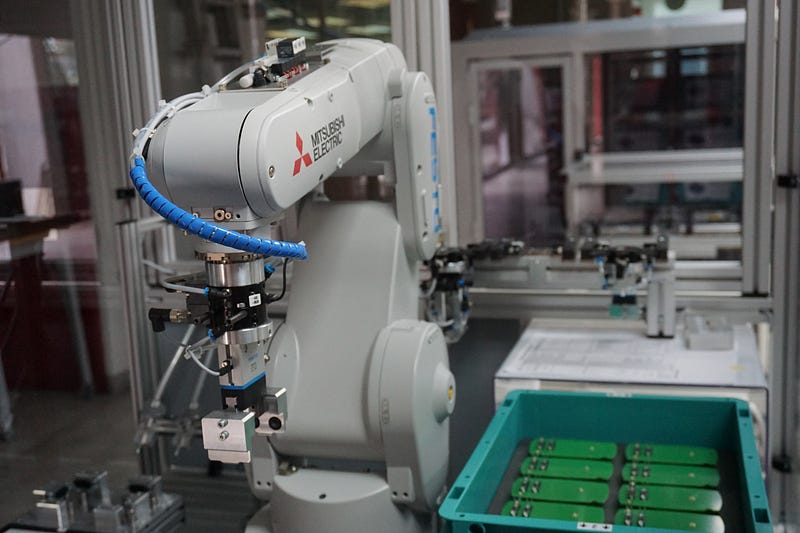
24/7 Operations: Robots, unlike humans, don’t tire. They can work around the clock, ensuring farming operations continue smoothly day and night.
Enhanced Accuracy: Automated machines can perform tasks like sowing seeds with unparalleled precision, ensuring optimal plant growth and reduced wastage.
4. Predictive Analytics:
Weather Predictions: By analyzing vast data sets, AI can predict weather patterns more accurately, helping farmers plan their activities better.
Yield Forecasting: With data-driven insights, farmers can get accurate yield predictions, aiding in market planning and pricing strategies.
AI’s Challenge: Making It Root in Every Field
The transition isn’t without hurdles. Skeptics, high costs, and adaptation challenges stand in the way. However, when the future promises so much bounty, these challenges aren’t insurmountable but mere stepping stones.
Germinating AI: Cultivating this Technological Shift
Education First:
Empowering Farmers: Initiatives that focus on educating farmers about the benefits and operations of AI tools can lead to faster adoption.
Local Demonstrations: Setting up pilot projects in various regions can provide live demonstrations of AI’s potential in farming.
Government and Private Sector Partnerships:
Subsidized AI Tools: Governments can offer subsidies or tax breaks for farmers integrating AI into their operations.
Research Grants: Encouraging research through grants can foster innovation tailored for agriculture.
Open-source Platforms:
Accessible Tech: Open-source AI platforms can democratize access, allowing even small-scale farmers to harness advanced tools.
Community Building: Creating forums where farmers can share insights, ask questions, and learn from one another.
Customized Solutions:
Regional Tailoring: AI solutions designed for specific climatic conditions and crop types can significantly enhance outcomes.
Crop-specific Algorithms: Different crops have different needs. Custom algorithms can cater to these individual requirements.
Weathering the AI Storm: Facing the Uncertainties
Like any journey, the path to integrating AI in agriculture has its twists and turns. From concerns over job displacement to the anxiety of relying too heavily on tech, the road ahead might seem daunting. But by complementing AI with traditional farming wisdom, a harmonious blend is achievable.
The Harvest: AI, the Future of Agriculture
As golden fields sway in the breeze, a new dawn beckons. The integration of AI means that farming isn’t just about traditional methods; it’s about evolving to meet the demands of a growing population while ensuring sustainability.
Embrace this future, making AI your steadfast ally in farming’s noble journey. Cultivate the future!
Thanks so much for taking the time to read! Your feedback means the world to me, so please share your thoughts in the comments. Everyone’s perspective is unique and valuable. And if you enjoyed this article enough to give it a clap, you’re absolutely amazing! ❤️
This article is for informational purposes only and should not be construed as professional advice