
AI FOMO in everyday business: Is it still okay not to use AI?
Use cases for artificial intelligence – should entrepreneurs now force themselves to use AI software?
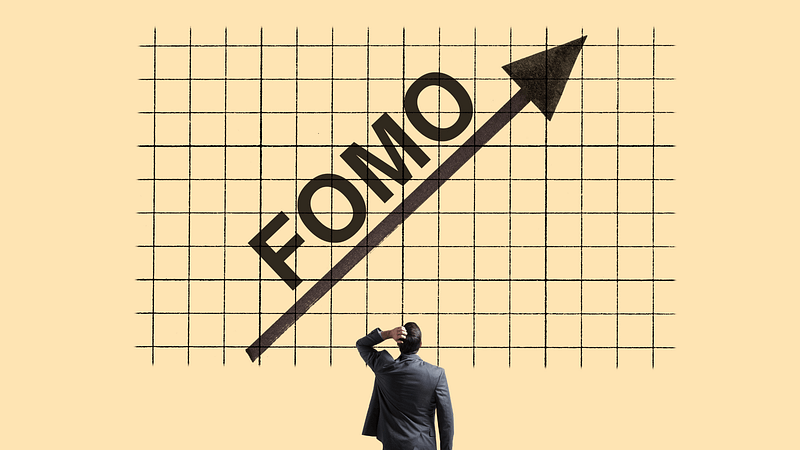
With ChatGPT, we all experienced a real iPhone moment! Since then, artificial intelligence has not only become ubiquitous but also an integral part of business in every aspect.
The big promise is increased productivity and possibilities that we didn’t have before. As a result, many founders and self-employed individuals are now faced with the question: Should I use AI now and for everything in my business? Or will I be left behind if I don’t go all-in?
Meaningful use cases and AI FOMO (fear of missing out)
The mind thinks, technology supports.
I am a big fan of technology and see how it enables our modern work environment. Simple and complex tools take on tasks that increase our productivity by handling certain things and making them possible in the first place.
In my everyday business life, I use a lot of tools and felt well-equipped until the end of 2022. But since ChatGPT caused a wave that continues to build up to this day, I have been regularly testing AI tools and trying to understand and evaluate how they can help me in business. Primarily, to not miss out on anything.
The pressure increases
In the media world, an image is becoming more and more established where one could become afraid of being left out if not actively used.

Whether on social media or in blogs. Looking the other way does not seem to be an option any longer.
Meanwhile, the other half stirs up fear and quotes opinions from experts who warn of the AI apocalypse.
At the same time, a huge software industry is emerging, throwing new solutions onto the market every day and providing us as entrepreneurs with new opportunities.
Either way, AI is trending and the question of its meaningful use in everyday business is totally justified. But where exactly?
AI for Text, Image, Video & Audio
These 4 areas that have become the core of AI applications for most people playing around with it:
- Text
- Images
- Videos
- Audio
Of course, AI can also be used to plan trips, create software, manage financial portfolios and much more. But with these four areas, we should all immediately think of so-called prompts (instructions for AI) with which we can feed an AI to create awesome stuff.
New job: Prompt Writer
With the rise of AI, a new job has emerged: Writing prompts.
Prompts are longer or shorter instructions for AI applications that are used to give commands to AI software.
The special thing about prompt writing is that with AI, input and output no longer fit together in a way that is clear and repeatable for humans. Each time, a new output is created that creates a certain surprise effect.
Prompts are like cooking recipes that I use and then hope the cake tastes good.
The more I practice Prompt Writing, the more predictable the results become. It’s a skill that can be worth a lot, depending on the use case. If you can master prompts, you can impress.
Particularly impressive results can currently be achieved with, for example, the text to image AI like from Adobe Firefly, Midjourney or even Canva*.
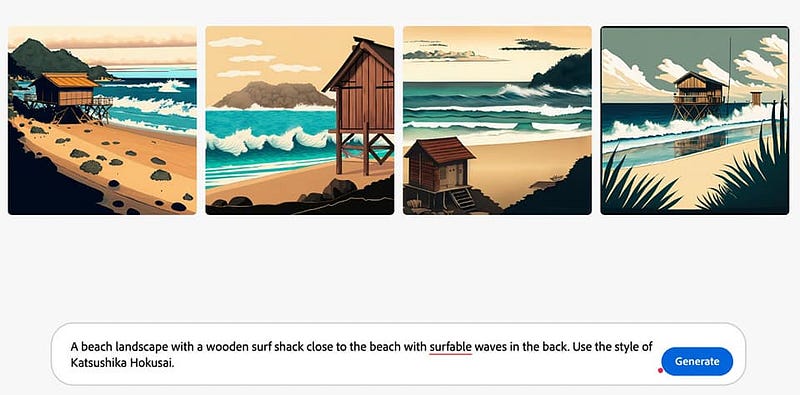
In other places, entire blog posts are generated with AI.
So what use cases do we really see in business?
It’s really impressive what AI technology can do now. However, with all the possibilities, the question of meaningful uses always remains for me.
Example 1: Images
In my everyday life as a blogger, I often create images, e.g., cover images for blog posts or YouTube videos. So far I’ve used Canva for this, specifically a mixture of templates and the simple user interface, which make it possible for me as a non-designer to incorporate basic rules of aesthetics, and actually make images usable.
Just because I can now create stunning images with Adobe Firefly and Midjourney, I don’t yet see a use case other than writing about making great images.
Then there is the question of copyright. Who is the copyright holder? AI or Prompt Writer? Or no one? Can AI have any rights at all?
Use cases could be useful for photographers or graphic designers, where AI helps to improve image quality. This could be removing an unwanted object in the image, enhancing content for specific formats, improving light and color, etc.
Example 2: Audio
With audio AI, this approach becomes even clearer. If you are not a professional musician and are in a creative hiatus, you don’t need new beats or suitable lyrics.
However, it could be exciting if we use AI to improve the quality of our podcasts, remove noise in videos, or perhaps automatically add jingles or sound effects to videos to make them more entertaining.
Example 3: Text
As a blogger, I am particularly critical when it comes to text creation. Anyone who writes texts online is trying to achieve SEO success or improve conversions through better product descriptions. These are all legitimate goals, and there are many tools that support them, e.g.
My criticism with all tools, however, is the lack of originality. They say that people like to buy from people. In the online world, you could adapt the tagline a bit and say:
People like to buy from trustworthy brands that they can identify well with.
A brand with which you can identify well as a customer and as a human being! AI does the exact opposite. Even if AI texts are instructive in terms of content or even factually correct, the question of originality remains.
So instead of formulating a text themselves and accommodating their own opinions and tone, many try to improve their prompt writing skills instead. All with the goal of compensating for their own writing weaknesses and creating more results in less time (AI as a productivity booster).
Even if Google can currently be fooled with this, it becomes difficult with humans, especially with journalistic content. An AI text may be created faster than one written by hand. But it will never have the personality that a human can put into a text — regardless of the topic.
From my point of view useful text AI can help to improve handwritten texts. For example, if you have a spelling weakness, use tools like DeepL Write or the Chrome extension LanguageTool. If SEO texts are not your strong point, have a text checked and optimized by AI software. Do the same, if you find it difficult to get to the point.
Example 4: Video
There is AI that can create videos! Whether for reels, YouTube, online courses and more. But video is one of the formats that conveys the most personality. After all, there is usually a human being in front of the camera.
Instead of relying on video generators, I see use cases in the post-production of videos. There are applications that can, for example, automatically cut videos or extract content from long videos into short snippets. The content here basically remains an original, but the work afterwards becomes much more efficient.
The big opportunity: Be the original, stay the original
With all the possibilities that AI opens up for us in our everyday lives, I also see, above all, a great opportunity for those who create content.
Instead of trying to do what everyone else is doing, everyone should try to stand out through individuality and personality. No one is helped if the professional world becomes a more homogeneous soup of experts. Instead, keep reminding yourself that people want to buy from other people. Be the original, be the brand.
Also, don’t use AI to generate content for you. If, let it help you compensate for weaknesses (e.g., writing or creative weaknesses) or to make repetitive post-production tasks easier (e.g., video editing, SEO optimization). Think of AI as an assistant that improves YOUR work, but doesn’t replace it.
Like this post? Subscribe to my profile:
Disclaimer Links with * are Affiliate Links. If you follow that link and make a purchase, the author will be rewarded by the company. This has no impact for customers.