
AI-Assisted Design: The Future of Hospital Architecture

Artificial Intelligence is rapidly transforming industries across the board, and architecture is no exception.
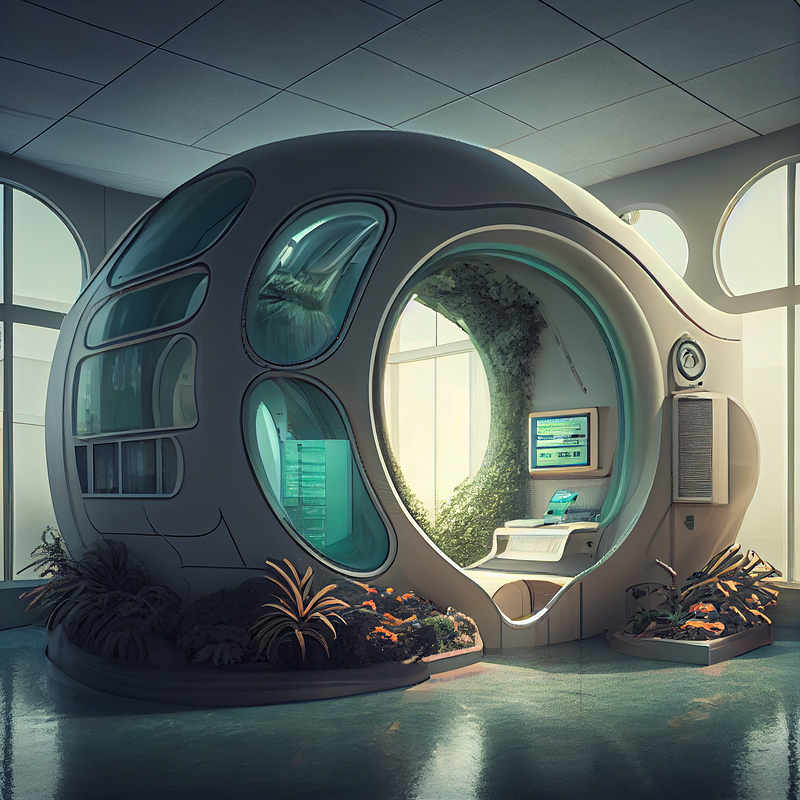
In the field of hospital design, AI-assisted design offers new opportunities to create environments that are both functional and healing.

The importance of hospital architecture cannot be overstated. A well-designed hospital environment can have a significant impact on patient outcomes, reducing stress and promoting healing. Research has shown that natural light, access to nature, and a comfortable and relaxing atmosphere can help patients recover faster.
In the past, hospitals have undergone several design transformations, starting with Florence Nightingale’s pavilion plan with its emphasis on natural light and cross-ventilation.
However, as cities became more densely populated, these large wards became impractical. The focus shifted towards sterile spaces, before evolving into stripped-down, office-like buildings focused on efficiency.
But with AI-assisted design, hospitals have the opportunity to marry data-driven design with empathy for patients.
AI algorithms can analyze large amounts of data and provide insights into patient needs and preferences, allowing architects to create spaces that are both functional and healing. For example, AI can help architects optimize the placement of windows for maximum natural light or design spaces that promote privacy and calm.
In addition, AI can also aid in the construction process, helping architects and engineers to collaborate more effectively and identify potential problems before they occur.
This can lead to more efficient and cost-effective construction, while ensuring that the final product meets the needs of both patients and healthcare providers.
In conclusion,
AI-assisted design has the potential to revolutionize hospital architecture, leading to spaces that are not only functional but also healing. As the healthcare industry continues to evolve, the role of AI in architecture will become increasingly important, helping to create a better future for patients and healthcare providers alike.


