
AI and Modern Technology
The rapid pace of developments with platforms such as ChatGPT unsettles many. Leaders in the field are clear about what things could go terribly wrong. Much is being said about regulations, and I think this is very important.
ChatGPT like other platforms enforce guidelines for use, but these do not always work properly.
I have typed in questions deemed sensitive, and been refused answers, only to see seconds later some fairly detailed responses as I tried to manipulate prompts as part of my own experimentation and investigation of this platform.
Recently, some intrepid users discovered that the same degree of regulatory control differed from language to language, as you might expect from an English-based system.
For me the reality is that these tools will be game changers, and will aid us tremendously, however, I say this with several caveats.
First, and fundamentally, is the issue of control. I have seen the suggestion that AI might in time write its own code and change in ways we cannot imagine today, or anticipate.
The second point that I think people overlook is the fact that once everyone is able to, and actually uses AI, people will all be able to do the same kinds of things, things that they could never have done before, and do them better than most humans can do now.
You can argue that augmented humans will become more creative, given the new technologies to do things they never could do before.
Everyone will have access to the same tools, and individuals now who have competitive advantages given their skill levels, will no longer have that competitive edge. Once everyone is working on the same level, regardless of personal skills: take programming as one simple example, or drawing magical pictures as another, human creativity will change from acts of personal creation to pushing buttons (writing prompts), in most cases.
The important point is that everyone will be working from the same basic level and it is hard to see that the gloss of AI survives as everything fades and becomes normal and commonplace. We will, in time, simply take it for granted, and think, little more about it. Assuming we survive all these changes.
However, there will be some very creative people who will use these platforms to do things that ordinary mortals cannot. Although AI in time might also be able to do that.
Personally, as a tool for human development and self-expression, I think AI can fundamentally change us, and help transform us into something more.
In the same way that calculators have allowed people to do mathematical problems that once only sophisticated mathematicians could have done.
At the same time, there is a downside in that we have lost something of our own mathematical prowess as we have given way to these small machines.
In a similar vein, you could argue that spell checkers today, are making many incapable of spelling even basic words. On the other hand, you could also argue that when they see the corrections, they are slowly learning how to spell better. As we say here in Australia, you could have two bob (1) either way (2).
Technology has changed us and changed our world, and right now it is changing so fast, that no one can predict where it might take us.
The following is meant humorously, however, I am uncertain whether in the context of AI, it is funny at all.
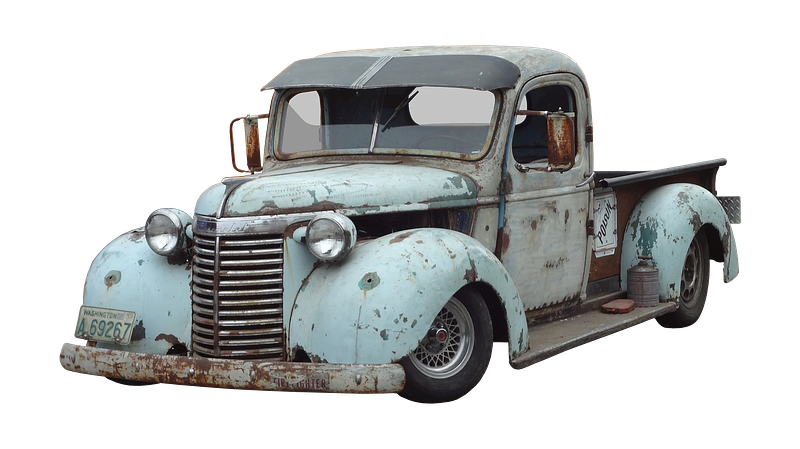
Recently, I was watching a program called QI (Quite Interesting), and the subject was the Farmers’ Anti-Automobile Association of Pennsylvania. Automobiles significantly disrupted the pace and practice of rural life in the early 20th century. The “rules” we are talking about here are not laws in themselves, but conditions that frightened people tried to enforce to minimise the perceived negative impact of cars on their world.
These rules are often cited humorously to illustrate the resistance to the introduction of automobiles, particularly in rural America. It seems that the rules quoted in QI are exaggerated or fictional accounts intended only to contrast the fears of the new technology. These accounts are commonly discussed in articles about the history of automobiles, but it must be borne in mind that their historical accuracy is debated.
Some of the laws that follow border on the absurd by today’s standards but at the same time, they provide us with a window into the past, and how people at that time feared the disruptive consequences of automobiles in early 20th-century rural America.
We can see this, in terms of the discussions around AI today. On one hand, there may be an overreaction to new technologies, but at the same time, it is possible that there might be existential threats that we downplay at our own risk. This is simply one humorous take on change.
The following two paragraphs were taken from that broadcast, and as they purport to refer to actual historical records, my understanding is that copywriting law does not apply to these particular details.
Extracts:
If a car is travelling on country roads it must send up a rocket every mile and wait for 10 minutes for the road to clear. Then the driver can proceed with caution, blowing the horn, and firing of Roman Candles.
If the driver sees a team of horses approaching, it must pull over to one side of the road, and cover the machine with a blanket or a dust cover, which should be painted or coloured to blend into the scenery. In case a horse is unwilling to pass a car on the road, the driver of the car must take the machine apart as rapidly as possible, and conceal the parts in the bushes.
I decided that I would investigate further, and this is what I found out.
The Farmers’ Anti-Automobile Association of Pennsylvania actually existed and was a reaction against automobiles. While they had no legal standing, the rules they wanted to be enacted stemmed from their fear of how cars might change country life and traditions. These are some of the ‘rules’ that appear to have applied briefly in certain places in America.
- Speed Limits: The enforcement of low speeds especially in farmlands or rural areas.
- Warning Signals: Drivers were required to give warning signals, and to stop and give way to livestock, or buggies and the like.
- Liability: They advocated for liability laws enforcing responsibility for damages to livestock or property.
- Road Use Fees: Proposed toll fees for using the roads, because they were built for farmer's use.
- Designated Routes: Prescription against automobiles travelling in certain places, and the desire to keep them off rural roads entirely.
- Time Restrictions: Restriction of cars to limited time periods.
- Mandatory Stops: Must stop at crossroads and turns in farming areas.
- Flagmen: One idea, was that flagmen should preceed cars, walking, sometimes as much as a quarter of a mile ahead to warn pedestrians and carriages.
- Licensing and Registration: Stringent licencing requirements for owners.
- Local Governance: The association wanted the power to enforce additional rules as local communities saw fit.
Conclusion
Today this all seems an overreach, a misunderstanding of the new technology, compounded by ill-formed fears, and it illustrates to us how we often react with fear to change. However, in the past, when there has been change, there has been suffering. It is not enough to say that for the old jobs lost, new jobs were created. This is undoubtedly true, but speaks nothing of those poor souls who suffered and fell by the way when they lost their jobs, and their worlds were destroyed.
With change, there is always a human cost.
There may be some who think today that the demand for industry regulation is unnecessary and overblown.
Others, like myself, disagree.
What do you think?
I would love to hear what it is about this debate that moves you.
- Two bob in older Australian and British usage is referred to as 20 cents.
- An even bet.
Copyright ©️ 2023 Philip Temple. All Rights Reserved.
Finally, I would deeply appreciate any small contributions that you might be able to make to help me on my writing journey.


