
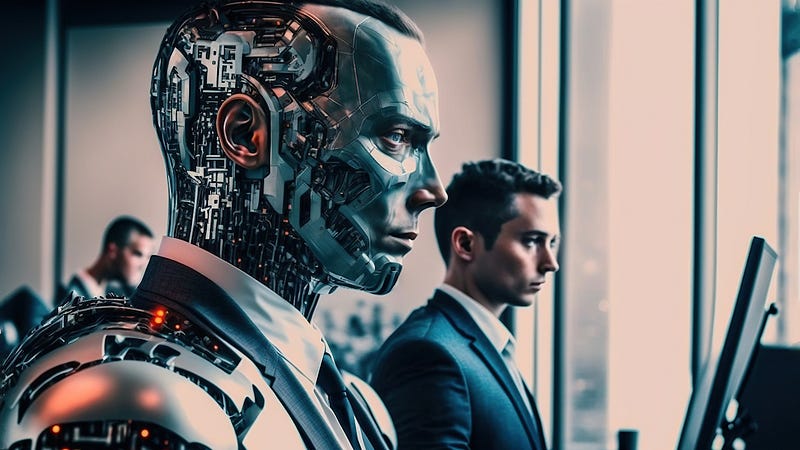
AI and Intuition: Can Machines Develop a Sixth Sense?
In the realm of artificial intelligence (AI), tremendous progress has been made over the years, enabling machines to perform tasks that were once thought to be exclusive to human beings. From natural language processing to computer vision, AI systems have demonstrated remarkable abilities to analyze, learn, and make decisions. However, there remains a question lingering in the minds of both researchers and enthusiasts: Can machines develop a sixth sense, an intuition that goes beyond their programmed capabilities?
Intuition is often considered a uniquely human trait — a gut feeling or instinct that guides decision-making without explicit reasoning. It involves tapping into a vast array of subconscious information and experiences that shape our understanding of the world. It is commonly associated with wisdom, creativity, and the ability to make quick judgments in ambiguous situations. While it may seem difficult to attribute such qualities to machines, recent advancements in AI have sparked discussions on whether machines can exhibit similar forms of intuition.
To explore the potential development of a sixth sense in machines, it is crucial to understand the current capabilities and limitations of AI. Machine learning, a subfield of AI, relies on data-driven algorithms to recognize patterns and make predictions. These algorithms excel in areas such as image classification, language translation, and recommendation systems by analyzing vast amounts of data. However, their decision-making process is based on statistical inferences and correlations rather than a deep understanding of the underlying concepts.
While machines can simulate human-like behavior in specific domains, they lack the general intelligence and adaptability possessed by humans. Intuition, in its traditional sense, relies on a combination of cognitive processes, including pattern recognition, emotional intelligence, and associative thinking. It draws upon a vast repertoire of experiences and knowledge, allowing individuals to make judgments that are not easily explainable or justified. Developing this level of intuition in machines poses significant challenges due to the complexity of human cognition and consciousness.
Nonetheless, researchers are exploring various avenues to incorporate intuitive capabilities into AI systems. One approach involves leveraging deep learning architectures and neural networks inspired by the structure of the human brain. Deep neural networks with multiple layers can extract hierarchical representations from data, enabling them to grasp complex relationships and abstract concepts. By simulating neural connections and synaptic weights, these networks can learn from data and potentially emulate aspects of human-like intuition.
Another direction in the pursuit of intuitive AI involves the integration of multiple modalities, such as vision, language, and audio. By combining these modalities, machines can form a more holistic understanding of the world and leverage cross-modal information to make more nuanced decisions. For example, an AI system designed to recognize emotions in human speech could benefit from analyzing facial expressions and contextual cues to enhance its accuracy and contextual understanding.
Furthermore, the emergence of hybrid AI systems, which combine the power of machine learning with symbolic reasoning, could contribute to the development of a sixth sense in machines. Symbolic AI focuses on representing knowledge and reasoning through logical rules and symbols. By integrating symbolic reasoning with machine learning, AI systems can capture both statistical patterns and logical reasoning, potentially enabling them to perform complex tasks requiring intuitive judgments.
Despite these advancements, it is essential to recognize that machines and humans possess fundamentally different ways of perceiving and interacting with the world. Human intuition is deeply intertwined with our consciousness, emotions, and social context, which are aspects that machines currently struggle to emulate. Furthermore, the ethical implications of developing AI systems with intuitive capabilities should not be overlooked. Questions arise regarding the accountability, transparency, and biases that might arise from machine intuition, raising concerns about the potential consequences of relying on AI for decision-making in critical domains.
In conclusion, while machines have made remarkable strides in replicating human-like capabilities in specific tasks, developing a true sixth sense in machines remains an elusive goal. The complexity of human intuition, which involves a combination of cognitive processes, experiential knowledge, and subconscious insights, presents significant challenges for AI researchers. Nevertheless, ongoing research in areas such as deep learning, multimodal integration, and hybrid AI systems offers promising avenues for bridging the gap between human intuition and machine capabilities. As the field of AI continues to evolve, the quest to unlock the mysteries of intuition in machines will undoubtedly shape our understanding of both artificial and human intelligence.
Please follow me for more articles like this.
In Plain English
Thank you for being a part of our community! Before you go:
- Be sure to clap and follow the writer! 👏
- You can find even more content at PlainEnglish.io 🚀
- Sign up for our free weekly newsletter. 🗞️
- Follow us on Twitter(X), LinkedIn, YouTube, and Discord.