
AI, Alexa Voice, and The End of American Accents
I love regional accents. It doesn’t matter where the accent is from; I am always interested in listening to people who speak in a way that differs from how I was raised. Even the sound of voices that speak other languages intrigue me, and I have always been quite adept at recognizing the speaker’s origins based on a few phrases or local tones. Despite being able to recognize all types of regional accents, I always assumed that I didn’t have one. That was until I moved to Georgia.
In the Peach State, I learned that how I talked and behaved was just as much a reflection of my statehood as my childhood. As a kid growing up in New York, I took for granted the brusque manner of speaking and behaving with others — the silence and solitude in a sea of individuals. In New York, the only people you talked to were friends and family, the people you knew and trusted. In Georgia, everyone spoke to you as if you were family. They asked for your opinion and about your day, not just to be polite. They wanted to know how you were and to bring you closer to the warmth of southern living.
As a native New Yorker unfamiliar with this particular brand of hospitality, my mother was sure that it was all a scam. In addition, the thick southern accents were too much for her to comprehend, so every time we went to the grocery store, my sister and I became the unofficial translators and conversationalists with the store employees. Being in the public school system, we had to adapt quickly to these mannerisms and learned on the ground how to engage with this new community of folks. Assuaging my mother’s suspicions, we would explain that nobody was trying to mug us at the Publix, but people were conversing casually.
Even as I have moved across multiple states, being in Georgia has always felt more like home than being in New York. Say what I want about the strange intimacy of Southern hospitality or the forced familiarity of living in Atlanta, I miss it when I’m gone. But, listening to the music and sounds of Southerners is one of the ways that I stay connected to the American South. This is why I have been especially interested in recent research and news headlines discussing the slow disappearance of southern regional accents.
The New Generation of American Accents
According to a 2023 study publicized by Linguist Margaret E.L. Renwick, PhD., an associate professor at the University of Georgia, younger generations no longer adopt the southern drawl of their elders. Instead, as many young Southerners attend college or engage more with social media, they tend to adopt a pan-regional American accent more than the distinct regional accents that states like Georgia are known for. The researchers determined this through media archeology or by deep diving into decades of recordings and media texts that the University had collected. The researchers then traced the unique characteristics of the Southern drawl and regional dialects from these media records and their disappearance across generations.
While there are many reasons for the fading of southern regional accents, something that interested me while reading and listening to interviews about the study was the idea that language is not just cultural but also aspirational. In an interview with NPR’s Weekend Edition, Margaret Renwick states that:
“Language is aspirational. So we aim at what we want to sound like. That’s definitely true. On the other hand, little kids don’t learn language from social media. Kids acquire language from their parents, from their caregivers. And so that is our earliest linguistic input that helps us learn our native language. Then, once kids get into school and enter adolescence, they emulate their peer group. And so we think that’s where language change from generation to generation really takes hold.”
She goes on to state that younger generations have now adopted a pan-regional American accent that is more similar to “California English,” this particular way of speaking is also finding its way to several major cities across the United States. While I think it would be interesting for the researchers to look into the role that migration patterns and cultural geography have on the popularity of California English, as a social media researcher who has moved to the state, I can’t help but wonder how much influence content creators have on the adoption of this new way of speaking.
Algorithms, AI, and the Adaptations of Alexa Voice
In studying user-generated content, something ubiquitous amongst influencers across the United States is the almost inevitable move to Los Angeles. This exodus out west is even more common amongst influencers that build their brand and audience in rural towns, the Midwest, or the South. In the early days of social media, Los Angeles was not only the home of Hollywood (and therefore, opportunities for creatives and content creators who wanted to break into film, television, or music) but for those who wanted to build a social media backed brand, LA was the home of creator hubs like YouTube’s Maker Studios and potential collaborators.
As platforms like Instagram and TikTok have secured content creation as a viable career path, California has also become a popular locale for influencer houses, where content creators can gather under one roof to push out videos and garner brand deals and more significant influence. In this sense, California English is not just a regional accent; this dialect represents social capital within the most popular media production and consumption realms. Especially thinking about accents as aspirational, it is not surprising that younger generations are invested in adopting the most popular accent in mainstream media.
Additionally, as California continues to be a central content hub for creatives and the culture industries, speaking in a pan-regional American accent also means more recognition for your content. As I have previously discussed, the natural language processing algorithms (NLPs) that undergird most social media platforms are used to regulate content and decide which content should be promoted. Therefore, NLPs only work well when they can accurately hear and analyze the words communicated within online content.
However, in listening to and analyzing communication from different cultures, we see the issues with these algorithms. In the article “Racial disparity in natural language processing: A case study of social media african-american English” by Su Linn Blodgett and Brendan O’Connor, the authors note that: “Linguistic production is a critically important form of human behavior and a major class of artificial intelligence algorithms — natural language processing, or language technologies — may or may not fairly analyze language produced by different types of authors.”
The primary example that the article points out is that NLPs are much better at recognizing and transcribing what they believe are male voices versus ”Female” voices. I put that in quotes because I would also argue that NLPs are probably not that good at identifying the gender of a voice in the first place, but there is a specific tone and timber of voice that they have an easier time recognizing. If you have ever traveled to a foreign country or tried to translate your language assignment for a class, you also know that NLPs are not great at translations. Additionally, the systems are not very good at understanding communication from English Language Learners (ELLs).
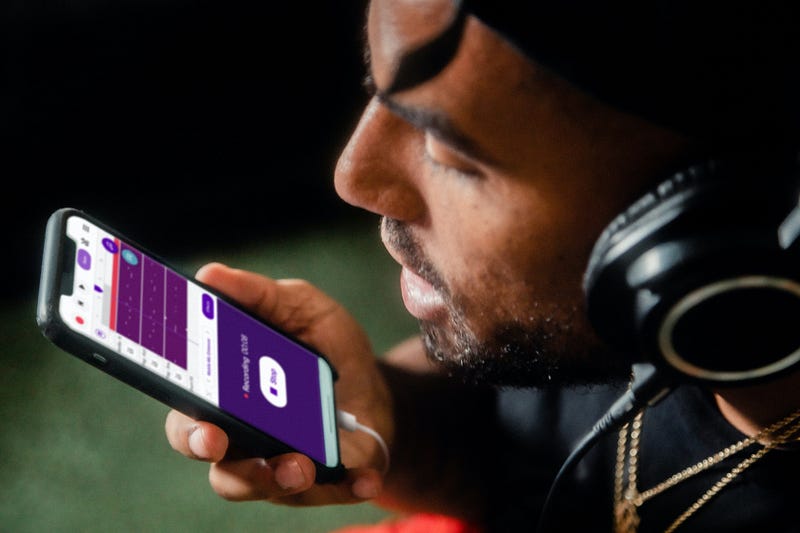
And while one part of this is the languages themselves, another part is how people speak when English is not their only language. This also speaks to another area where NLPs have issues, which is when listening to people that have specific accents to their voice or even a non-normative tone. I recently watched a TikTok of an Afro-Latino man performing what he calls his “Alexa voice,” which is like code-switching for AI. When talking to Alexa or Siri, he changes his tone of voice and removes his accent because if he doesn’t, the virtual assistant won’t understand what he’s saying. Many ELLs report having this experience with technology, as well as people who are primarily English speakers but don’t have the standard neutral accent.
NLPs also need help comprehending popular speech patterns and phrases within more diverse communities, like African-American Vernacular English (AAVE). Consequently, it is unsurprising that California English and the pan-regional American accent proliferate amongst younger generations because young people are adopting technologies that work best for people with specific dialects and vocal tones. Despite the importance of maintaining one’s linguistic culture, there are social benefits to adopting the linguistic norms of digital platforms. Additionally, the popularity of using “Anchor Voice” or even “NPR voice” amongst journalists shows that a pan-regional American accent is expected across mainstream media and significantly influences our ability to hear, understand, and communicate across diverse regional accents.
Aurality, Accents, and Intercultural Competency
This brings me to another trend I have seen in studying online comments on social media platforms. A typical comment, especially on the content of musicians and actors, is the inability of younger generations to recognize accents as an English dialect representing a region or culture. Younger people attribute specific accents to individuals instead of locales.
For example, instead of stating that an artist has a Southern accent or an accent from a specific state or region, their accent will be attributed to another artist from the same place. In this sense, the distinct accents of cities like Atlanta or Houston have disappeared from the minds of younger media consumers outside those regions. They have now been replaced with the voices of artists like Big Boi or Beyonce, whose voices are synonymous with the region’s sound.
Consequently, this also leads to accusations from uninformed listeners, who assume that everyone with a regional accent is copying their favorite artist. Therefore, I have wondered whether we should be thinking about the implications of the disappearance of regional accents and their causes and the seeming inability of younger generations to recognize these accents. Especially as we call for teaching media and digital literacy amongst students, we should also have more calls for developing students’ aural skills as an essential part of developing intercultural competency.
As artificial intelligence is primed to take over the automation of human voices in customer service roles across the globe, there will be even fewer opportunities for individuals to experience listening to accents that differ from their own. This push has also been attributed to the number of consumers complaining about comprehending accents that differ from the traditional American or English accent (another example of the need to teach intercultural competency across generations). Therefore, I hope this post will spark your curiosity about regional dialects and ensure these unique accents stay in the media and our shared cultural lexicon.


