
Agriculture of the Future: Harnessing Technology for a Sustainable World
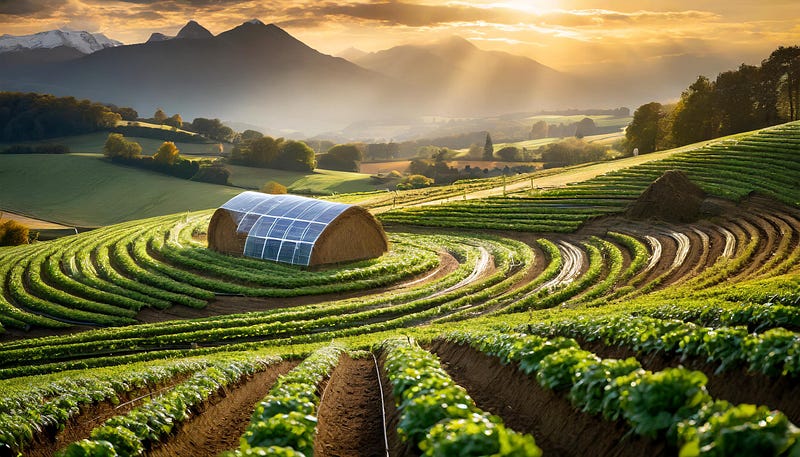
In the face of escalating environmental challenges and a rapidly growing global population, the future of agriculture stands at a pivotal crossroads. The traditional practices of farming, while rich in heritage and critical in feeding billions, are increasingly unsustainable in their current form. This article delves into the transformative role of technology in shaping the agriculture of the future — a future that promises reduced carbon emissions, improved air quality, and a more efficient, resilient food production system.
The Emergence of Precision Agriculture
Precision agriculture is at the forefront of this transformation. Utilizing advanced technologies such as AI, machine learning, and IoT (Internet of Things), precision agriculture enables farmers to optimize their practices to the needs of each plant. This approach significantly reduces the waste of resources like water, fertilizer, and pesticides, which in turn diminishes the environmental footprint of farming.
AI and machine learning algorithms analyze data from satellite imagery and field sensors to provide insights into crop health, soil conditions, and weather patterns. This data-driven approach ensures that crops receive exactly what they need, precisely when they need it, enhancing yield while minimizing environmental impact.
The Role of Vertical and Urban Farming
As urban populations swell, vertical and urban farming present innovative solutions. These methods utilize controlled environments in urban settings to grow crops, often in stacked layers, thereby reducing transportation emissions and land use. Hydroponics, aeroponics, and aquaponics are key technologies here, enabling plant growth in nutrient-rich water without soil, which cuts down water usage by as much as 70% compared to traditional farming.
Integration of Renewable Energy Sources
The integration of renewable energy sources in agricultural practices is a game-changer. Solar and wind energy can power farm operations, reducing reliance on fossil fuels. This shift not only cuts down CO2 emissions but also insulates farmers from the volatility of energy prices.
Advancements in Genetically Modified Crops
Genetically modified (GM) crops represent another crucial element. By altering the DNA of crops, scientists can create varieties that are more resistant to pests, diseases, and extreme weather conditions. This biotechnology has the potential to reduce the dependency on chemical pesticides and fertilizers, contributing to lower CO2 emissions and better air quality.
The Impact of Robotics and Automation
Robotics and automation are set to revolutionize labor-intensive farming practices. Drones for aerial monitoring, autonomous tractors, and robotic harvesters can significantly reduce the time and labor required for farming. These technologies not only make farming more efficient but also help in reducing emissions from farm machinery.
The Promise of Enhanced Supply Chain Efficiency
Technology also plays a pivotal role in enhancing supply chain efficiency. Blockchain technology, for instance, can create more transparent and efficient supply chains, reducing waste and ensuring fresher produce reaches consumers. AI-driven predictive analytics can optimize distribution routes, further cutting down carbon emissions.
Challenges and Considerations
While the potential of technology in transforming agriculture is immense, there are challenges. These include the high initial costs of technology, the need for farmer education and training, and concerns around data privacy and security. Moreover, there is a need to ensure that these technological advancements are accessible to farmers across the globe, including those in developing countries.
Conclusion
The agriculture of the future, powered by technology, holds the promise of a more sustainable and efficient food production system. It offers a pathway to reduce our environmental footprint, improve air quality, and feed a growing population sustainably. As we embrace these technologies, it is imperative to address the accompanying challenges to ensure that the benefits of agricultural innovation are realized globally. The future of agriculture is not just about producing more; it’s about producing better, in harmony with our planet.
Visit us at DataDrivenInvestor.com
Subscribe to DDIntel here.
Have a unique story to share? Submit to DDIntel here.
Join our creator ecosystem here.
DDIntel captures the more notable pieces from our main site and our popular DDI Medium publication. Check us out for more insightful work from our community.
DDI Official Telegram Channel: https://t.me/+tafUp6ecEys4YjQ1