avatarWorld As One 4PEACE

Free AI web copilot to create summaries, insights and extended knowledge, download it at here

4166

Abstract

a Alchapar</a> on <a href="https://unsplash.com/?utm_source=medium&amp;utm_medium=referral">Unsplash</a></figcaption></figure><h1 id="d669">Bayer & Corteva Will Compete for Global Soybean Market Share</h1><p id="9bfa">Agweb is a premier Farm Journal covering all of the aspects of global agriculture markets and commodities. On 19 September 2023 the journal wrote about<b> <a href="https://www.agweb.com/news/business/taxes-and-finance/corteva-now-beating-out-bayer-companys-market-share-surges-soybeans">the competition between Bayer and Corteva for global soybean market share</a></b>, since both of the companies produce market-leading herbicides and seed technology for farmers all over the world.</p><p id="9bf2">According to Jim Wiesemeyer, writing for Agweb:</p><blockquote id="0403"><p>“Together, Bayer and Corteva now control approximately 70% of the corn and soybean seed market in the U.S., a significant increase from around 40% two decades ago, according to USDA data. Both companies are vying for a share of the billions of dollars farmers spend on seed-and-chemical combinations to combat stubborn weeds.”</p></blockquote><p id="89df">This is causing the two companies to go after each other through marketing channels, legal disputes and even through political efforts such as fierce lobbying campaigns.</p><p id="ccd6">Anyone who is following global agriculture news should know that Bayer has been wrought with a class-action lawsuit over its main herbicide product: Round-Up. Read more about this legal case <a href="https://readmedium.com/agriculture-news-bayer-corteva-will-compete-for-global-soybean-market-share-f4a03f247610"><b>here</b></a>.</p><h1 id="8e80">Bunge’s Investment at Soybean Facility in Indiana Is Part of Agriculture Industry Trends</h1><p id="b45e">A report by<b> <a href="https://www.bloomberg.com/news/articles/2023-07-06/bunge-seeks-to-make-tastier-veggie-burgers-with-new-soy-plant">Bloomberg on 6 July 2023</a></b> explained why Bunge Ltd’s latest investment in a soybean facility in Indiana of the United States illustrates the commodities traders push into the trendy alternative-protein indsustry. This industry is made up of a variety of alternative foods to meat such as veggie burgers and other meatless products.</p><p id="2ac8">Reportedly for an amount of 550 million this soybean processing facility is to be commissioned by mid-2025 to serve consumers with food products from the United States to Europe.</p><p id="d9ef">I was able to track this story down to <a href="https://www.agweek.com/business/markets/bunge-to-build-550-million-soy-processing-facility-in-indiana"><b>15 December 2022</b></a>, when the amount of 550 million to build the processing facility was confirmed.</p><p id="dc07">But I think the most suitable content for anyone who is interested in this story was written by <a href="https://www.globalaginvesting.com/bunge-investing-550m-new-soy-protein-concentrate-facility-indiana/"><b>Global Aginvesting Media</b></a> on 4 Janurary 2023.</p><h1 id="a47b">Bunge-Viterra Merger To Become Global Agriculture Market Powerhouse For Grains & OilSeeds</h1><p id="2005">In what has been one in the many mergers & acquisition stories of the year, Bunge and Viterra are merging into one agriculture trading company at a price of <a href="https://www.investopedia.com/bunge-and-viterra-to-merge-in-a-major-agribusiness-deal-7511531"><b>$18 billion</b></a>.</p><p id="8f0b">The companies are primarily trading in grains and oilseeds, putting them up against the highly competitive trading companies known as ABCD group — Archer Daniels Midland, Bunge, Cargill and Louis Dreyfus (ABCD). <a href="https://www.abc.net.au/news/rural/2023-06-14/global-grain-giants-bunge-and-viterra-agree-to-merger/102461984"><b>ABC Rural</b></a></p><p id="78d3">Viterra is owned by Swiss-based global mining and commodities giant Glencore, whose <a href="https://www.glencore.com/media-and-insights/news/viterra-to-merge-with-bunge"><b>CEO Gary Nagle</b></a> said: “The merger of Viterra with Bunge is expected to realise significant value for Glencore. Our investment in the agriculture sector dates back ove

Options

r 40 years and has grown from being a small grains trader to being part of a world leading, fully integrated global agriculture network. The combined group would be a premier pure-play agribusiness solutions company, well placed to meet increased global demand as well as the ongoing challenge of providing sustainable, traceable food and feed products to customers around the world.”</p><p id="885d">Bunge Limited is based in St. Louis, Missouri of the United States. Upon releasing details about the company’s merger with Viterra, <a href="https://www.viterra.com/Media/News/Bunge-and-Viterra-to-Combine-to-Create-a-Premier-Diversified-Global-Agribusiness-Solutions-Company"><b>CEO Greg Heckman</b></a>, said: “The combination of Bunge and Viterra significantly accelerates Bunge’s strategy, building on our fundamental purpose to connect farmers to consumers to deliver essential food, feed and fuel to the world. Our highly complementary asset footprints will create a network that connects the world’s largest production regions to areas of fastest growing consumption, enhancing the geographical balance and adaptability of our global value chains and benefitting farmers and end-customers.”</p><p id="b5a1">The value of this merger has a potential to reach<b> <a href="https://www.reuters.com/markets/deals/bunge-merge-with-viterra-form-18-billion-agriculture-trader-2023-06-13/">34 billion</a></b>, as the market for grains and oilseeds have seen much-higher prices since the disruptions to agriculture supply chains and price shocks from fertilizer inputs have went up in tandem with geopolitical trends and food insecurity.</p><h1 id="c05a">Sustainable Agriculture &amp; Energy Initiatives Focusing on Africa Are in Full Swing</h1><p id="6213">Eni and Nestle are two companies with a massive presence around the world. Although they operate in different industries, they both serve African markets with commodities. Hence, they play a large role in Africa’s agriculture development.</p><p id="d87f">There have been two recent news reports about these companies in Africa. Eni plans on expanding its sustainable energy push <a href="https://www.reuters.com/markets/commodities/eni-bets-agri-business-africa-expand-biofuel-production-2023-06-01/"><b>by investing in agri-business opportunities</b></a> all over the African continent.</p><p id="c2dd">While Nestle, the world’s largest packaged food company, has been pushing forward with its <a href="https://www.nestle.com/media/news/nescafe-plan-2030-progress-regenerative-agriculture"><b>Nescafe Plan 2030</b></a> that intends to prove that farmers in the company’s supply chains have been adopting regenerative agricultural techniques to produce crops such as coffee.</p><p id="a8e5">The Nescafe Plan 2030 supports regenerative farming due to the imminent climate change crisis affecting global farmers, and thus contributing a global food crisis. But the plan also gets support from the Rainforest Alliance.</p><p id="9ced">It has been reported that Nestle plans to spend 1 billion to achieve sustainable sourcing of coffee in Ivory Coast, Indonesia and Mexico by 2030, and one way the company is encouraging farmers to do is by giving them cash. <a href="https://www.reuters.com/sustainability/nestle-trials-giving-cash-coffee-farmers-who-grow-beans-sustainably-2023-06-06/"><b>Reuters</b></a></p><p id="bb19">The content in <a href="https://medium.com/areas-producers"><b><i>Areas & Producers</i></b></a> provides a methodology for readers and writers who are curious about global trends and the future of the world.</p><div id="408c" class="link-block"> <a href="https://medium.com/areas-producers"> <div> <div> <h2>Areas & Producers</h2> <div><h3>Developing Concepts Around Scenarios/Shifts Of The Future</h3></div> <div><p>medium.com</p></div> </div> <div> <div style="background-image: url(https://miro.readmedium.com/v2/resize:fit:320/1*GFIzprry0M39ybeabKd9OQ.jpeg)"></div> </div> </div> </a> </div></article></body>

Agriculture News — World’s Largest Ag Producers Are Concerned About Global Market Trends

Photo by Fernando @cferdophotography on Unsplash

Bloomberg reported this week that some of world’s largest agriculture companies — Cargill Inc., Louis Dreyfus Co., and China’s state-owned Cofco Corp — feel uneasy about the upcoming elections and political changes in Argentina this year.

Representatives from the global agribusiness leaders expressed their concerns about the agriculture industry in Argentina during a soybean conference in Rosario, a significant trading hub located in Argentina.

Speaking on behalf of all represenatives, Pablo Scarafoni, head of commercial operations for Cargill in South America, told an audience in Rosario that the outcome of Argentina’s election will be a decisive matter for the country’s agriculture industry; and thus a crucial factor in the global agribusiness leaders’ economic forecasts. Here’s what he said:

“It’s very sad for me to see how Argentina has lost influence and relevance in global markets. While Brazil is growing with gigantic strides helped by the political and economic framework, while the US also grows with policies like biofuel mandates, Argentina’s soy production is stagnant.”

Argentine elections are to be held on October 22. Reuters also reported this week that the South American country is poised to develop its oil sector to attract more foreign investment by loosening the government’s grip on the country’s exchange rate for the Argentine peso.

Many analysts following the elections in Argentina believe that a controversial political figure, Javier Milei of the Liberty Advances coalition, will win the elections in October.

Milei is known as a stauch supporter of former American President Donald Trump but also for his radical views on the country’s sex education and gun policies. To know more about the upcoming elections in Argentina, read this in-depth article from Forbes about the results of the Presidential Primary Election.

Next, here’s more content from Areas & Producers to explain global trends from the latest agriculture news.
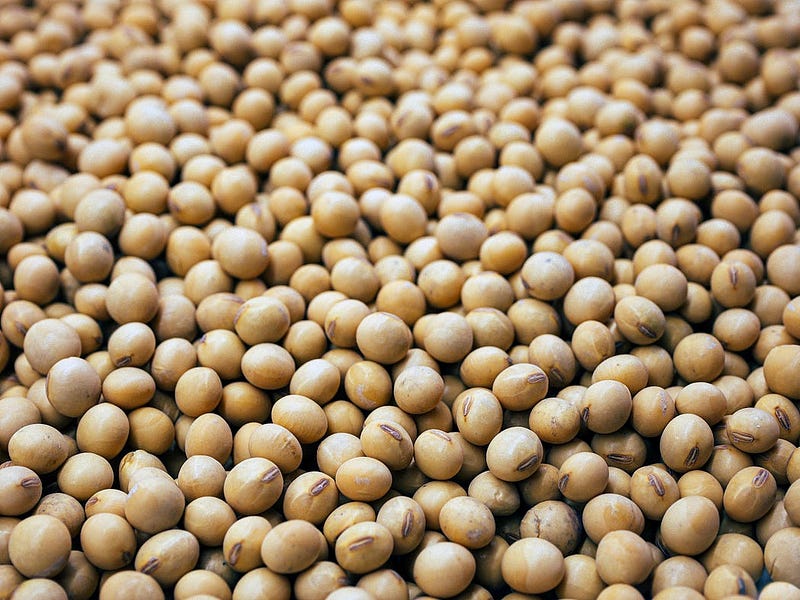
Photo by Daniela Paola Alchapar on Unsplash

Bayer & Corteva Will Compete for Global Soybean Market Share

Agweb is a premier Farm Journal covering all of the aspects of global agriculture markets and commodities. On 19 September 2023 the journal wrote about the competition between Bayer and Corteva for global soybean market share, since both of the companies produce market-leading herbicides and seed technology for farmers all over the world.

According to Jim Wiesemeyer, writing for Agweb:

“Together, Bayer and Corteva now control approximately 70% of the corn and soybean seed market in the U.S., a significant increase from around 40% two decades ago, according to USDA data. Both companies are vying for a share of the billions of dollars farmers spend on seed-and-chemical combinations to combat stubborn weeds.”

This is causing the two companies to go after each other through marketing channels, legal disputes and even through political efforts such as fierce lobbying campaigns.

Anyone who is following global agriculture news should know that Bayer has been wrought with a class-action lawsuit over its main herbicide product: Round-Up. Read more about this legal case here.

Bunge’s Investment at Soybean Facility in Indiana Is Part of Agriculture Industry Trends

A report by Bloomberg on 6 July 2023 explained why Bunge Ltd’s latest investment in a soybean facility in Indiana of the United States illustrates the commodities traders push into the trendy alternative-protein indsustry. This industry is made up of a variety of alternative foods to meat such as veggie burgers and other meatless products.

Reportedly for an amount of $550 million this soybean processing facility is to be commissioned by mid-2025 to serve consumers with food products from the United States to Europe.

I was able to track this story down to 15 December 2022, when the amount of $550 million to build the processing facility was confirmed.

But I think the most suitable content for anyone who is interested in this story was written by Global Aginvesting Media on 4 Janurary 2023.

Bunge-Viterra Merger To Become Global Agriculture Market Powerhouse For Grains & OilSeeds

In what has been one in the many mergers & acquisition stories of the year, Bunge and Viterra are merging into one agriculture trading company at a price of $18 billion.

The companies are primarily trading in grains and oilseeds, putting them up against the highly competitive trading companies known as ABCD group — Archer Daniels Midland, Bunge, Cargill and Louis Dreyfus (ABCD). ABC Rural

Viterra is owned by Swiss-based global mining and commodities giant Glencore, whose CEO Gary Nagle said: “The merger of Viterra with Bunge is expected to realise significant value for Glencore. Our investment in the agriculture sector dates back over 40 years and has grown from being a small grains trader to being part of a world leading, fully integrated global agriculture network. The combined group would be a premier pure-play agribusiness solutions company, well placed to meet increased global demand as well as the ongoing challenge of providing sustainable, traceable food and feed products to customers around the world.”

Bunge Limited is based in St. Louis, Missouri of the United States. Upon releasing details about the company’s merger with Viterra, CEO Greg Heckman, said: “The combination of Bunge and Viterra significantly accelerates Bunge’s strategy, building on our fundamental purpose to connect farmers to consumers to deliver essential food, feed and fuel to the world. Our highly complementary asset footprints will create a network that connects the world’s largest production regions to areas of fastest growing consumption, enhancing the geographical balance and adaptability of our global value chains and benefitting farmers and end-customers.”

The value of this merger has a potential to reach $34 billion, as the market for grains and oilseeds have seen much-higher prices since the disruptions to agriculture supply chains and price shocks from fertilizer inputs have went up in tandem with geopolitical trends and food insecurity.

Sustainable Agriculture & Energy Initiatives Focusing on Africa Are in Full Swing

Eni and Nestle are two companies with a massive presence around the world. Although they operate in different industries, they both serve African markets with commodities. Hence, they play a large role in Africa’s agriculture development.

There have been two recent news reports about these companies in Africa. Eni plans on expanding its sustainable energy push by investing in agri-business opportunities all over the African continent.

While Nestle, the world’s largest packaged food company, has been pushing forward with its Nescafe Plan 2030 that intends to prove that farmers in the company’s supply chains have been adopting regenerative agricultural techniques to produce crops such as coffee.

The Nescafe Plan 2030 supports regenerative farming due to the imminent climate change crisis affecting global farmers, and thus contributing a global food crisis. But the plan also gets support from the Rainforest Alliance.

It has been reported that Nestle plans to spend $1 billion to achieve sustainable sourcing of coffee in Ivory Coast, Indonesia and Mexico by 2030, and one way the company is encouraging farmers to do is by giving them cash. Reuters

The content in Areas & Producers provides a methodology for readers and writers who are curious about global trends and the future of the world.

Agriculture
Food
Politics
Business
Argentina
Recommended from ReadMedium