
.jpg)
Agoraphobia, Life Through a Window
The Fear of Going Outdoors
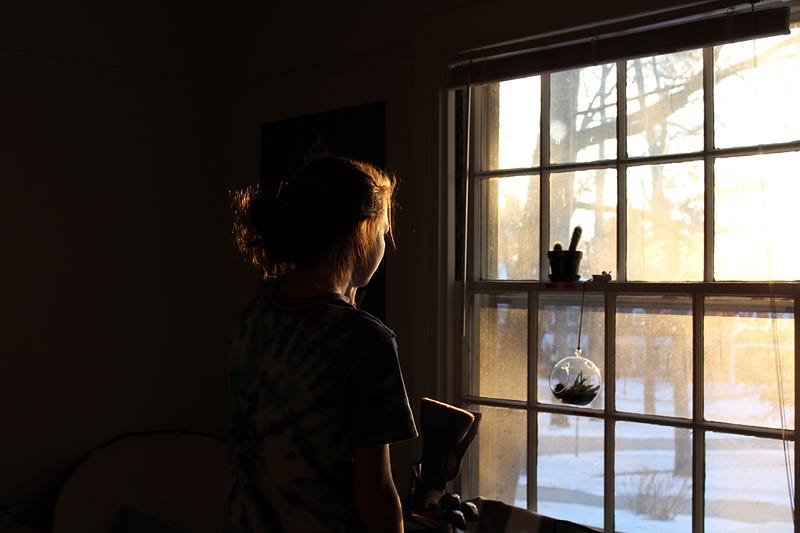
Agoraphobia holds you captive within your own home. You look outside and the sun is shining yet you are unable to work up the determination to venture outdoors. You look outside when the weather is cold, windy and raining; this makes you happy…because now you have an excuse.
You feel it in every muscle of your body, it’s almost like knowing you should be somewhere really important, but you can’t move.
Restlessness, fatigue, resentment and fear; you wish you could enjoy the day like everyone else, but this disorder prevents you from doing so. Day after day… you look out the window, but remain frozen in your steps. Maybe tomorrow… yes tomorrow will be better. Unfortunately, there always seems to be a reason for delaying the freshness of outdoors until tomorrow.
Do you know someone who can relate to this? Maybe you can relate to this? If this sounds familiar, you may be suffering from an anxiety disorder called ‘Agoraphobia’ and this disorder is characterized with panic type symptoms upon leaving one’s home, or being in a situation in which one feels they cannot escape from.
Symptoms associated with agoraphobia are dizziness, nausea, tremors, chills, shortness of breath and pretty much any panic-type symptoms.
Symptoms
- Intense fear of leaving the house
- Fear of being in a public place
- Irrational fear of being ridiculed by others
- Fear of being in a place where escape would be difficult
- Separation anxiety from a loved one
According to the DSM-V; Diagnostic Statistical Manual for Mental Disorders Fifth Edition this is one classification of an anxiety disorder.
Upon learning about this disorder, you will want to remember that you are not alone! There are various degrees within agoraphobia, from the scenario above, to the absolute incapability of even opening the front door. This fear can result in severe, debilitating panic or even the possibility of unconsciousness.
This may sound ominous, but the good news is that this is treatable. I know I mention Cognitive Behavioral Therapy …a lot…. but that’s because it works.
With this treatment, the patient would slowly be introduced to scenarios of outdoor activities such as walking around the block, or a walk to the local coffee shop. Then, when the patient is comfortable with pursuing the next step, the therapist will then take their patient for that walk.
How is this possible? Cognitive Behavioural Therapy is used to retrain the brain to take a different perspective.. Perhaps one example that a therapist would tell their patient is to not see the outdoors in such a frightening manner, but to rationalize it from a different angle. Try to challenge catastrophic thinking; remind yourself that this is a disorder, and even though the fear is real, the rationality of it is not. Remind yourself that going outside is okay, and that you will be okay; you’re just not feeling well, but you can do it.
Anxiety disorders are difficult to live with, they challenge you in ways that keep you in a constant state of discomfort, agony and pain.
We need to first understand what we feel, research and research some more, seek therapy, read books and treat yourself well.
Genuinely taking good care of yourself can help with healing, and can help with yourCognitive Behavioural Therapy.
If you find that you’re still suffering, then a visit to a doctor is highly recommended.
Agoraphobia affects millions of people, you’re not alone.
Be kind to yourself. You deserve it.
Health & Wellness, Mental Health
Originally published at http://kathylum.com on June 10, 2019.