
Agile workflows in the real-day usage

The secret of the Wright brothers inventing the first airplane ever in human history
Before the Wright brothers, mankind could not even imagine flying. However, thanks to their rapid and adventurous spirit of development, the present human race can easily fly to another country if they have the capital and the will. We know well that they invented the airplane, but we don’t know how they developed the airplane or what set it apart from their competitors to make it a successful flight.
A representative antithesis of the Wright brothers is Samual Langley. Although he had been working on the development of powered airplanes since 1897, he is said to have been greatly outraged by the news of the Wright brothers’ first flight. Why didn’t he, a prominent doctoral graduate, build an airplane faster than the Wright brothers?

The biggest difference between Dr. Langley and the Wright brothers is whether the plan is amended. Dr. Langley was good at drawing long blueprints, but he worked hard with his team to achieve them rather than revise them. But the Wright brothers were different. The Wright brothers came up with a small plan, quickly put it into action based on the results, and re-planned it. The series of steps we now call prototyping was initially attempted by the Wright brothers when they built a powered airplane.
It is impossible to say which of the two methods is the correct answer. It is important to have a long-term plan and to work hard to achieve it. But when it came to creating something new that never existed in the world, the Wright brothers were right. And this approach has been passed down to various start-up companies and continues to be practiced.
Agile workflow

Agile workflow is one of the software development methodologies, and it resembles the Wright brothers’ method of developing a powered airplane mentioned above. As the name suggests, this workflow is fairly fast, and getting feedback from customers is key to getting a workable product as fast as possible. If you are preparing to start a business and have a great interest in software development, it can be said that an agile workflow is one of the development methods you must know.
Suddenly, after learning about this radical but innovative methodology, I wondered if ordinary people would be able to apply this workflow to their work. I am currently a graduate student, but I thought that if I applied an agile workflow to my joint research, I could get things done effectively. And I recently put it into practice right away. In this post, I would like to briefly share that process.
How can we apply the Agile workflow in our real-day usage?
To start an agile workflow, you must first establish an end goal called an epic. Epic means writing the goal you want to achieve in the end. As a graduate student, I set up an epic with my collaborators to “prepare suitable experimental data to write a scientific paper”.
After that, you have to go through a process called sprinting to achieve an epic. Sprinting usually lasts from 1 to 4 weeks, during which the team members exchange opinions continuously to set short-term goals. After each sprint period, you should gather feedback for the next sprint and talk about how much progress you have made during the given period. In addition, during the sprinting period, opinions should be exchanged between team members for 10 to 15 minutes every day, which is called a daily standup. I asked the co-researchers to exchange opinions every day even if it was brief, and I recorded information in the minutes of the stand-up meeting.
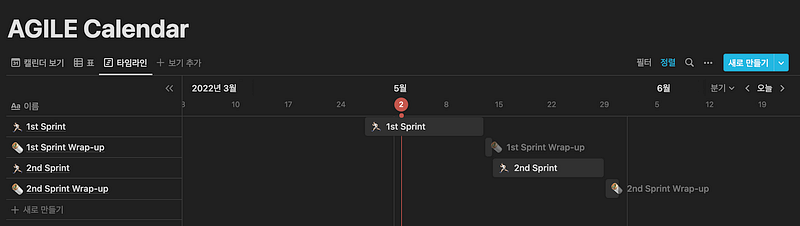
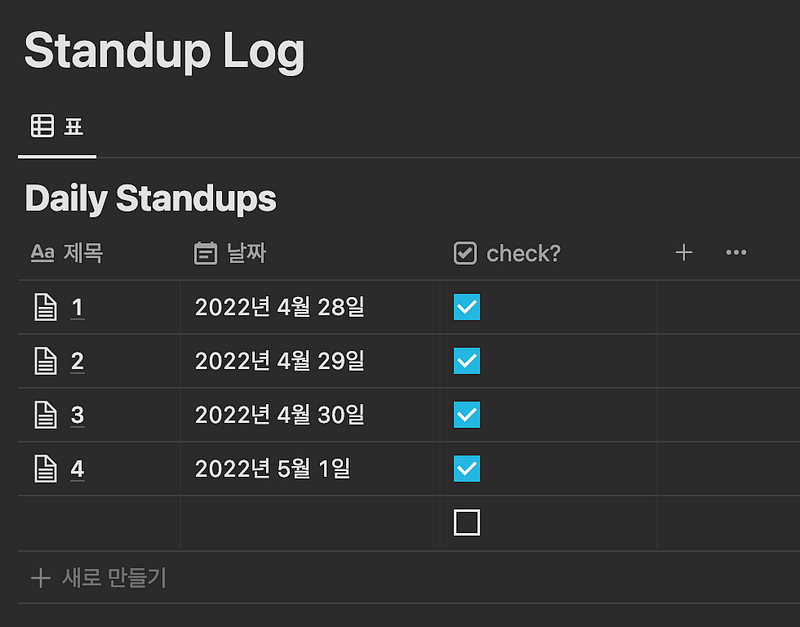
The most important thing when doing stand-up is transparency. During the exchange of opinions among team members, there should be no lies about the work or difficulties you have been working on. Because we are human, we can surely make mistakes. Even though, if you exchange these contents during the meeting, it can be of great help to team members in the long run. In addition, even if other team members make mistakes, it is necessary to be generous in understanding them, since next time you might make a mistake. We must trust each other and recognize and respect each other’s capabilities.
Pros & cons of the agile workflow when normal people are trying to use them
Of course, it is difficult for the general public to use agile workflows. Because this methodology is focused on creating products quickly in collaborative collaboration. If your goal isn’t to create deliverables or collaborate, then there’s no reason to force agile workflows into your work.
Agile workflow is also a methodology that seeks to get user feedback by creating a workable product in between. However, there is no need to apply an agile methodology to your work if it is not important to show your achievements to others and to receive feedback.
Nevertheless, an agile methodology can be of great help in creating a fast-paced atmosphere of collaboration and deliverables. Also, if you want to use a lot of collaboration tools like Slack, Trello, and Notion with your team members, and you want to experience the same workflows as software developers, there is no better methodology than agile workflows.
In any case, the choice is yours. If, like the Wright brothers, you want to quickly change your plans and workflow through feedback, just give it a try.
Anyway, thank you for reading this post:) Have a nice day😁
Sincerely,
Woojin


