
AGI Will Not Take All Our Jobs
But it will change all our jobs
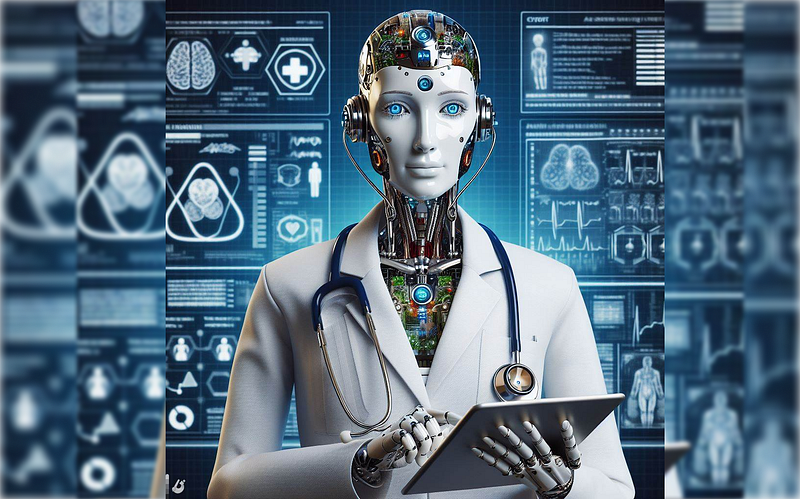
The Wikipedia page for Artificial General Intelligence describes AGI as “an autonomous system that surpasses human capabilities in the majority of economically valuable tasks”.
Kinda scary right? 😨
If AGI can do our jobs better than we can, wouldn’t we all be left out in the cold lining up for government handouts?
I claim that we will not. 🧙♂️
Let me explain why, starting from my own experience…
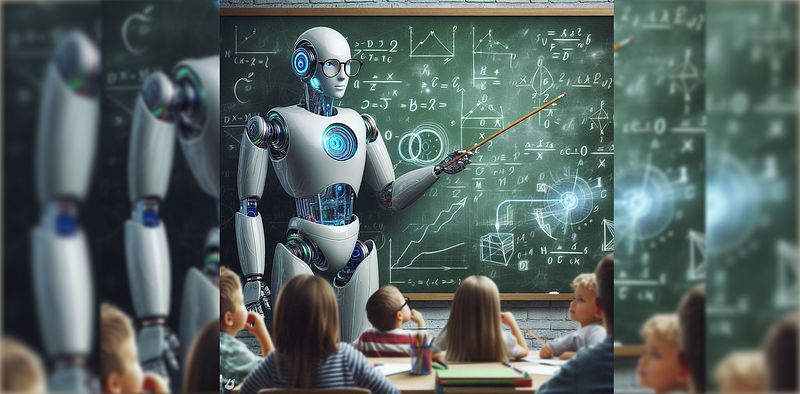
I’m a high school mathematics teacher. I spend my working hours helping students learn algebra, calculus, statistics etc. Even today’s best AI models are currently pretty 💩 at math, but I know they will improve fast. To the point where they can not only solve mathematical problems better than I can, but also explain concepts and respond to questions to help students learn.
When that day comes, will I be out of a job?
One of the things I do each year, separate from my regular teaching role, is mark the statewide final exams. The curriculum board pays qualified teachers to mark the exams, as we sometimes need to use our experience and professional judgement to make assessment decisions.
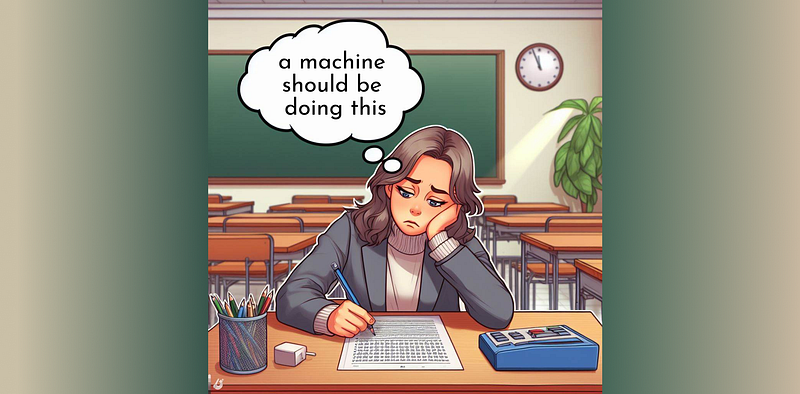
But to be honest, 90% of the assessment role is simple right vs wrong marking that a computer with decent handwriting recognition could do 100 times faster than me. Every year for the last 5 years I have thought “a machine should be doing this”, but year after year they keep on employing us.
Now, I have no doubt that the time will come when AI is used to mark the majority of student responses, and a team of 100 assessors is reduced to a team of 10 who deal only with subtleties and edge cases that actually require human expertise.
But will the same happen for the teaching profession as a whole?
I doubt it.
Because unlike the specific task of grading exams, teaching in general is not a “once it’s done it’s done” kind of job. The potential to learn is infinite, so the same is true with the potential of a teacher.
Even if AGI can help to replace a school of 100 teachers with a team of 10, it could also be used to make those 100 teachers all 10 times more productive so that the students learn 10 times as much!
Which will it be?
Perhaps somewhere in between. 🤹♂️
The labor market, just like the rest of the economy, relies on supply and demand. If many people want something, its value increases, especially if that thing is in short supply.
While AGI may be able to perform the vast majority of tasks that people are paid to do now, there is no sign that it could fulfil all human needs and desires.
And as long as there as something we can do that an AGI can not do, we will have a job.
As long as there as something we can do that an AGI can not do, we will have a job.
Now, there are some things that AI will never be able to better than humans, because it’s artificial by definition.
Take chess as an example. Computers have been superior to the greatest human chess players for over 20 years.
But millions of people still choose to spend hours of their valuable free time not only playing chess, but watching other people play. Hikaru Nakamura has millions of YouTube and Twitch followers and an estimated net worth of $50 million. How could this be — when a computer can do his job better than him?
Because he’s human.
There are probably already machines that can produce music as well as Taylor Swift. But again, millions of people will happily hand over their hard-earned income to see Taylor in concert because they feel an inexplicable emotional connection to the small town girl who wrote “Love Story”.
Because she’s human.
It’s this sense that “She gets it, she gets me. And these people here, they all get me” that screaming fans feel as Swift walks onstage in full sparkles, and full empowerment. A young country girl with curly hair and a guitar has become a symbol of what they could become — a better, bigger, and enormously popular version of themselves. — Psychology Today

Of course we can’t all be Taylor Swift or Hikaru Nakamura.
But that’s not the point.
The point is that they are providing something we want, that we are willing to pay for, that will not be replaced by AGI.
Having a job is not about satisfying basic physical needs. Most of us reading articles on Medium could cut our income in half and still be able to afford basic accommodation, food, clothing etc.
So why do we work overtime, aim for promotions or new business ventures?
We want a nicer house. A nicer car. We don’t want our kids to feel left out when the other kids have iPhones and designer clothes. We want to be happy, and we want our loved ones to be happy.
Are we striving for acceptance? Power? Connection? Fulfilment?
Now we’re getting into the realm of psychology, philosophy, spirituality and religion.
These are not exact sciences!
The fact is that these basic questions about the value and purpose of human life cannot be answered with logic. These questions — the most important questions — are beyond the scope of intelligence, human or artificial.
These questions — the most important questions — are beyond the scope of intelligence, human or artificial.
I should wrap this up before I go too far trying to express things in words that cannot be expressed in words.
But I want to address the very real concern that AGI could widen existing economic inequality, creating an unassailable divide between a small powerful group of people who control the AGI and the remaining masses who cannot afford to harness its power.
In an excellent video Capitalism Doesn’t Need Consumers Anymore, this worst-case scenario is described where
… there would be no need for the unemployed masses to be involved in this exchange of value at all because they provide no value to trade with… in the most extreme version of this hypothetical thought experiment, people would just starve to death because there’s no economic incentive to provide them with even basic essentials. — youtube.com/@EconomicsExplained
As you will already know, I do not believe this will happen to us.
Neither does the presenter of Economics Explained. But our reasons seem to be different. He believes that limited economic opportunities would lead to a decreased population — people would choose to have less children because “it is no longer economically advantageous to have them”.
Personally, I can say that my decision to have children had very little to do with economic advantages or disadvantages.

I can’t really explain why I finally wanted to have children, and why they bring me so much joy. But I don’t need to explain it to you, do I?
Like I don’t need to explain why I enjoy listening to Taylor Swift sing Love Story, listening to Hikaru talk about chess, or feeling the sunshine in the morning.
You get it.
Because you’re human.
We will always be connected. As artificial intelligence improves, no doubt there will be monumental changes, and change is never easy. But we will always continue to learn from each other, work together and help each other.
Because we’re human.


