
After human extinction, it’s feral pets that will take over the Earth. Which species will do best?
Earth is already a pet planet. If we were to suddenly disappear from its surface, feral pets would have the best chance of taking over a desolate planet.
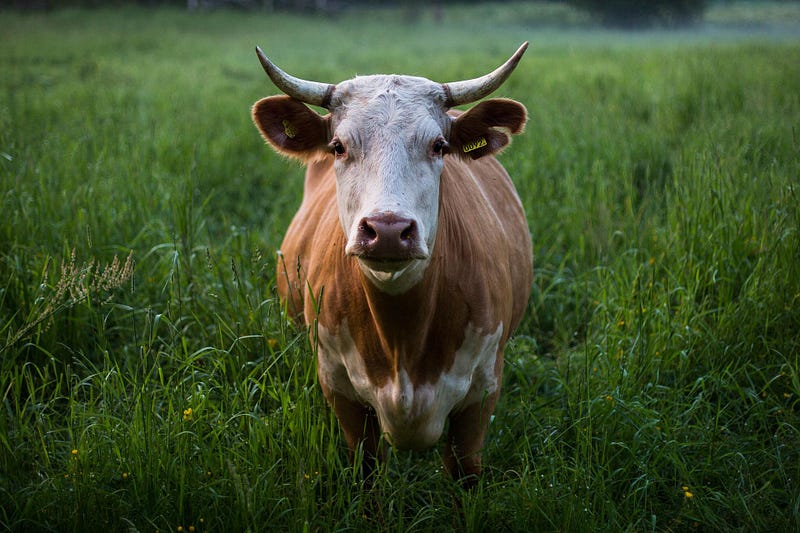
The total biomass of domesticated mammals — which consists mainly of cows and pigs — reaches 60 percent of all living representatives of this group. If we add the total mass of humans, which constitutes 36 percent of the mass of mammals, then only 4 percent remains for the wild species from this group. The situation is similar with birds. 70 percent of their current biomass is accounted for by poultry, mainly chickens. Wild species account for only 30 percent of the mass of all living birds. At least this is what the team of Prof. Ron Milo of the Weizmann Institute of Science in Israel calculated.
Absolute figures support these conclusions. It is estimated that the Earth is currently inhabited by 19.5 billion chickens, 1.4 billion cows, 980 million pigs, 470 million dogs and 373 million cats. Add to that horses, cows, sheep, goats or even honeybees. And also animals which, although they have not been domesticated, have closely associated their lives with humans. These include house mice, rats, sparrows or white storks.
If humanity were to suddenly die out as a result of some global epidemic, the gigantic outnumbering of domesticated and human-related animals would give them the upper hand in overtaking the Earth we have left behind. On the other hand, some human-influenced versions of the genes in their cells could make it difficult for them. Short legs, big fat, lame ears or a gentle character would not make the struggle for existence in a really wild nature easier. Rapid weight gain or omnivorousness, on the other hand, could prove useful.
Evolution does not retreat, but serves new mutations. This can be seen when feral domestic animals appear. It has happened many times on islands, abandoned farms or in human evacuation zones after various disasters. This is a good prognosis of how such animals could cope on the Earth without people. And the conclusions are sometimes surprising.
Feral pets — cows
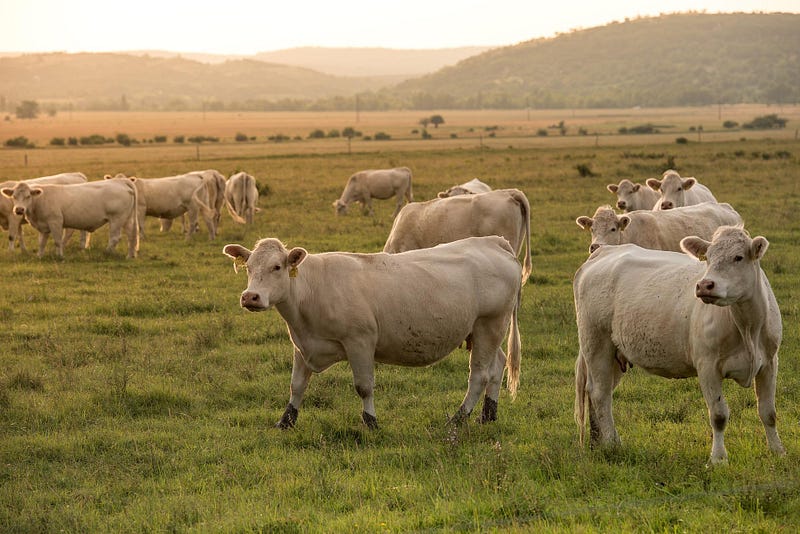
In the fall of 2019, a herd of cows escaped from a farmer in the village of Jakubowskie in Poland. He had kept the animals since spring in a pasture, sometimes only bringing them food. The cows had little contact with humans. When the owner decided to drive them to the cowshed in autumn, they ran away at the very sight of him. Nobody expected that they would survive the winter on their own. Meanwhile, they not only coped well, but also multiplied. They also developed a strong herd instinct. At the sight of a human, adult cows hid their young inside, and they lined up around them. In this arrangement, they fled into the forest.
Probably the key to successful rustling was that they belonged to the meaty Limousine breed. So they did not require daily milking and did not suffer from excess milk. If they belonged to the Holstein-Friesian breed, the most popular in Europe, they wouldn’t survive the winter. These cows — with their characteristic black and white coat — yield 5.5 to 11 thousand liters of milk per year. From the more primitive Red breed, you can only get up to 3,000 liters a year.
If man suddenly disappeared, most cows, not milked, would fall ill with painful mastitis. The few that would survive the disease would have to face herds of predators. The slow dairy cows would die out without an heir. Two evolutionary lines would cope with predator attacks. One would be the small, lean and fast low-milking primitive breeds. Their strength would be their endurance and ability to escape. In time, these breeds would develop into a species of small but fast and hardy cattle. Similar in size to today’s deer, they would form small family groups whose main method of defense against predators would be efficient escape.
Large meat breeds of limousine cattle could also survive the disappearance of humans. Genes for rapid weight gain, favored in artificial selection, would give them an advantage against predators. Cows would form large herds that would line up around aggressors, pushing their young to the center. They would use their large horns for defense, so over time evolution would favor increasing their size. This is how the second species of wild cattle would have evolved: slow but huge, surpassing bison and aurochs in size, and aggressive and armed with powerful horns.
Feral domestic animals — dogs
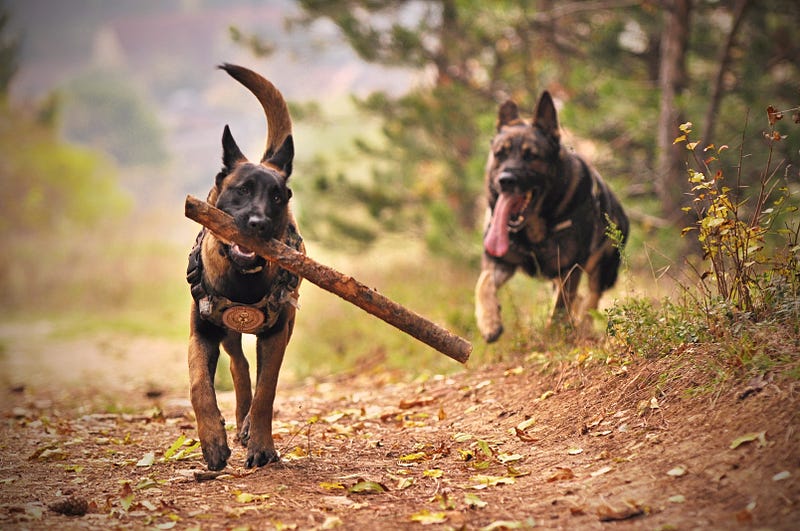
The majority of dogs can be classified in the broadly defined category of mutts. This group of dogs forms a kind of super breed, better able to cope on their own than representatives of any breed bred by man. They have a better sense of smell, more efficient reproductive and immune systems. They can also independently search for food, feed on leftovers, not only fresh meat but also carrion, excrement, fruit, even rotting. So if man suddenly disappeared from the face of the Earth, purebred dogs would quickly die out. The world would be conquered by ubiquitous mutts. But soon they would have to face wolves.
For the dog is a domesticated wolf. Genetic studies indicate that the origins of this process go back between 27,000 and 40,000 years. Dogs and wolves still share a strong genetic bond. Wolves treat dogs either as rivals in their territory to be bitten or as breeding partners. A 2018 study found that as many as 62 percent of Eurasian wolves carry fragments of dog DNA. In a post-human extinction world, wolves, finally free from persecution, would dramatically increase their numbers. The mutts, in turn, would be forced to forage in the wild. Some of them would be eaten by the wolves. Others would interbreed with them on a large scale.
The result would be the dog-wolf. It would be slightly smaller in size than today’s wolves, more varied in coloration, and more capable of feeding — it would supplement its diet of meat, from hunted prey, with feces and wild fruits. The pack structure of dog-wolves would also become more flexible, making it more difficult for potential prey — deer, deer, wild cows or horses — to predict their current hunting strategy. In the temperate and boreal zones, dogfish would become the most successful predator in a post-extinction world for humans.
Feral pets — pigs
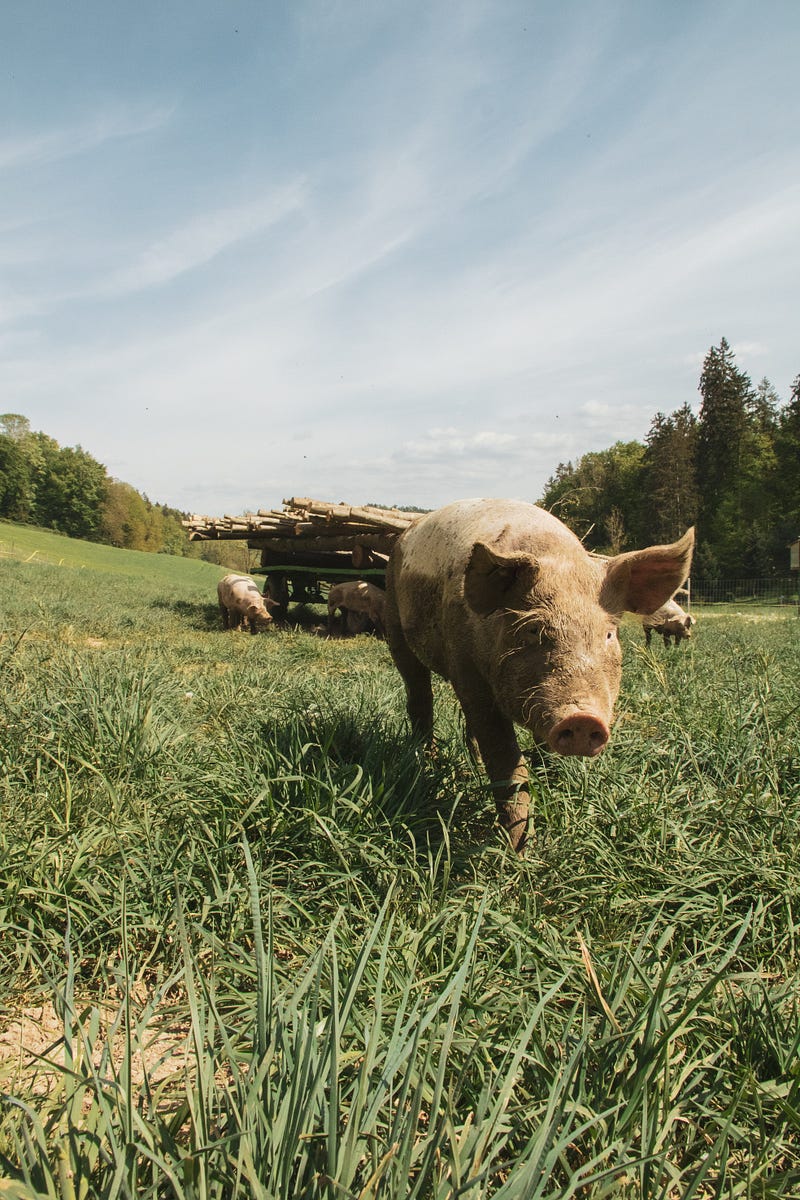
After the 2011 Fukushima disaster, Japanese authorities ordered the evacuation of more than 100,000 people within a radius of more than 20 km. Approx. 300 square kilometers of this area were agricultural and urban areas. From the abandoned farms there escaped into the wild nearly 30 thousand pigs. At the same time, the number of wild boars increased dramatically in the abandoned areas. This allowed unfettered contact between the two species.
In the history of civilization this was not an exceptional case. Pigs were domesticated 8–8,500 years ago in the Middle East. From there they migrated with farmers to Europe. Farmers from the north willingly added wild boars to their herds of pigs. Approx. 4,000 years ago pigs became a cross between these two species.
Not surprisingly, genetic exchange between pigs and wild boars also took place in the abandoned areas around Fukushima. The effects of this were studied by a group of Japanese scientists who expected the pig genes to benefit the wild boar. However, they discovered that the hybrids made up barely 16 percent of the population, and the pig genes in them made up only 8 percent of the total DNA. So the researchers concluded that the pig traits were not helping the wild boars to survive. In their view, hybrids are gradually dying out.
This in turn means that after the disappearance of humanity, pigs would probably also quickly cross with wild boars. But the hybrids would not be able to find food in wild nature and to defend themselves from predators. So in time they would disappear, and only wild boars would remain on the planet.
Feral pets — chickens
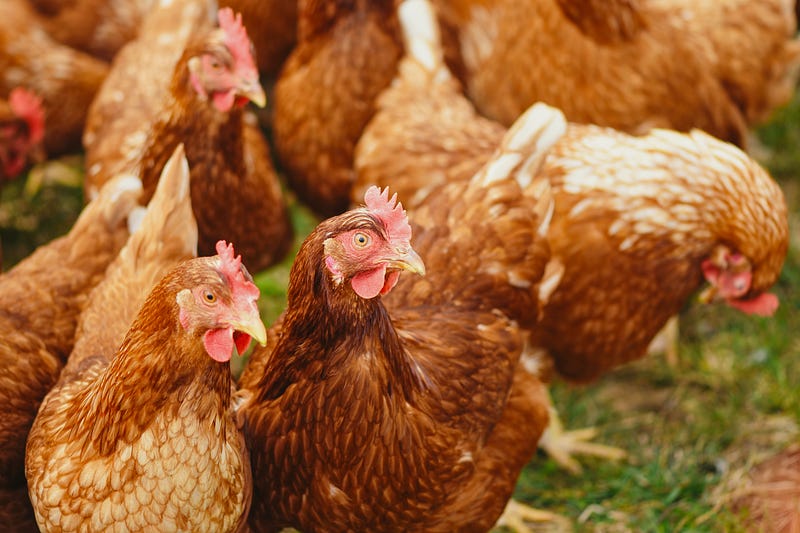
The first animal that catches the attention of tourists on the Hawaiian island of Kauai are chickens. You see them in parking lots, lawns, streets, beaches and in the woods. No one watches over them, no one takes care of them. They are doing great completely on their own.
Like all chickens in the world, the Kauai chickens are descended from the banana chicken living in the jungles of southern Asia. Domestication probably occurred about 8,000 years ago. From there, chickens spread throughout the world. Most hens today are completely dependent on humans. They reach twice the size of their wild ancestor. Often they have lost their originally small ability to fly. They have proportionally smaller brains. They can lay eggs almost daily, but often lose the need to brood.
The ones that Polynesians brought to Kauai about a thousand years ago more closely resembled the original Bankswa hens. After Captain James Cook discovered the island in 1778, they crossed with European breeds. This happened again after the hurricanes of 1982 and 1992, among others, which drove chickens from backyards into forests.
Kauai’s feral hens have retained many of their original genes, but the influx of DNA from domesticated hens has benefited them. Genes for rapid growth and reproduction allow them to quickly rebuild populations after crises. And wild traits — smaller body size, less frequent egg-laying and more careful egg-laying — make it easier for them to survive.
A similar process is likely to be seen in hens after human extinction. Most of the typical meat and laying breeds would probably die out quickly. The more general-purpose ones, such as the Partridge Greenlegs, would survive. But even they would not cope with winter in polar and temperate regions. Deprived of heated poultry houses they would freeze to death.
By contrast, in warm and tropical climates, after a temporary collapse in numbers, they would quickly recover. Evolution would push them to become smaller and fly more efficiently. They wouldn’t be able to fly for long, but — like black grouse or capercaillie — they would easily fly up into trees to escape predators. They would lay fewer eggs, which they would hide in a hole dug in the ground, somewhere in the forest thicket. Genes for rapid growth would allow them to mature quickly and have several broods a year.
The admixture of DNA from fighting breeds would increase their aggressiveness. Thus during the mating season roosters would fight with each other in an extremely spectacular manner. The hens, on the other hand, would defend their chicks with fierceness, kicking with their strong legs and jerking their opponent’s beak until it bled.
Feral pets — horses
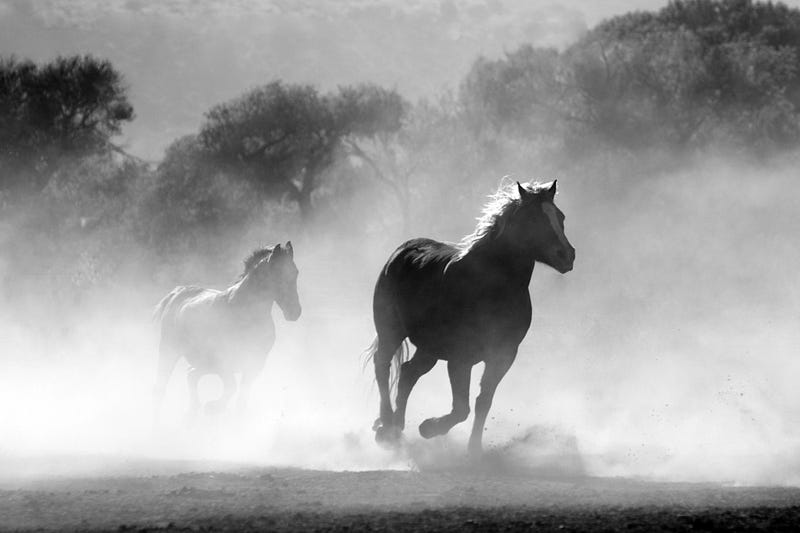
Horses were most likely domesticated about 5,000 years ago by the Botai people from the steppes of Kazakhstan. From there they spread throughout the world. They were bred mainly as draught horses for agricultural work or as animals to be ridden on horseback. Breeding has not changed their original genes as much as in cows, pigs or hens. Most breeds of horses have retained a high level of physical fitness and independence.
Deprived of human care, they easily go wild and adapt to local conditions. Such as mustangs, which are descendants of domestic horses brought in the 16th century by Europeans conquering North America.
“In each region of the United States, mustangs form a slightly different structure,” says Iwa Momatiuk, a nature photographer who has lived in America for 56 years.
In parts of Nevada they live in family groups of up to 80 horses. In the mountains, on the other hand, a herd usually consists of just a stallion, several mares and their offspring.
So if all mankind went extinct, uncontrolled and uncastrated horses would probably flood the world. Their evolution could go both ways. In open areas — mainly steppes — horses would retain their large size and form large herds of up to several dozen individuals. They would stay together all year round. They would keep the variety of colours of domestic horses, long manes and tails. Highly visible, especially at the gallop, they would provide an excellent warning of predators to other members of the herd.
In contrast, the forests could produce a species of small horse with a more solitary lifestyle and a uniform dark brown coloration that would act as camouflage. A short mane and thin tail would prevent entanglement in bushes. The muzzle would be slightly longer and tapered to make it easier to pick nutritious leaves in the thicket. Forest horses would only gather together during mating season. The males would then fight violently for access to the females, using their hooves and teeth in the process. After fertilization, the stallions would return to their individual lifestyle, and the mares would raise their young on their own.
Feral domestic animals — goats
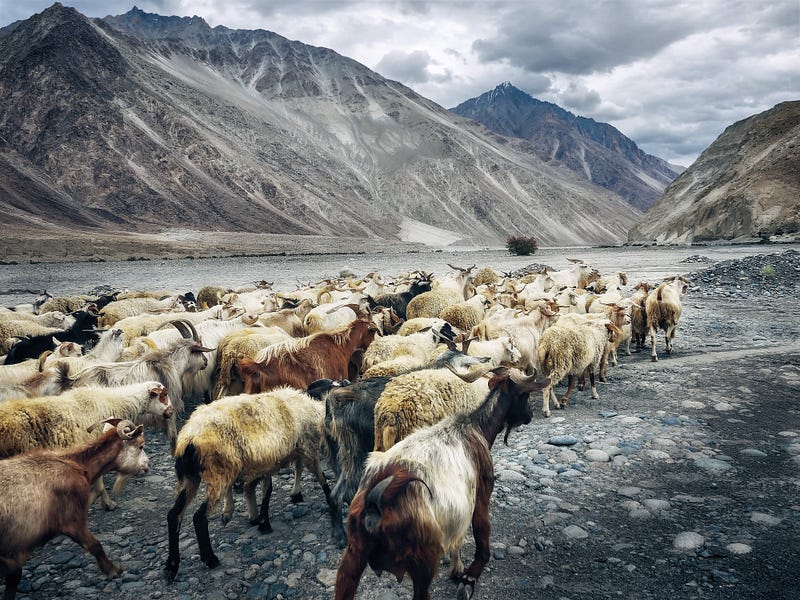
Feral goats were a scourge of the Galapagos Islands. They were killed by the thousands until the last ones were finally eradicated in 2006. Had even one pair of them survived, these animals would soon have rebuilt the islands’ large population. This story shows how incredibly expansive the domestic goat is.
It is descended from the wild bezoar goat, which still lives in desert areas of Southwest Asia today. Although it has been nearly 11,000 years since domestication, the domestic goat still retains the tremendous stamina and food flexibility of its ancestors. It is able to feed on leaves, branches, bark, flowers, fruits, roots, seeds, and even fungi. In Australia, feral goats eat prickly acacia and bitter herbs that sheep or cattle avoid.
If there were no humans on Earth, domestic goats would quickly take over all dry and warm regions, especially semi-deserts and rocky areas. They would retain the ability to breed at any time of the year — as long as they had some food and water. They would form, as they do today, herds with a matriarchal structure: with an experienced female leader, younger females and their offspring. Males would leave the family groups after reaching sexual maturity, forming loose and flexible male herds.
Feral pets — cats
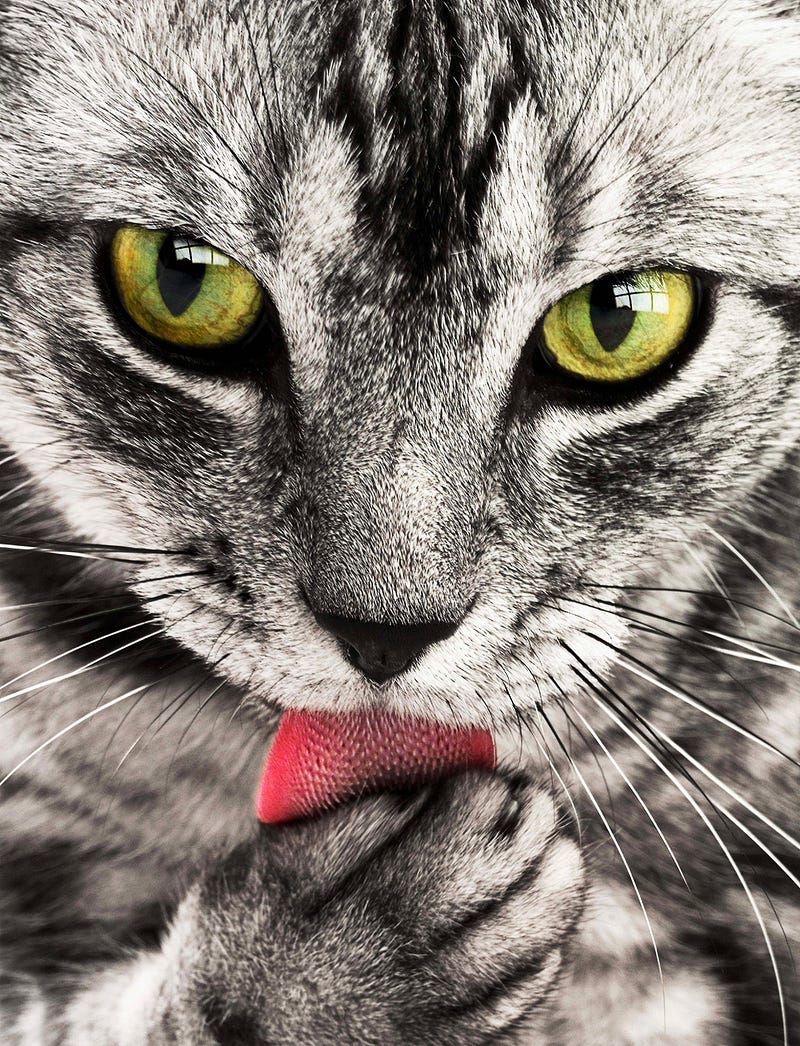
Nearly 9 thousand small and medium-sized islands of the world are inhabited by feral cats. There they eat whatever they can: from birds and mammals, to reptiles, to invertebrates, mainly insects. This food versatility would certainly make it easier for cats to survive after human extinction.
The bond between our species dates back 8,000 years. That’s when Nubian cats (Felis silvestris nubica), or the African and Arabian subspecies of wildcat (Felis silvestris), started hanging around humans. They were attracted by mice and rats, lured in turn by the grain supplies of early farmers.
Nubian cats were gradually domesticated: first in Western Asia, then in Egypt. Together with farmers the domestic cats migrated to Europe. There they met the second subspecies of wildcat: the European wildcat (Felis silvestris silvestris). They also easily interbred with them. As a result, wildcats were largely replaced by hybrids in many parts of Europe.
After the extinction of man, the couch-dwelling races would probably quickly die out, and the Earth would be taken over by the descendants of the “roof-dwellers”. In conditions of fierce competition, however, they would have to begin to specialize nutritionally. Some cats would have switched to an arboreal lifestyle, intensively interbreeding with European wildcats. The lighter, smaller and more agile ones would feed mainly on birds. The above-ground individuals would form a larger and heavier, slow but ferocious line that would specialize in hunting rats and giant mice.
Cool that you made it to the end of this article. I will be very pleased if you appreciate the effort of creating it and leave some claps here, or maybe even start following me. Thank you!


