
After Brexit, Do We British Still Have the Right to Call Ourselves European?
Did we ever?
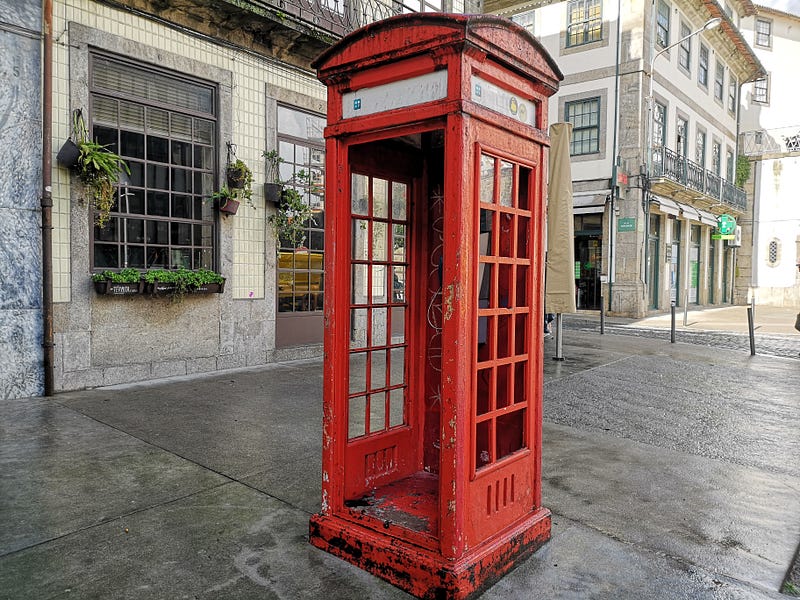
As a Europe-loving, Brexit-hating Brit who lives in Portugal, I feel deeply conflicted about my European identity.
On the one hand, Brits tell me you’re not European anymore, we voted out of that (I try to argue we left the EU, not Europe, but that technicality doesn’t seem to matter).
On the other, I have European friends who can’t fathom why Brits don’t see themselves as European, even after Brexit. You may have left the EU, they tell me, but Britain is still part of Europe. You are still European.
Honestly, even the most hardened British Europhiles struggle to identify as European. That landmass just 22 miles south of my home country feels so far removed from the identity of being British it could be thousands of miles away.
It’s a problem. Because when you get a whole country that feels isolated from the very continent it belongs to, you get divisions. You get isolationism.
You get Brexit.
You also get a whole group of people — like me — who have been forced to struggle with their identity every single day.
Am I British? Am I European? Right now, I don’t feel either.
Not feeling European ruined the UK
If you don’t feel European, you don’t believe you need Europe to thrive.
Then you get Brexit.
Most people in Britain now believe Brexit was a terrible idea. Even Nigel Farage, a key Brexit architect, admits it has failed.
The whole thing was one mitigated disaster that played no small part in Britain becoming the worst-performing large economy this year (and that includes sanctioned Russia).
If you speak to Brits who voted to leave, you figure out pretty quickly that one reason Brexit happened is that many Brits don’t identify with their European neighbors. Britain pulled out of the largest trading block in the world because it thought it could do better on its own.
It’s island mentality at its finest. Island mentality is when isolated communities believe they are superior to the rest of the world. Sound familiar?
Call it a hangup from the days of the British Empire if you like. A hangup that has seen us become a lonely little island in the North Sea with few friends.
This is very different from the rest of Europe. Whilst only 15% of Brits identify as European (even before Brexit), the European average is 72%. In places like Spain, it’s as high as 84%.
It’s a shame us Brits never got the message that we too are European because Brexit ruined us.
The ramifications of which Britain will feel for generations.
The Brexit casualties seldom talked about
I hear all the time that there is little appetite in Britain to re-open the question of Brexit or re-enter the EU. But here’s something you don’t hear about — there are many Brits who still struggle with Brexit on an identity level every single day.
I’m one of them. The same also goes for pretty much every one of my British friends and family.
We’re fiercely pro-Europe. We never felt “European” in a siesta and sangria sort of way but that was OK because we were part of Europe and the EU. The ties existed.
Now, we feel discombobulated. We hardly feel British, let alone European. We want to live and work in Europe but we can’t without extensive and expensive visa applications. We don’t recognise the country we were born into but at the same time, Europe is now largely closed to us.
We’re floating in a no-man’s land of identity.
On a personal level, this is further compounded by the fact that I’m Welsh. Where I’m from, we don’t fly the English Cross or even the Union Jack flag, we fly the Welsh Dragon. We don’t say Good Morning, we say Bore Da.
A lot of what people think of as British is really English and many of us Celts push back on that.
My friend Ali Hall told me the other day for instance she seldom calls herself British, she’s Scottish. This is not an unusual stance in Scotland — 72% of Scots call themselves Scottish before British. And if there was ever a country that embodies this Brexit identity crisis I’m talking about, it’s Scotland.
I recently moved to Portugal and that process only further questioned my British and European identity.
I went through a long and bureaucratic visa process to gain residency. One Brits wouldn’t have had to go through just three years ago. My lawyer has advised me not to visit Britain before my residency card arrives which can take months. Even when that happens, my visa stipulates I can’t spend more than four months a year outside Portugal.
Going through a process like this reminds you that Britain is very much not part of the EU anymore. And that questions my European identity every single day.
This is what Brexit did to Europe-loving Brits. It put so much distance between us and the continent that the thought of calling ourselves European is almost laughable.
The press may be bored of Brexit. Politicians may not want to reopen the case. But there are literally millions of us who are stuck questioning our identity and our position in the world every single day because of it.
It’s amazing what a bit of perspective can do
There is a weirdly specific time when I do feel European and that’s when I hang out with Americans.
Britain and America may have developed a “special relationship” in the last few decades but there are still parts of our culture that look distinctly weird to Americans and completely normal to Europeans.
A non-exhaustive list includes:
- Lack of tipping.
- The size and quantity of our bathrooms (small and one).
- The size of our cars.
- Lack of guns.
- Attitudes towards alcohol.
- Cost of healthcare.
Despite the oceans of ideology that separate Britain from mainland Europe, we are influenced by them and they by us. After all, for many of us growing up in Britain, Europe wasn’t something you do a once-in-a-lifetime trip to.
It’s somewhere many of us visit multiple times a year. Perhaps someone we know owns a house in France or Spain. And we’ve almost all been on a €5 Ryanair flight to somewhere random in Poland.
When you speak to Americans, it’s different. We might speak the same language (sort of) and share a penchant for voting in far-right governments but so much of American culture feels completely alien to us. Not least for the reasons listed above.
So put me in a room full of Europeans and Americans — where I live, that happens more often than you’d expect — I feel very European indeed.
But it’s the only time.
I have many theories about why Brits — even the pro-Europe ones — never felt European.
Perhaps it’s because we don’t fit into what Brits think Europe is:
- Being “Mediterranean” (siestas, outside living, vacations).
- Being “Eastern European” (cheap beer and Christmas markets).
- Being “Nordic” (happy places that are too expensive to actually visit).
Perhaps it’s because of our weather (seriously). There’s a collective notion that the weather in Europe is better than Britain because most of us have been to Spain / France / Italy / Croatia in the summer and assume it’s hot like that all year round. I once visited Spain in March on a work trip with a dude who didn’t bring a jacket “because it’s Spain” (it was 10C all week).
Perhaps it’s because we don’t have an outside public life the way many European countries have. We marvel at their determination to spend time outside, even when it’s cold.
Britain, on the other hand, took a leaf out of the American Dream playbook. Houses are castles to be defended. Life is conducted indoors. We take our cars to the out-of-town malls and supermarkets. If it rains or is cold (so 90% of the time), you’ll not see a soul on the streets.
Perhaps at the heart of it, British identity is a complex thing and always will be. We’re a weird bunch at the best of times and the way we view our role in Europe is no different.
As for me, I may not feel European in my bones, but I am learning how to become one.
Now I live in Porto, I spend more time outdoors. I marvel every time I even think about crossing the border into Spain and how easy that is. I am chilling out and hustling less and learning how to work on Portuguese time (be at least half an hour late to everything).
I may struggle to feel European but that doesn’t mean I’m not trying.
Despite Brexit.
Who knows, perhaps one day I’ll feel it.
I can’t wait.


