
Africa Is Poor
Generalizing Is The Thief Of Knowledge Seeking!
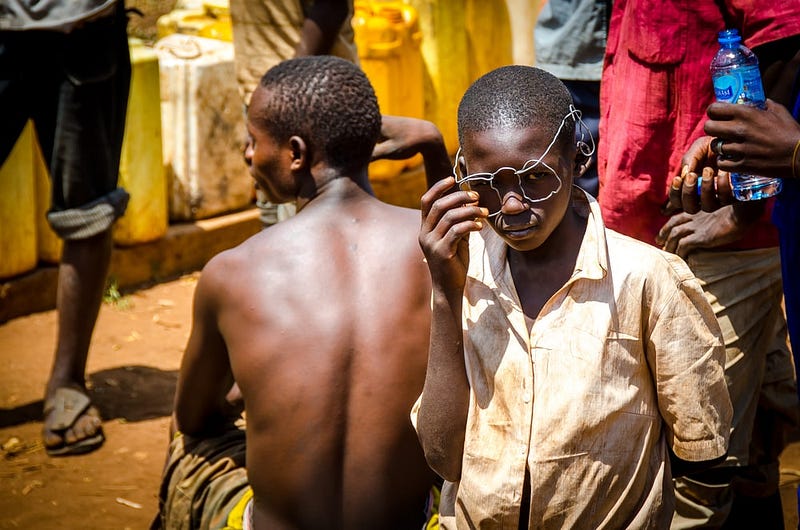
Africa The Imagined Place:
It has been ancient times that outsiders assigned poverty to Africa as her identity. Are you familiar with the Berlin conference? See the short link. Thank you. https://www.aljazeera.com/opinions/2019/11/15/berlin-1884-remembering-the-conference-that-divided-africa
Some History Should Be Common Knowledge:
Consistent with the Berlin Conference, its attendees or agenda, and the ongoing consequences, we Africans continue to be in a misunderstood reality.
The sad truth is that we do not fully understand our nature, and to me, this is comprehensible given that our history was written for us. As long as we accept the details of peer-reviewed academic works in the darkness of Africa, we will continue to be assigned dehumanizing adjectives.
Change Is Gonna Come:
Let me volunteer and say that it is hard being melanin anywhere in the world. Why? The reason for this difficulty is the creation story of Africa. This tale is a never-ending snowball. It falsifies our ancestral lands and all that Africa is and ever was to the world.
This trend can be traced back to early missionaries, then the imperialists and the colonists, and now the neoliberalists. We are tired of being spoken for this way.
Oh, the stereotype entered us as early as kindergarten. Thus, most of us became hopeful scholars with this miseducation at the back of our minds. As a result, Africans entered college and later working lives armed with a sense of self-shame.
Unto Whom More Is Given, More Is Expected: Undo Your History:
“Of the world population older than 15 years, 86% are literate. Globally, however, large inequalities remain, notably between sub-Saharan Africa and the rest of the world. In Burkina Faso, Niger and South Sudan — the African countries at the bottom of the rank — literacy rates are still below 30%.” https://ourworldindata.org/literacy
Educating Africans has never been on the agenda of imperialists and their colleagues, colonists, anthropologists, sociologists, or Neoliberals. As shown, the “developed world” and thus assumed wealthier nations invest in educating their society.
These parts of the world subsidize Internet services, cable television, libraries, have free education for the most part, and corporations there pay “it forward” via bursaries and scholarships to ensure that Africa is studied and done so in a singular way.
Also, they use the data mentioned above to invest resources to develop their opinions of global affairs. But, this news is common knowledge to us now! We now are dismantling singular stories and eradicating racialized stereotypes.
The Danger of A Single Story:
“If you want to work in Africa, there are plenty of opportunities. The continent hardly lacks unskilled labor, but there is a demand for skilled workers, particularly those with long experience in the industry and/or a university degree. And as ever, the oil and gas sector offers rick pickings, particularly in established countries such as Nigeria and Algeria.” https://www.expatnetwork.com/living-working-africa/
My Two Pence Regarding The Above Citation That Serves To Lure Expats To Africa Is This:
Africa is a complex Geo-locality. I am yet to know someone who has visited all of Africa. It would take immortality for someone to gain adequate lived experience when speaking for Africa: for she is a lot. This place is more than the countries whose borders we do not enjoy.
Our waterways include streams, rivers, and beaches. Also, there are varying landmasses: dry land, wetland. Africa is also unique in its diverse wildlife, mineral deposits, and vegetation.
Human beings in African enjoy colorful food and tasty herbs and spices under sunny skies. Please see a Nigerian Speaking Up Against Single-Story Telling In the African Context:
https://www.youtube.com/watch?v=D9Ihs241zeg
African problems Have An Exterior Birthing:
“Meanwhile, as the West looks on, the Chinese are muscling in. Hungry for raw materials to fuel their economic boom, the Chinese are befriending resource-rich but cash-poor governments.” https://www.expatnetwork.com/living-working-africa/
Conclusion:
In Africa, we are not a single story! No dark-skinned man is black, nor any white man is white. Again, we are unique, for we are Africa. At the same time, this place includes all kinds of human beings.
Inhabitants are not singular. We have since diversified over the years! Currently, we have accepted our new(er) identities. No one can simplify identifying us by just two rationalizations.
No! We are a lot, as we are people coexisting as descendants of varying degrees of brutality, oppression and oppressor ties, survivors, and more.
One thing about Africans is that they are not perfect, nor have they misrepresented their past while considering future world affairs. Instead, Africans rather face their historical fate differently as descendants of Europeans, Asians, Arabs, and everyone else!
As a whole, we are a people coexisting despite inherited imperial/ colonial corruptible governing apparatuses. We know this and are working on it.
Generalizing Is The Thief Of Knowledge Seeking! Thank you for investing your time.


