
Africa: According to a Box of Old National Geographics
19 341 feet: Kilimanjaro Part II
I’m going to Tanzania. It’s kind of a big deal — Africa is my last continent.
That’s a lie. I’ve never been to Antarctica, but does that miserable lump of frozen tundra really count? Tell those emperor penguins to get together and open a coffee shop down there, and maybe I’ll take the trip. Until then Antarctica, you’re not a real continent and you should be ashamed to compare yourself to the likes of South America and Asia.
Whenever I set out on an adventure, I scribble down my impressions, all of those half-thought-through opinions I’ve overheard in watering holes. Then, when the trip is over, I get to look back and see what an idiot I was.
It’s fun, in the same masochistic way that dripping hot candle wax on your nipples is fun.
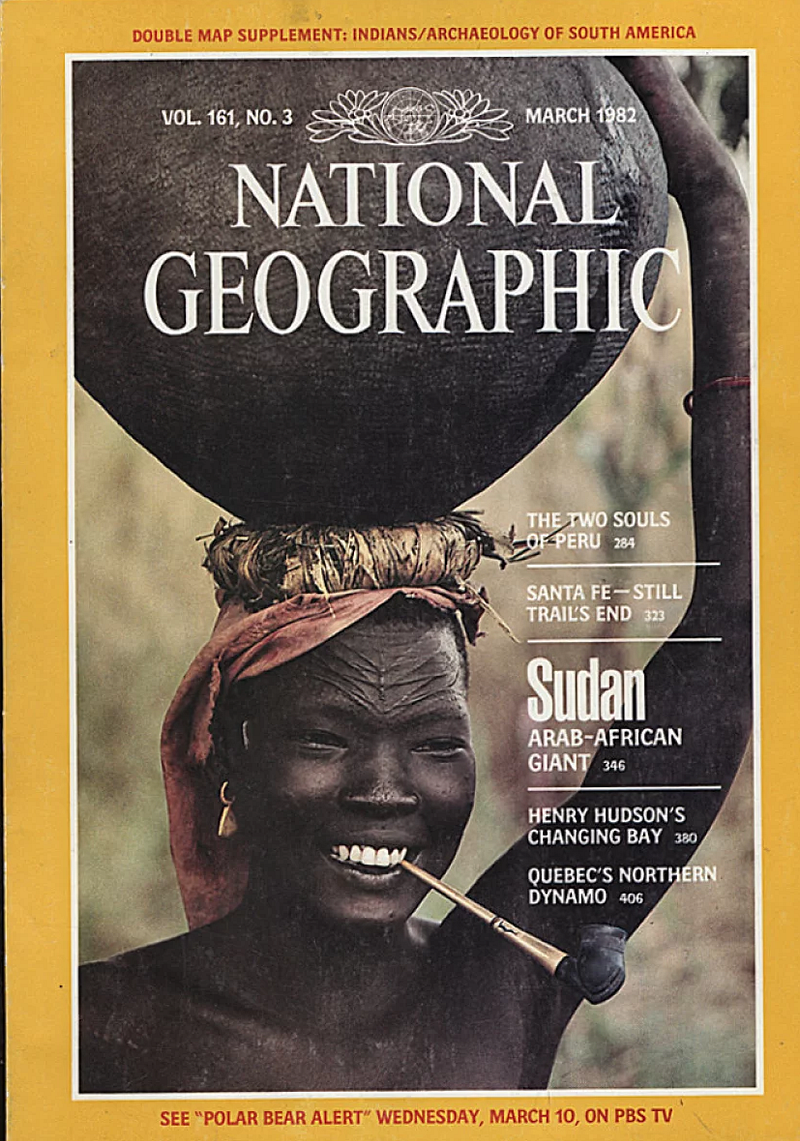
My impressions of Africa come from leafing through my father’s old National Geographics — just ten-year-old me and a box of musty magazines in the basement. I may very well have been searching for tits, but what I found on those pages were stereotypes; the sort of cliches that live in your head for a lifetime.
Here is what National Geographic taught me about Africa.
1. Africa is Homogenous
The number one impression I have of Africa is that it is one place, and its various regions are about as distinguishable as North Dakota is from South Dakota. This isn’t a continent with 54 countries, 2000 languages, and 3000 ethnicities. It’s just 30 million square kilometers of safari tours.

2. The Animals Are Going to Eat You
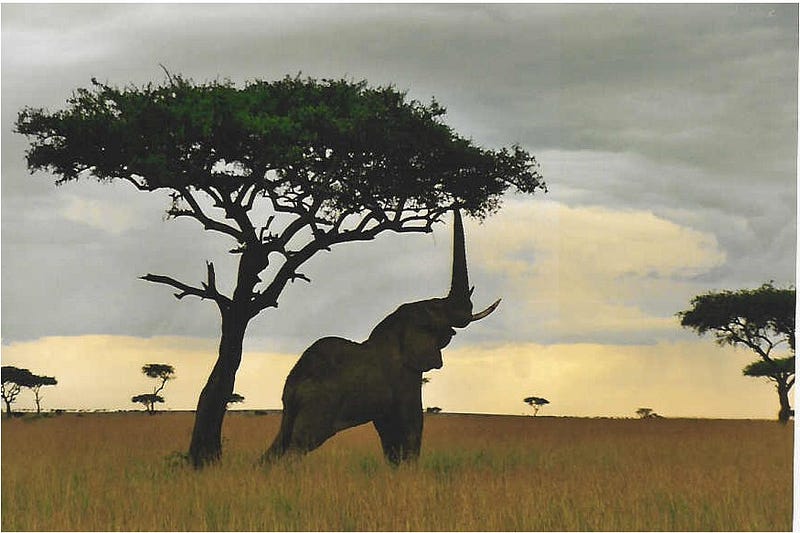
If you go swimming you will be eaten by a crocodile. If you step outside of your Jeep you will be mauled by lions. If you climb a tree you will be dragged out of it by angry elephants. Even vultures will try their luck if they happen to catch you napping. All the scariest animals on earth have congregated in Africa, and all of them are lying in wait just beyond the automatic doors of Kilimanjaro International Airport.
3. Owning a Mobile Phone Makes You a Wizard
National Geographic’s Africa seemed to belong to another century. One of those centuries before the modern marvels of electricity, automobiles, and smart toothbrushes. If the locals catch a glimpse of my iPhone 13 Pro they will surely bow down before me, for only a God could possess such a wondrous device.
4. Who Needs a Suitcase?
As a kid I remember stacking books on top of my head, trying to see how many I could keep steady as I walked from one end of my house to the other. There would be bonus points if I could make it up the stairs! But no matter how good I got at balancing dictionaries on my head, I knew my talents would never compare to a common Rwandan, who must have been born balancing on her own umbilical cord.
5. African Art is Primitive
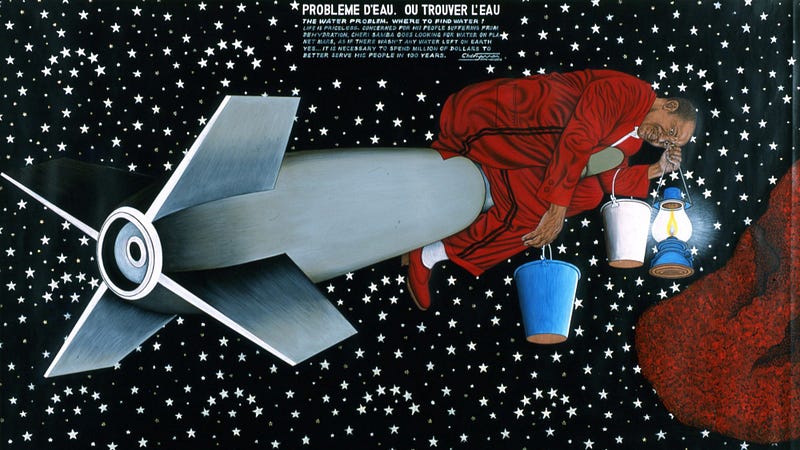
Elaborately painted masks? Pots with fever trees carved into them? Necklaces made from rhinoceros bones? This was the epitome of African art to me. In that young, impressionable brain, there was no room for artists in Africa who played jazz or punk, and certainly no room for contemporary paintings like this:
6. Clothing is Optional
As an adolescent, I could be reasonably sure that any story about Africa would feature a picture of topless women. Unlike other magazines where photos of scantily clad folks abound — Playboy, Hustler, Maxim — National Geographic wasn’t seen as smut. This was educational. The whole point wasn’t to arouse, it was simply to learn about the No-Shirt Natives of Timbuktu. But if you do choose to wear clothing:
7. Khaki Jackets and Tilley Hats Are Mandatory
There are no blue jeans in the heart of darkness. No Tommy Hilfiger, no lululemon, and no Gucci either. Here are your options: dress like a nineteenth-century British colonial asshole, or you strip down and splash around in a tapeworm river like everybody else. Speaking of tapeworms . . .
8. The Water is Full of Tapeworms
Don’t drink the water. Any water. Ever. Even if it comes out of a tap it’s certain to contain tapeworms. Africans are therefore full of tapeworms too. There are ten tapeworms for every man woman and child on the entire continent, and if you so much as look at a puddle too long, they’ll be wriggling inside of you too.
Catch Part I of my Kilimanjaro series here: