avatarDonna L Roberts, PhD (Psych Pstuff)

Free AI web copilot to create summaries, insights and extended knowledge, download it at here

3483

Abstract

nds act as symbolic resources that consumers use to construct, maintain, and project their identity (Belk, 1988).</p><figure id="1eb9"><img src="https://cdn-images-1.readmedium.com/v2/resize:fit:800/0*S8aL6u6KZHbO1-EU"><figcaption>Photo by <a href="https://unsplash.com/@christianw?utm_source=medium&amp;utm_medium=referral">Christian Wiediger</a> on <a href="https://unsplash.com?utm_source=medium&amp;utm_medium=referral">Unsplash</a></figcaption></figure><p id="3fb3"><b>The Dark Side of Conspicuous Consumption</b></p><p id="b2ff">While the act of conspicuous consumption can lead to short-term pleasure and a temporary boost in self-esteem, it has potential downsides. There’s a growing body of evidence suggesting that a materialistic orientation towards life can lead to reduced well-being and increased levels of anxiety, depression, and general unhappiness (Kasser, 2003). Overemphasis on material possessions can also result in strained personal relationships and an inability to find long-term life satisfaction outside the realm of material acquisition.</p><p id="7bdf"><b>Narcissistic Personality Traits and Consumption</b></p><p id="de88">Twenge and Campbell (2009) found that narcissistic personality traits, including entitlement and a need for attention, correlate positively with conspicuous consumption. The act of purchasing and showcasing expensive or exclusive items can serve as an external manifestation of the narcissistic individual’s perceived self-worth and superiority. These purchases are not driven solely by the functional or intrinsic value of the goods but are instead intended to convey a specific image and status to others, fulfilling the narcissistic need for admiration and envy (Sedikides & Hart, 2022).</p><p id="e571">Narcissistic individuals employ conspicuous consumption as a form of social signaling, broadcasting their success, and distinguishing themselves from others (Cisek et al, 2014). This behavior aligns with the narcissist’s tendency to view themselves as exceptional and deserving of special treatment. The products and brands selected during conspicuous consumption often bear symbolic significance, acting as cultural capital and contributing to the construction and maintenance of a desired social identity that mirrors their inflated self-concept.</p><figure id="9b34"><img src="https://cdn-images-1.readmedium.com/v2/resize:fit:800/0*As4fgp9IGui3FtNk"><figcaption>Photo by <a href="https://unsplash.com/@isthatbrock?utm_source=medium&amp;utm_medium=referral">Brock Wegner</a> on <a href="https://unsplash.com?utm_source=medium&amp;utm_medium=referral">Unsplash</a></figcaption></figure><p id="d67f">Conspicuous consumption is a complex behavior rooted in evolutionary biology, social psychology, and cultural influences. While it can serve as a mechanism for status signaling, identity formation, and compensation for perceived inadequacies, it’s essential to recognize the potential pitfalls of over-reliance on material goods for self-worth and happiness. In the pursuit of genuine well-being, it’s crucial to strike a balance between material desires and intrinsic values.</p><p id="e178"><b>References</b></p><p id="6e8f">Belk, R. W. (1988). Possessions and the extended self. <i>Journal of Consumer Research</i>, <i>15</i>(2), 139–168.</p><p id="c015">Cisek, S. Z., Sedikides, C., Hart, C. M., Godwin, H. J., Benson, V., & Liversedge, S. P. (2014). Narcissism and consumer behaviour: a review and preliminary

Options

findings. <i>Frontiers in psychology</i>, <i>5</i>, 232.</p><p id="8151">Festinger, L. (1954). A theory of social comparison processes. <i>Human Relations</i>, <i>7</i>(2), 117–140.</p><p id="81c6">Kasser, T. (2003). <i>The high price of materialism</i>. MIT press.</p><p id="54c7">Mandel, N., Petrova, P. K., & Cialdini, R. B. (2006). Images of success and the preference for luxury brands. <i>Journal of Consumer Psychology</i>, <i>16</i>(1), 57–69.</p><p id="13a3">Miller, G. (2009). <i>Spent: Sex, evolution, and consumer behavior</i>. Penguin.</p><p id="ff93">Sedikides, C., & Hart, C. M. (2022). Narcissism and conspicuous consumption. <i>Current opinion in psychology</i>, <i>46</i>, 101322.</p><p id="3a55">Twenge, J. M., & Campbell, W. K. (2009). <i>The narcissism epidemic: Living in the age of entitlement</i>. Free Press.</p><p id="ad03">Veblen, T. (1899). <i>The theory of the leisure class: An economic study of institutions</i>. Macmillan.</p><p id="6511">Wong, N. Y., & Ahuvia, A. C. (1998). Personal taste and family face: Luxury consumption in Confucian and Western societies. <i>Psychology & Marketing</i>, 15(5), 423–441.</p><p id="8dbc">Zahavi, A. (1975). Mate selection — a selection for a handicap. <i>Journal of Theoretical Biology</i>, <i>53</i>(1), 205–214.</p><div id="a796" class="link-block"> <a href="https://donnarobertsphd.medium.com/the-tyranny-of-busy-how-our-obsession-with-constant-productivity-may-be-harming-our-well-being-37aff76b8ffb"> <div> <div> <h2>The Tyranny of Busy: How Our Obsession with Constant Productivity May Be Harming Our Well-Being</h2> <div><h3>The problem is that you think you have time — Buddah</h3></div> <div><p>donnarobertsphd.medium.com</p></div> </div> <div> <div style="background-image: url(https://miro.readmedium.com/v2/resize:fit:320/0*0MJwghiZMoq57XOO)"></div> </div> </div> </a> </div><div id="cc8d" class="link-block"> <a href="https://readmedium.com/a-dozen-times-a-fictional-character-perfectly-portrayed-a-mental-illness-de9da54653d"> <div> <div> <h2>A Dozen Times a Fictional Character Perfectly Portrayed a Mental Illness</h2> <div><h3>When Art Imitated Life</h3></div> <div><p>medium.com</p></div> </div> <div> <div style="background-image: url(https://miro.readmedium.com/v2/resize:fit:320/0*WMdloibwv5qU82RW)"></div> </div> </div> </a> </div><div id="69cd" class="link-block"> <a href="https://readmedium.com/snap-judgments-and-first-impressions-the-psychology-behind-our-initial-perceptions-of-others-be5518321e7b"> <div> <div> <h2>Snap Judgments and First Impressions: The Psychology Behind Our Initial Perceptions of Others</h2> <div><h3>“Each of us is full of too many wheels, screws and valves to permit us to judge one another on a first impression or by…</h3></div> <div><p>medium.com</p></div> </div> <div> <div style="background-image: url(https://miro.readmedium.com/v2/resize:fit:320/0*MhQ6x1NmOH9NkcA6)"></div> </div> </div> </a> </div></article></body>

Affluence on Display: A Psychological Exploration of Conspicuous Consumption

The basis on which good repute in any highly organized industrial community ultimately rests is pecuniary strength; and the means of showing pecuniary strength, and so of gaining or retaining a good name, are leisure and a conspicuous consumption of goods. — Thorstein Veblen

Photo by freestocks on Unsplash

Conspicuous consumption, a term first coined by the sociologist and economist Thorstein Veblen in his 1899 work “The Theory of the Leisure Class,” refers to the purchase and display of luxury goods and services primarily to flaunt one’s wealth and status rather than to meet a basic need or functional utility (Veblen, 1899). This behavior is not a modern phenomenon, and throughout history, humans have often acquired and displayed expensive items to signify power, prestige, or social status. However, the psychological underpinnings of conspicuous consumption are multifaceted and deserve a deeper examination.

Socio-evolutionary Perspective

From an evolutionary perspective, conspicuous consumption can be seen as a manifestation of signaling theory. In biology, signaling theory explains how animals, including humans, convey information to others to demonstrate fitness or superior qualities (Zahavi, 1975). For instance, a peacock’s extravagant tail feathers signal its genetic fitness to potential mates. Similarly, conspicuous consumption can act as a signal to peers about one’s wealth, resources, or access to resources, which historically could have translated into better survival or reproductive success (Miller, 2009).

Social Comparison and Self-Worth

One significant driver of conspicuous consumption is the human inclination for social comparison. According to social comparison theory, individuals determine their worth based on comparisons with others (Festinger, 1954). When someone perceives their possessions or lifestyle as inferior to their peers, it can lead to feelings of insecurity or inadequacy. Consequently, purchasing luxury items can be a compensatory mechanism to elevate one’s perceived status in the social hierarchy, even if only temporarily (Mandel, Petrova, & Cialdini, 2006).

Cultural Influences

Cultural factors play a substantial role in shaping consumption behaviors. In cultures that place a high value on material success and equate wealth with personal worth, conspicuous consumption tends to be more pronounced (Wong & Ahuvia, 1998). In such societies, material possessions often become symbolic representations of success, with individuals driven to purchase not out of necessity but as a means to validate their self-worth.

Identity Formation and Expression

For many, the products they purchase and the brands they associate with are a form of identity expression. Individuals can use branded luxury items to craft and communicate a desired image to the external world. In this context, brands act as symbolic resources that consumers use to construct, maintain, and project their identity (Belk, 1988).
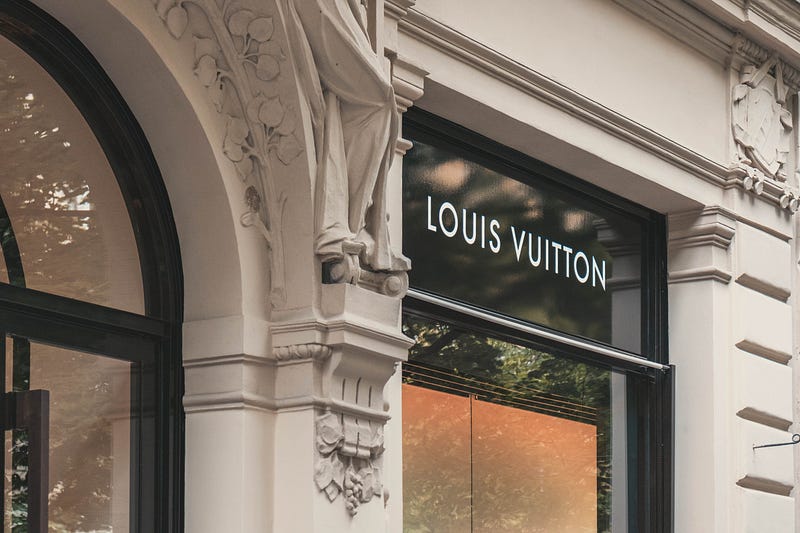
Photo by Christian Wiediger on Unsplash

The Dark Side of Conspicuous Consumption

While the act of conspicuous consumption can lead to short-term pleasure and a temporary boost in self-esteem, it has potential downsides. There’s a growing body of evidence suggesting that a materialistic orientation towards life can lead to reduced well-being and increased levels of anxiety, depression, and general unhappiness (Kasser, 2003). Overemphasis on material possessions can also result in strained personal relationships and an inability to find long-term life satisfaction outside the realm of material acquisition.

Narcissistic Personality Traits and Consumption

Twenge and Campbell (2009) found that narcissistic personality traits, including entitlement and a need for attention, correlate positively with conspicuous consumption. The act of purchasing and showcasing expensive or exclusive items can serve as an external manifestation of the narcissistic individual’s perceived self-worth and superiority. These purchases are not driven solely by the functional or intrinsic value of the goods but are instead intended to convey a specific image and status to others, fulfilling the narcissistic need for admiration and envy (Sedikides & Hart, 2022).

Narcissistic individuals employ conspicuous consumption as a form of social signaling, broadcasting their success, and distinguishing themselves from others (Cisek et al, 2014). This behavior aligns with the narcissist’s tendency to view themselves as exceptional and deserving of special treatment. The products and brands selected during conspicuous consumption often bear symbolic significance, acting as cultural capital and contributing to the construction and maintenance of a desired social identity that mirrors their inflated self-concept.

Photo by Brock Wegner on Unsplash

Conspicuous consumption is a complex behavior rooted in evolutionary biology, social psychology, and cultural influences. While it can serve as a mechanism for status signaling, identity formation, and compensation for perceived inadequacies, it’s essential to recognize the potential pitfalls of over-reliance on material goods for self-worth and happiness. In the pursuit of genuine well-being, it’s crucial to strike a balance between material desires and intrinsic values.

References

Belk, R. W. (1988). Possessions and the extended self. Journal of Consumer Research, 15(2), 139–168.

Cisek, S. Z., Sedikides, C., Hart, C. M., Godwin, H. J., Benson, V., & Liversedge, S. P. (2014). Narcissism and consumer behaviour: a review and preliminary findings. Frontiers in psychology, 5, 232.

Festinger, L. (1954). A theory of social comparison processes. Human Relations, 7(2), 117–140.

Kasser, T. (2003). The high price of materialism. MIT press.

Mandel, N., Petrova, P. K., & Cialdini, R. B. (2006). Images of success and the preference for luxury brands. Journal of Consumer Psychology, 16(1), 57–69.

Miller, G. (2009). Spent: Sex, evolution, and consumer behavior. Penguin.

Sedikides, C., & Hart, C. M. (2022). Narcissism and conspicuous consumption. Current opinion in psychology, 46, 101322.

Twenge, J. M., & Campbell, W. K. (2009). The narcissism epidemic: Living in the age of entitlement. Free Press.

Veblen, T. (1899). The theory of the leisure class: An economic study of institutions. Macmillan.

Wong, N. Y., & Ahuvia, A. C. (1998). Personal taste and family face: Luxury consumption in Confucian and Western societies. Psychology & Marketing, 15(5), 423–441.

Zahavi, A. (1975). Mate selection — a selection for a handicap. Journal of Theoretical Biology, 53(1), 205–214.

Psychology
Consumer Behavior
Consumerism
Luxury
Wealth
Recommended from ReadMedium