
Advice To My Nigerian Daughter-in-Law About Buying A House in the U.S.
Do the rules of real estate translate from place to place?
At the end of her vacation, I drove my daughter-in-law Abeni to the airport. She and my stepson Trey were just finishing up ten days with the family in New Hampshire.
My husband and I were each driving one of the kids to the airport so we could have a little private time with each of them before they flew back to Tennessee.
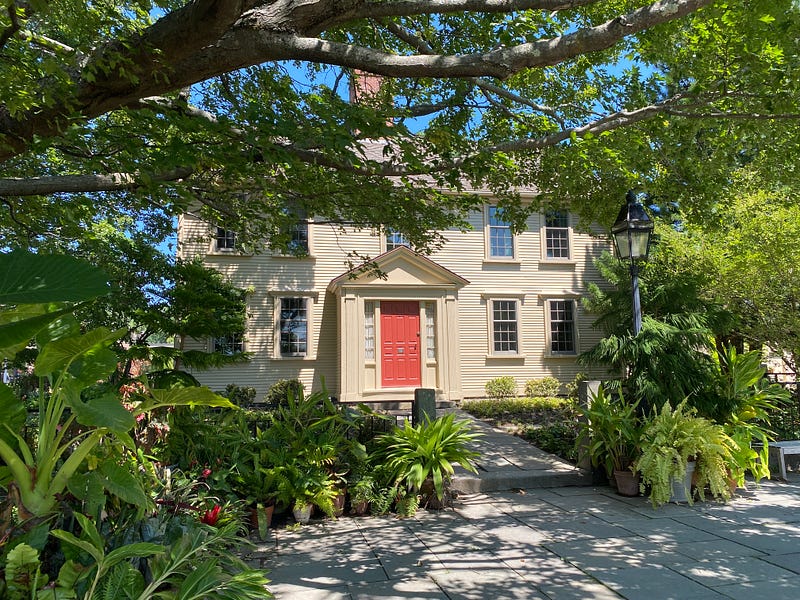
As I was driving, we passed a local farm that was founded in 1660 and is still in operation today. I pointed it out because I love old homes. Both Dover and Portsmouth, towns up the road from us, are celebrating their 400th anniversary in 2023. I’m excited by that.
Abeni looked over and grimaced.
“I think all these old things should be torn down,” she said.
Torn down?
These beautiful old homes are one of the best things about living in New England.
I am not from the northeast, by the way, but felt at home among the old bridges, barns, and villages, and decided to stay.
I never assumed that mine was a universal opinion. Nevertheless, architecture dating from the 1600s and early 1700s draws millions of tourists to New England each year.
Like foliage season in fall, maple season in spring, and ski season in between, the homes that survive through the centuries is what makes this region special.
Not for everyone, I guess.
Abeni grew up in Nigeria
Although I had come to know what traditional Yoruba, Hausa, and Igbo homes looked like, I realized I knew nothing about Nigeria’s real estate market.
What do most Nigerians look for in a home? What forces drive the local real estate market? What motivates people to buy?
I started investigating.
I found that it’s complicated.
Nigeria’s real estate is influenced by two distinct forces
One is population growth, and the other is its conflicted mix of ownership laws.
- The uncertain legal environment pulls chaos into the market. Habitat World Map explains it this way:
After independence in 1960, the state took possession of all the land. It has certainly weakened customary land tenure, but the traditional law has continued to be recognized in areas where land had long been owned by clans and families.
This complex arrangement includes not only traditional land ownership practices and government ownership, but also laws held over from the colonial period. Habitat adds that, “Nigeria inherited a colonial land law has never responded to the needs and expectations of local populations.”
2. The other factor, Nigeria’s steep rate of population growth, throws the chaos of the ownership law into an accelerator.
Population Matters predicts that by 2050 the population of Nigeria will overtake China as the second most-populous country.
Between 1960 (at the end of the civil war) and 1990, Nigeria’s population doubled — from 44,928,342 to 94,214,257. From 1990 to 2020, the population doubled again to 208,327,405.
Even more surprising (to me) is this statistic: with no curbs on current increases, Population Matters predicts that by 2050 the population of Nigeria is expected to overtake China as the second most-populous country:
By 2050, our population is expected to double and by 2100, Nigeria’s population will jump to 791 million, overtaking China to become the second-most populous country in the world after only India.
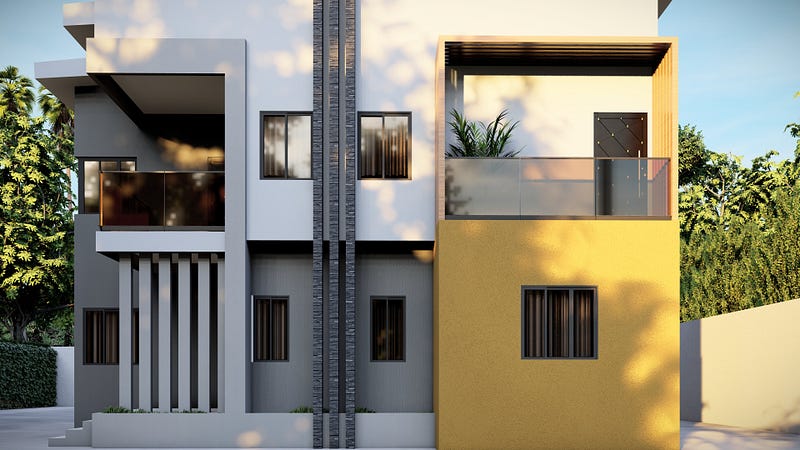
Given this rapid increase in population, it’s obvious that there simply isn’t going to be enough housing left over from previous generations for current and future Nigerians. New housing isn’t only a preference, but a necessity. What is being built, however, isn’t intended to last.
According to the the Nigerian Institute of Architects, housing in the country is expected to last only 20 to 30 years.
To illustrate this in bittersweet detail, check out this renovation of a house from 1959.
The structure is in the central cultural and governmental district in Lagos, so the location is amazing!
Still, judging by the owner’s having to explain what he’s doing and why on earth he’s doing it, we can assume that most Nigerians will need a lot of convincing before embarking on this type of project.
Nigeria’s changing very quickly, however
Housing that lasts only a couple of decades won’t serve homebuyers longterm in a country that’s undergoing a population explosion, simply because there will be continue to be a dearth of suitable housing as the stock rapidly ages out of usefulness.
For this reason old housing needs to be renovated for new generations to live in it.
Buildings need to be constructed for 100 years instead of 20, and traditional single family homes will have to give way to multifamily buildings.
As Sunny Echono, new president of the Nigerian Institute of Architects, says:
With the limited space we can accommodate more people because we have one of the highest population growth rates in the world currently in the region of 3.2 percent per annum.
Knowing what I know now, I can see that Abeni’s distaste for historic houses is based in sound economics
Paying off your mortgage on a house that has lost its resale value adds nothing to your bottom line.
As a result, Nigerians don’t consider a house an investment, but a depreciating asset…more like a car or a motor home.
If Nigerian architects and home buyers follow Sunny Echono’s advice, however, that may change soon.
Trey and Abeni are now looking for a house in Tennessee
Here’s the advice I gave them:
- Location is king: find a town that has something in it that will always draw people to it — such as a recreation area, a university, a historic site, or a state park; evergreen locations bolster resale value. Find a neighborhood that’s as close to transportation and amenities as possible. Check walkability scores.
- Quality counts. For new or almost-new construction, be sure to check the builder, the materials used, and the building codes of the area you’re considering, before putting down that offer. For any age of house, get the best quality inspection you can afford; it will save you money and heartache in the end.
- If historic preservation hasn’t taken off yet in your area, this could be a great opportunity to get in on the ground floor in some solidly-built old real estate in prime locations while everyone else is, for the moment, chasing new construction.
- Be philosophical. No one can guarantee what the future will hold. Life, by its very nature will keep surprising us. This advice is coming from my own experience, but I’m not an economist, psychic, or God.
- Real estate is always local. Wherever you’re thinking buying a home, understanding the underlying forces at work in your local market is key to making the best investment.
Good luck!