
Advice on Failure, Leadership, and Rejection from a Hacking for Defense Alum

Introduction
Let’s first acknowledge that hacking has negative connotations surrounding it. Society has ingrained us to picture a person with a hoodie over their head sitting in a dark room, surrounded by computers and coding at an ungodly pace. That a hacker is someone who intends to perform malicious acts.
I’m here to tell you this is not entirely true. To me, hacking looks more like this:

Hacking, in this context, is when you are “hacking” a problem. In other words, you are:
- Identifying and defining the problem
- Assigning a diverse team to handle the problem
- Collaborating with team members
- Creating solutions
- Pitching ideas
Would you look at that? We just picked up hacking from the negative connotation bin and placed it into the positive connotation bin.
About Hacking for Defense (H4D)

“A credit-bearing university course that offers the Department of Defense and Intelligence Community the opportunity to collaborate with talented student teams to develop innovative solutions to the nation’s emerging threats.” — H4D
You are split into teams and are given a selection of proposals from the Department of Defense. A proposal comprises of the following:
- Problem Title
- Challenge
- Background
- Operational Constraints
- Problem Sponsor
- Problem Sponsor Location
- Senior Leader
Your team collectively decides which proposal you want to hack then you pitch for it. If your pitch lacks energy and passion, you won’t get assigned that proposal. This seemingly minuscule first step gives you an initial taste of how word selection sets the stage. Remember that people invest in people, not ideas.
For example, my team was a combination of mechanical engineering (undergrad level with certifications in product design and innovation), mechanical engineering (grad level with several years of work and research experience), information sciences (undergrad level with ROTC and leadership experience), and analytics (grad level with a psych background and research/tutoring/law experience).
The main concept behind our pitch was having a background-diverse team; thus, we would be less susceptible to pigeon-holding ourselves into one solution. We had the unique ability to view the problem through a kaleidoscopic lens. More solutions = less risk for investors. Additionally, we showed we cared about the problem as much as we cared about who was on our team. There’s no reason you should be the one to solve a problem when you are not passionate about it, let alone receive millions in funding. That is a recipe for disaster.
Over the next 3 to 4 months, you are heavily involved in:
- Customer Discovery
- Market Analysis
- Team Meetings
- Office Hours
- Problem Sponsor Meetings/Chats
- Business Model Generation
- Minimum Viable Product (MVP) — Edits or Full Pivot
- Customer/Beneficiary Archetype Creation
- Networking
- Pitches
- Personal Development
- Failure
The above is not an exhaustive list but gives those outside the H4D world a glimpse inside. It’s important to note that you only get out what you put in.
Navigating Failure
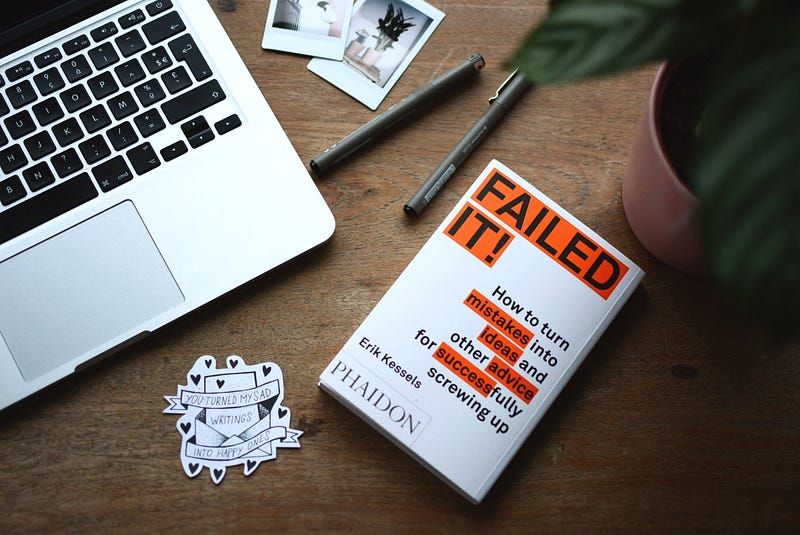
Experiencing utter failure was the best thing to ever happen to me. Falling flat on my face and having the floor ripped from under me on a weekly basis has enabled me to do the following better:
- Identify and navigate negative emotions
- Take other people’s reactions with a grain of salt
- To respond, not react
- Understand that no stands for Next Opportunity (thanks to a fellow Duquesne peer, Chike, for sharing this on one of my LinkedIn posts)
- Keep asking questions
- Collaborate with team members on a deeper level (take special note of their strengths, weaknesses, and everything in between)
Sound scary? Definitely, but here’s something I read every day to keep my energy up and to keep going:
“Failure should be our teacher, not our undertaker. Failure is delay, not defeat. It is a temporary detour, not a dead end. Failure is something we can avoid only by saying nothing, doing nothing, and being nothings.” — Denis Waitley
Right here is when I ask YOU these 3 critical questions:
- Why be nothing when you can start embracing how awesome you are?
- Why do nothing when your actions and ideas can change the world, even if it’s small scale?
- Why avoid all risk and associated failure when you can finally hold yourself accountable and tackle toxic behaviors?
I learned that too many people in this world are so focused on themselves while simultaneously being terrified of what others think of them (special thanks to Jen Sincero for writing You are a Badass). No idea is dumb. Only the presentation, and lack of preparation, of it can be.
There’s a difference between failure and not trying. I view failure as it was simply not meant to be — at that particular moment in time. It does not mean you are doing something wrong. All it means is the Universe is telling you to keep trying and to come back better than ever. Failure is practice for future success.
Understanding Leadership

It felt like everything I knew was tossed into the oblivion and that I was always taking the wrong turn. I quickly began to understand that’s the reality of business. The hardest pill to swallow is acknowledging you are the one who needs to figure things out. Even if you study every scenario possible, there are no correct answers.
If you want to go further in life or take your idea to the next level, start manifesting what you want it to look like then set realistic goals. You are the sole leader of your life. The business world does not offer a path to follow, so get comfortable with being uncomfortable.
Jerry Colonna, the CEO of Reboot.io, explains that leadership is not about having answers but about operating on a higher wave of emotional intelligence and having the kind of character that allows others to put their trust in your actions (check out this post and his book, Reboot).
In short, recognize that your words and actions have an effect on others. It’s up to you to decide what kind of message you want to deliver.
Handling Rejection

Rejection hurts, causes us to lash out on others, and encourages association of negative thoughts/feelings with those who told us no. It’s ironic when leaders say they never make emotional-based decisions. In reality, everything we do stems from emotion. It makes us who we are, so give thanks to your amygdala, prefrontal cortex, hippocampus, and hypothalamus. On the bright side, though, you can regulate those emotions and minimize the magnitude of reactions through mindfulness.
“Make the present moment your friend rather than your enemy. If you stay in the moment, you’ll have what is called spontaneous right action, which is intuitive, which is creative, which is visionary, which eavesdrops on the mind of the universe.” — Dan Harris, 10% Happier
Tara Brach, an American psychologist and author, devised a method for applying mindfulness in acute situations: RAIN.
R: recognize
A: allow
I: inquire, investigate
N: non-identification, nurture
On a deeper level, name your negative thoughts, acknowledge your distress and accept it as your present reality, ask questions like what triggered your distress or when you have felt this way before, and remind yourself that your negative thoughts are not you.
Meg Selig explained the importance of doing this in her Changepower! book: “The more you can surround your negative thinking with compassion, the easier it will be to dissolve it and move on.”
Each rejection provides an opportunity for you to practice mindfulness. By switching the automatic “Whatever, this person is dumb and wasn’t even listening to me” to “This is good because…”, you are making a step in the right direction. And yes, it does get easier over time.
Now go out and change the world. I am rooting for you.
Key Takeaways
- Change is good. It’s great. It’s fantastic. Get comfortable with it.
- Failure is unavoidable if you’re trying to make a difference.
- Your negative thoughts are not you.
- Customer Discovery is everything, so TALK TO PEOPLE. If you think you’ve talked to enough, you haven’t.
- If you don’t know your customers, you will never know their true pain points; thus, a failed product launch.
- Time is limited. Business moves fast. Remove the fluff and get to the point.
- No conversation will be the same. Some feel like you’ve been blindsided and pushed down the Niagara Falls in a wooden barrel like Annie Taylor. Others feel like you’ve known this person since birth. A select few will change who you are (I know this first hand).
Resources
H4D
- Talking to Humans by Giff Constable
- The Startup Owner’s Manual: The Step-By-Step Guide for Building a Great Company by Steve Blank and Bob Dorf
- Business Model Generation: A Handbook for Visionaries, Game Changers, and Challengers by Alexander Osterwalder and Yves Pigneur
- Value Proposition Design: How to Create Products and Services Customers Want by Alexander Osterwalder, Yves Pigneur, Gregory Bernarda, Alan Smith, and Trish Papadakos
- Testing Business Ideas: A Field Guide for Rapid Experimentation by David Bland and Alexander Osterwalder
Personal Development
- 10% Happier by Dan Harris
- You are a Badass: How to Stop Doubting Your Greatness and Start Living an Awesome Life by Jen Sincero
- Reboot: Leadership and the Art of Growing Up by Jerry Colonna
Author Note
Thanks for reading! Please feel free to follow me on Medium, LinkedIn, and Twitter. I’d love to continue the conversation and hear your thoughts/suggestions.
-Mo