
Adopters, We are Begging You to Listen.
A loving entreaty to adoptive and foster parents from an adoptee to please… stop talking and listen.

On a warm August day in 1989, I walked out of a courthouse in SC and blinked against the sun. I felt numb. I was now legally the daughter of this man and woman I only just met a few months ago, and sibling to their creepy (also adopted) son.
I didn’t particularly feel comfortable with them, more uncomfortable, even, than some of the foster homes. No one had truly asked me my opinion or how I felt- when my social worker asked me how I liked them, I shrugged. And then I was just signed over, documents passed above my head, signed and stamped, like a piece of property.
If you are an adoptive or foster parent and you currently have children in your care, it is well worth your time to quiet yourself and open your mind and heart to authentic listening.
For context and background, I am an adoptee and a part of what I now consider a failed adoption (more on that later). I was adopted at the age of six after passing through eight foster homes in rural South Carolina in the 1980’s.
The first and foremost most important thing to remember during this time, and this is what seems to be the most difficult for potential adopters to truly grasp, is this:
This is not about you.
That’s right, centering yourself in a legal situation regarding a child who is losing their biological family, is grossly inappropriate, inconsiderate, and incongruent with doing what’s actually best for that child.
A concerning amount of idealistic-yet-woefully-ignorant people go blindly into the world of fostering and adopting with themselves and their goals at the forefront of their minds.
They feel really great about themselves and the life they can give some poor child and the love they can give this child, so much so that it seems inevitable in nearly every such scenario, the foster or adoptive parent develops a full-blown savior complex. [It’s also worth noting that in many cases, infertility is an issue, so if a woman cannot have a child, she wants to go get a child.]
When a foster or adoptive parent places themselves center, they become incapable of recognizing a fundamental truth of what is happening in their home, a truth that no one wants to admit or say aloud, and that is this:
This is a trauma.
That’s right, no matter how well intentioned you are, no matter the circumstances surrounding this child or children being removed from their family’s care, that child is enduring a trauma.
Being placed in your beautiful, Instagram-worthy home with a pool in the backyard does not automatically equal happiness and comfort to that child. Nor does it erase that the very fact that they are living in your home means their biological family, their root system, has been torn apart, which inherently is a huge trauma for anyone, but especially a child.
This is a deep, deep trauma, one commonly referred to as “The Mother Wound”. That child will have psychological impact from this for decades to come. Understanding that is vital to centering the child, not yourself, and to ensuring that you are ready to provide mental health treatment for this child as long as he or she needs, which typically means well into adulthood, due to this immense and life-changing trauma.
And if you’re actively engaging in something that will cause this child to need years, if not decades, of intense therapy, it should go without saying that:
This is probably not what’s actually in this child’s best interest.
I understand that’s probably hurtful to hear.
“But his mother is on drugs.” “But her father is in jail and her mother works two jobs.” “But they are… SO poor.”
Literally none of those are reasons to take someone’s child from them. Intervene? Yes. Step in and assist? Of course. Take the child back-to-school shopping and ensure they’re clothed and supplied? Yes, that’s on the right track. Offer childcare temporarily, and preferably in the child’s home, while Mom is in rehab, goes to job interviews, etc? You’re getting so much warmer.
Ensure that child is receiving holistic care while still in their home and with regular contact with their parent and family, even if it’s uncomfortable to you because of race and class differences?
Bingo.
Our current (and antiquated) systems in place, including but not limited to family courts, social work programs, DSS, CPS, and hosts of private for- and not-for profit adoption agencies, have applied an industrial “solution” to a human problem.
Parents are going to mess up. Parents are going to struggle. Parents are going to make mistakes.
No parent should have to pay for a mistake by having their child taken from them, permanently and without recourse. No child should have to pay for their parent’s mistake by losing their parent (and entire family) altogether, permanently and without recourse. No grandparent should pay for their child’s mistake by losing contact with their grandchild, permanently and without recourse.
This is kidnapping and human trafficking.
And aside from the trauma of losing a mother and/or father, children are being robbed of the wealth of intergenerational knowledge and connection along the way. Children don’t just lose mom and dad, they lose grandparents, aunt and uncles, cousins, and the rich heritage of their deeply unique and personal family culture.
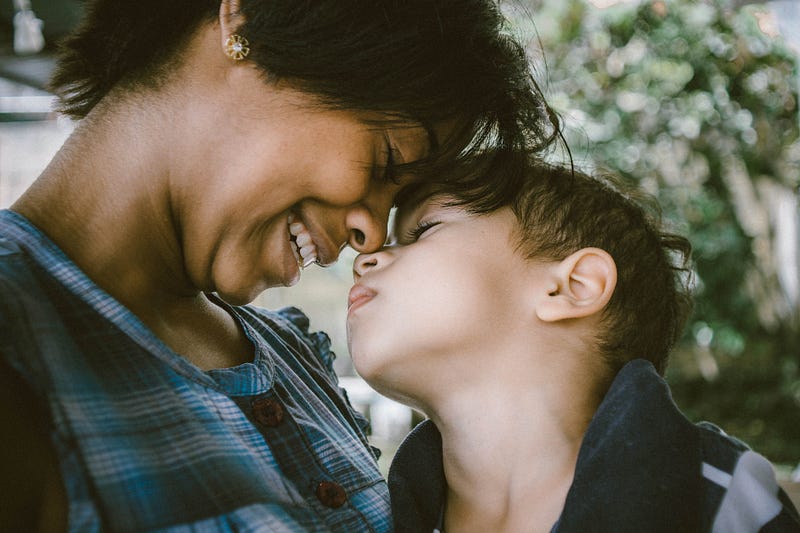
The bond between mother and child is one of the most ethereal, intimate, deeply innate relationships that is part of the human experience. The depth of connection is inexplicable.
Before gleefully jumping to sever that connection between a child and their mother so you can fulfill your desire to add to your brood, or “save” another kid, or whatever your motivation is, truly ask yourself if you are willing to be the tool for this child’s trauma by becoming the axe that cuts their family connection forever.
OK, I’m listening. Now what?
If you have already adopted, my most urgent piece of advice is to go find that child’s mother and reopen lines of communication between your child and their parent(s).
- Open as many lines of family communication as you can. Grandma, aunts and uncles, and definitely any other siblings that they may have lost in the adoption should be found and the child have access to form and keep relationships with as many of their family members as they would like.
- Resist the urge to center yourself, your feelings, and especially what you’ve “done” for the child and recognize that when you entered this triad (child, mother, you), you inherently took on the responsibility of doing what’s best for that child… and that includes this.
- Have the uncomfortable conversations, track down phone numbers and addresses, and work with an entire other family to coordinate family get-togethers, holidays, birthdays, etc., just as you would with your own children and their other parent after a divorce.
- Allow your child to, without guilt, pressure, or manipulation, choose where they would like to spend holidays and important days, and then honor their request. If blended families can work around varying custody agreements and court orders, so can you. You have custody, not ownership. You and your family don’t “own” that child and so you do not “own” her during holidays and especially not on her birthday.
- Be prepared for that child to choose their parent over you. This may mean if their mother gets sober and stays sober for years, when that child is an adolescent they may want to go live with her again. Are you prepared for that? Would you be prepared to recognize that people can change and heal and that the best possible place for that child is with her mother, who is now a functioning and healthy parent? (If your answer is no, please do not ever adopt. You are interested in human trafficking and “owning” a child of your own, not in truly doing what’s best for any child.)
And if you are currently fostering, what are you doing to assist that mother in healing, in getting the resources she needs to be the best mother she can for her child? Or are you eagerly awaiting the day she finally fails the final ‘test’ and loses her parental rights so that you can swoop in and be savior?
Let’s be really honest on that last one, because I’ve seen a disturbing trend of foster parents posting celebratory content when “their” foster child’s parent loses rights to them permanently [thus making them legally ‘available’ to adopt]. I invite you to contemplate the mindset of an adult who celebrates a child permanently losing a parent and then ponder if that person is truly the best individual to be caring for children.
Would you ever consider a model of fostering that entails you going into that child’s home and cooking dinner, helping them with homework, and then turning over care duties to Mom when she gets home from work?
If your answer is no, why not? Because you’d be uncomfortable? Or because it would be too much to juggle?
It seems with our current model, we are structuring everything around the comfort and availability of the adults, which inherently means the only one sacrificing comfort is the child.
The child has to adjust. Not you. The child has to spend time in a stranger’s home. Not you. The child has to endure months and years of being uncomfortable. Not you.
Let’s cut to brass tacks here: there are obviously horrific scenarios in which a child being removed from their parents is absolutely warranted. There are sadistic people who abuse their own children, and they absolutely should not be custodial parents.
However, we must be extraordinarily cautious not to remove children from caring homes with parents who are temporarily struggling and place them in abusive homes with individuals who are temporarily pretending to be decent people.
Like I said, I would consider mine to be a “failed adoption”; I had extremely little contact and support throughout my adult life from my adoptive parents. They have made no effort to contact me or even pretend to be ‘familial’ anymore. I kept pushing and trying to have a relationship for years until it dawned on me how they truly felt about me, so I simply stopped calling and figured when they made the effort to call we could have a real conversation about it.
That was almost six years ago. They haven’t called.
My adoptive mother made disturbing comments when I was a child, like “We picked you because you look like us,” followed by the even more disturbing behavior of making sure to mention in conversation upon meeting new people that we were adopted. Then why did we need to “look like her” if she was just going to tell everyone we met?? The savior complex was strong.
I was abused in many ways while in their home, and while I’m not delving into that in this piece, it’s very important to note that they continued acting as if I owed them something for years after the abuses had been exposed. When I say… the savior complex was strong… it’s kind of mind-boggling, actually.
They didn’t save me from anything. I needed to be saved from them.
I’m not going to say that all foster and adoptive parents are narcissists, because I know perfectly well that’s not true, but this particular community does tend to attract people who have a propensity to be pretty self-centered, have substantial savior or martyr complexes, think simplistic answers are always the best, and fail to grasp- or admit they grasp- the complicated intricacies of interpersonal relationships with unequal power dynamics, like between a child and a caregiver, and the infinitely complex nature of families.
Not every family has to look like yours to be “ok”, and not every parent has to care for their child like you for it to be “correct”.
Ultimately, in the vast majority of cases, the people best equipped to raise a child are that child’s parents. In the event that this is not the case, every effort should be made to care for the child without disrupting their life, routine, and extended familial and cultural connections.
A final thought: if you’ve read this from a defensive position and you say you are NOT a narcissist or have a savior complex, I invite you to prove it!
Care for a child in a radical way that both tends to their immediate needs and preserves their bond with their family and does not rob a mother of her child. Refuse to engage in state-sanctioned human trafficking and insist on an open adoption for that child.
Mahatma Gandhi is quoted as saying, ‘the true measure of any society can be found in how it treats its most vulnerable members’. I challenge you to reconsider the way we’ve been thinking about fostering and adoption and truly place the children’s deepest, long-term needs at the forefront.
Thank you for reading and, I deeply hope, taking into consideration the life experience of someone who has experienced this reality and lived with the resulting trauma.

My name is Melissa Corrigan, and I’m a freelance writer/thought sharer/philosopher in coastal Virginia. I am a mom, a wife, a veteran, and so much more. I deeply enjoy sharing my thoughts and receiving feedback that sparks genuine, respectful conversation.
If you like my content, please consider subscribing… click here.
If you love my work, consider buying me a coffee? Or further, become a member for exclusive content and more!