avatarDavid's psych club

Free AI web copilot to create summaries, insights and extended knowledge, download it at here

1834

Abstract

readmedium.com/v2/resize:fit:800/1*AvTimT02Yh7amCFna7yflQ.jpeg"><figcaption>The famous Sturm und Drang (Wiktionary)</figcaption></figure><p id="6b05">Self-awareness and awareness of one’s environment become acute. Everything is felt more intensely, and sensations become ends in themselves.</p><h2 id="0115">A visionary view</h2><p id="74c6">Many of Hall’s observations were confirmed by research. Hall believed that adolescents form a particularly at-risk population for depression: he described a “depression curve” starting at age eleven, peaking at fifteen, and then steadily declining until the age of twenty-three.</p><p id="d8c0">Recent studies have highlighted a similar trend. Nor have the causes of depression identified by Hall changed: fear of not being loved, feeling insurmountable flaws, and “searching for love without hope.”</p><p id="455d">For Hall, the embarrassment felt in adolescence leads to self-criticism and a form of intolerance. This is confirmed by modern studies, which show that young people, as they improve their reasoning abilities, develop a thin-skinned sensitivity. Hall also asserts that delinquency is more prevalent during adolescence, peaking around eighteen, which has been confirmed since.</p><p id="49e5">But his assessment is not entirely negative since, in <i>Youth: Education, Regimen, and Hygiene</i>, Hall considers adolescence as a transition to a better state. “Adolescence is a new birth, as it sees the birth of superior and more human traits.”</p><figure id="4cf7"><img src="https://cdn-images-1.readmedium.com/v2/resize:fit:800/1*hkTOiX2ezp8lln9NkGIh3g.jpeg"><figcaption>The book were Hall described adolescence (Amazon.com)</figcaption></figure><h2 id="60d6">Who was G. Stanley Hall?</h2><p id="fc2f">Born into a farming family in Ashfield, Massachusetts, USA, Granville Stanley

Options

Hall graduated from Williams College in 1867. Due to lack of money, he had to wait a year to go to Germany, a year he spent studying theology in New York.</p><p id="b191">Returning to the United States in 1870, Hall studied under William James for four years at Harvard, where he earned the first American Ph.D. in psychology. He returned to Germany and worked for two years with Wilhelm Wundt at Leipzig, in his laboratory of experimental psychology.</p><figure id="c2d9"><img src="https://cdn-images-1.readmedium.com/v2/resize:fit:800/1*x3fMmrwGKrSgOaPS0-WW0w.jpeg"><figcaption>Wundt’s psychology lab in Leipzig, were Hall worked alongside Wundt (Brewminate)</figcaption></figure><p id="f141">In 1882, Hall was appointed professor at Johns Hopkins University in Baltimore, where he established the first American laboratory dedicated to psychology. He launched the American Journal of Psychology in 1887 and became the first president of the American Psychological Association in 1892.</p><figure id="676a"><img src="https://cdn-images-1.readmedium.com/v2/resize:fit:800/0*6AmNetW3QFOTFg2m"><figcaption>The John Hopkins University, in Maryland, were Hall established his psychology lab (twitter)</figcaption></figure><h2 id="64dd">Summary of the article</h2><p id="112b">Human development is determined by the innate: it draws from our “ancestral memory.” That is why a child has the same capabilities as an animal and goes through several stages of growth. Adolescence marks a brake in this evolutionary momentum; it is a time of individual change.</p><p id="5aa6">Adolescents go through a period of distress during which they become more sensitive, reckless, shy, and prone to depression. The adult then emerges from childhood as a more civilized, more structured being. Conclusion: Adolescence is a new birth.</p></article></body>

Adolescence is a new birth

A deep dive into the psychological roots of humanity (Article no.11)

In theory, adolescence — from the Latin adolescere, meaning “to grow” — is an intermediate phase between childhood and adulthood. In practice, it simply refers to the years surrounding puberty.

In most Western societies, the concept of adolescence only emerged in the 20th century: previously, adulthood followed childhood, typically around the age of eighteen.

Granville Stanley Hall (1844–1924), a pioneer of experimental psychology in the United States, was the first scientist to delve into the subject by publishing Adolescence in 1904. Influenced by Darwin’s theory of evolution, Hall believed that all childhoods reflect, especially in behavior and physical development, an evolutionary process, and that each of us develops based on our genetic heritage.

Granville Stanley Hall (Mass Moments)

Hall was also influenced by the German literary movement Sturm und Drang — “storm and stress” — which at the end of the 18th century advocated total freedom of expression. For Hall, adolescence fell under Sturm und Drang as a phase of emotional upheaval and rebellion, with behaviors oscillating between mood swings and risk-taking. The adolescent “aspires to exalted feelings and new sensations; monotony, routine, and detail are intolerable to him.”

The famous Sturm und Drang (Wiktionary)

Self-awareness and awareness of one’s environment become acute. Everything is felt more intensely, and sensations become ends in themselves.

A visionary view

Many of Hall’s observations were confirmed by research. Hall believed that adolescents form a particularly at-risk population for depression: he described a “depression curve” starting at age eleven, peaking at fifteen, and then steadily declining until the age of twenty-three.

Recent studies have highlighted a similar trend. Nor have the causes of depression identified by Hall changed: fear of not being loved, feeling insurmountable flaws, and “searching for love without hope.”

For Hall, the embarrassment felt in adolescence leads to self-criticism and a form of intolerance. This is confirmed by modern studies, which show that young people, as they improve their reasoning abilities, develop a thin-skinned sensitivity. Hall also asserts that delinquency is more prevalent during adolescence, peaking around eighteen, which has been confirmed since.

But his assessment is not entirely negative since, in Youth: Education, Regimen, and Hygiene, Hall considers adolescence as a transition to a better state. “Adolescence is a new birth, as it sees the birth of superior and more human traits.”

The book were Hall described adolescence (Amazon.com)

Who was G. Stanley Hall?

Born into a farming family in Ashfield, Massachusetts, USA, Granville Stanley Hall graduated from Williams College in 1867. Due to lack of money, he had to wait a year to go to Germany, a year he spent studying theology in New York.

Returning to the United States in 1870, Hall studied under William James for four years at Harvard, where he earned the first American Ph.D. in psychology. He returned to Germany and worked for two years with Wilhelm Wundt at Leipzig, in his laboratory of experimental psychology.
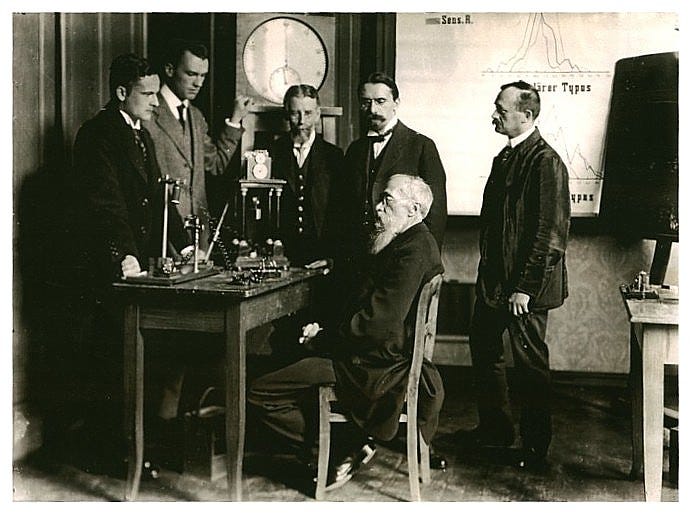
Wundt’s psychology lab in Leipzig, were Hall worked alongside Wundt (Brewminate)

In 1882, Hall was appointed professor at Johns Hopkins University in Baltimore, where he established the first American laboratory dedicated to psychology. He launched the American Journal of Psychology in 1887 and became the first president of the American Psychological Association in 1892.
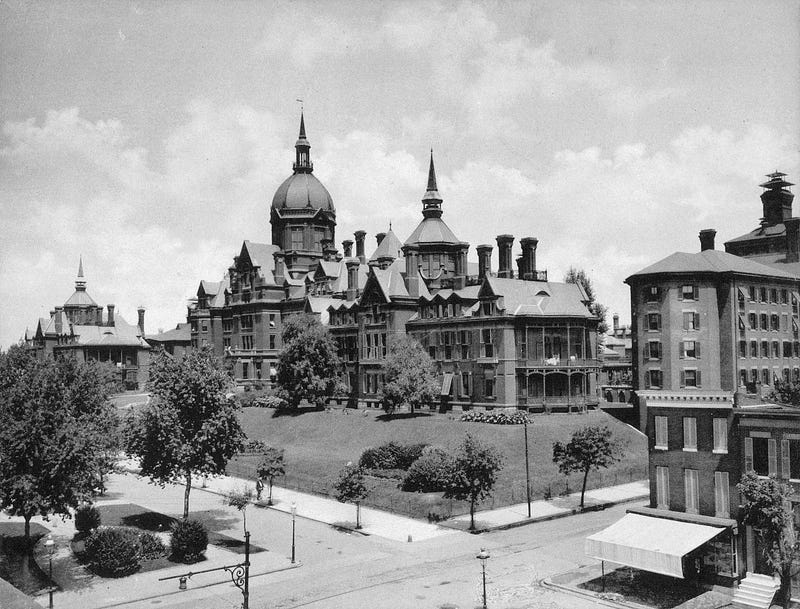
The John Hopkins University, in Maryland, were Hall established his psychology lab (twitter)

Summary of the article

Human development is determined by the innate: it draws from our “ancestral memory.” That is why a child has the same capabilities as an animal and goes through several stages of growth. Adolescence marks a brake in this evolutionary momentum; it is a time of individual change.

Adolescents go through a period of distress during which they become more sensitive, reckless, shy, and prone to depression. The adult then emerges from childhood as a more civilized, more structured being. Conclusion: Adolescence is a new birth.

Education
History
Psychology
Philosophy
Medicine
Recommended from ReadMedium