
ADHD, Waiting Mode, and How I Fight It
Hint: I wrote this article in Waiting Mode
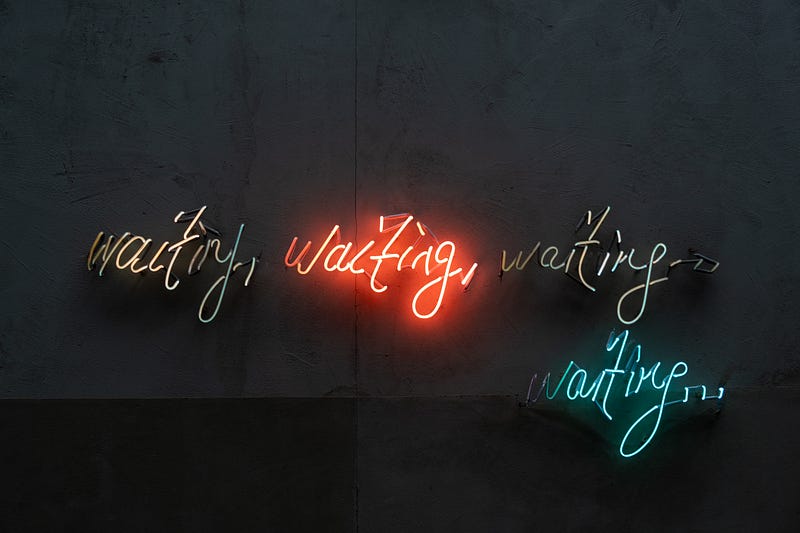
I have a phone meeting at noon today. It’s currently 10:31, and now there is nothing left to do but wait for that call.
Did I finish all my work? …no.
Do I have other things I could be doing even if I can’t focus on work? …definitely.
Am I going to be capable of doing them? …that depends.
See, Waiting Mode is a common phenomenon among neurodiverse people, where anxiety, executive dysfunction, and time agnosia combine into this wreck of circumstances that see people simply twiddling their thumbs, thinking about how they can’t miss this appointment.
This is true even when I’m simply waiting on someone to call me. They would interrupt whatever I was doing no matter what. But I still feel this inescapable need to stop. To wait for it.
For me, I think it’s a fear of falling into hyperfocus and losing track of all time, therefore deciding I need to do nothing but watch the clock, play Solitaire, or scroll social media. Things I — erroneously — believe I don’t hyperfocus on.
But Maaya Hitomi has some solutions for leaving Waiting Mode that help me when I start to feel this way. They note that we can lessen anxiety about the appointment itself by writing down whatever it is we’re ruminating on: what we need to pack, say, if we’re waiting to travel, or the scripts or talking points we want to remember if we’re waiting for an appointment.
Then we can, hopefully, move on to a task that meets two requirements: a low wall of awful, and a high level of dopamine. That is, find tasks that are
interesting, challenging, urgent, or novel. Tasks that involve any combination of these four elements are going to be easiest to start, but are often not the highest priority tasks on our to-do lists. That’s okay. After all, getting something accomplished during the time before an appointment is always better than just waiting.
Which is what brought me to Medium today. Writing an article about Waiting Mode was:
- interesting, because I got to research the thing I’m stuck doing anyway.
- challenging, because I had to put together coherent thoughts about what Waiting Mode is and how it affects me in particular.
- novel, because usually I write about fiction writing techniques, or edit for novelists, during my workday.
I have a list of Medium articles to write this week. This isn’t one of them, which means it wasn’t a super high priority. But it was fun, and honestly probably a better use of my time than playing Solitaire.
One of the things I’ve been working hard on this year is accepting my limitations and trying not to make my goals static things that define my worth. I’m going to lose part of my day to an appointment. I’m also going to lose part of my day to Waiting Mode. Then I’m going to lose much of my afternoon to having used my Spoons at the appointment. Understanding this about myself — and accepting it — has at least made a difference in my self-talk and my evaluation of my self-worth.
And as I’m trying to remember I’m a worthy being, not a worthy doing, is there anything better than that?


