
Adelaide’s Birth: The Pioneering Settlement of South Australia
From Wilderness to Civilisation — How Adelaide Emerged as the Heart of South Australia
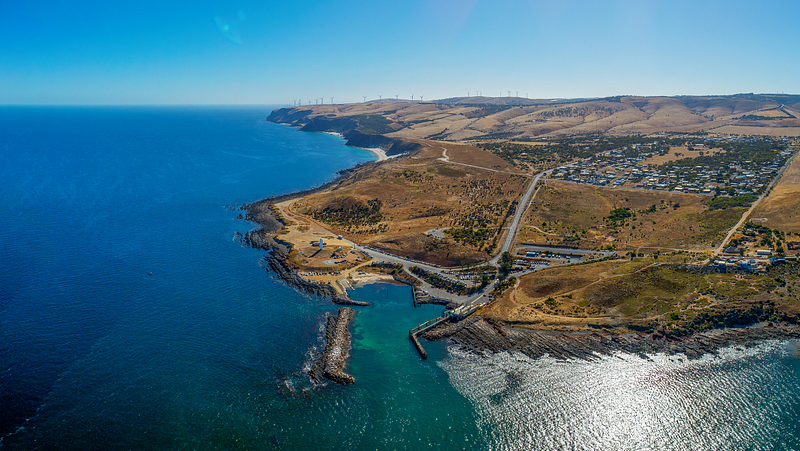
Long before European explorers set foot on the Australian continent, diverse Indigenous communities thrived across its vast landscapes.
Their rich traditions and deep connections to the land provided a complex tapestry of cultures that had evolved over tens of thousands of years.
In the region now known as South Australia, these communities developed unique ways of life, adapted to both the arid deserts and fertile river valleys.
European exploration in the 17th century marked a new chapter, leading to increased interest and eventual colonisation. South Australia’s rugged coastlines, expansive desert landscapes, and lush wine valleys offered both challenges and opportunities to these new settlers.
A blend of Indigenous tradition and European influence began to shape the region’s cultural heritage.
The settlement of South Australia, and the founding of its capital, Adelaide, were pivotal events in the development of this part of Australia.
They not only accelerated economic growth and urbanisation but also created a complex interplay between the existing Indigenous cultures and the new European societal structures.
The story of South Australia’s settlement and Adelaide’s emergence is one of human resilience, cooperation, and vision, and continues to be an essential part of the region’s identity and growth.
The Indigenous Peoples
South Australia’s original inhabitants belonged to various Indigenous groups, each with their own languages, social structures, and traditions.
Some of the notable peoples included the Kaurna, Ngarrindjeri, and Narungga.
They developed intricate relationships with the environment, manifesting in unique hunting techniques, artistic expressions, and spiritual beliefs.
European Exploration
The first recorded European sighting of South Australia was by the Dutch explorer Pieter Nuyts in 1627. However, serious interest didn’t begin until the late 18th century.
Subsequent voyages by other European nations led to further exploration, but the most significant mapping of South Australia was undertaken by British navigator Matthew Flinders.
In his ship, the Investigator, Flinders charted much of the South Australian coast between 1801 and 1803. His detailed maps and observations paved the way for future exploration and made the region more accessible to British ambitions.
South Australia’s potential was recognised early on by British authorities, particularly for its strategic value as a gateway to the East and its natural resources.
Figures like Colonel William Light and George Fife Angas were instrumental in promoting the idea of a free settlement in South Australia, distinct from the penal colonies elsewhere in Australia.
By the early 1830s, this interest had evolved into concrete plans, culminating in the South Australia Act of 1834, which formalised the British government’s intention to settle the region.
Together, these moments of early exploration and burgeoning British interest set the stage for South Australia’s settlement, connecting it to the broader movements of European exploration and colonisation in the early 19th century.
The South Australia Act of 1834, enacted by the British Parliament, laid the groundwork for the establishment of the Province of South Australia. It set the terms for governance, land distribution, and development, paving the way for organised settlement.
The passing of the South Australia Act in 1834 was not just a political manoeuvre, but a tangible commitment to a new chapter of British colonisation.
It gave rise to the South Australian Company — an organisation tasked with facilitating the settlement of South Australia, guided by a vision of creating a society based on free (non-convict) settlers.
This goal attracted a diverse group of settlers, from labourers to professionals, each bringing unique skills and aspirations to the new colony.
The process wasn’t without hardship, however. From the arduous voyage to establishing a foothold in an unfamiliar land, the early settlers faced a myriad of challenges.
Adapting to the local climate, dealing with occasional food shortages, and negotiating a peaceful coexistence with the Indigenous peoples were among the tasks at hand.
Yet, with tenacity and a common vision, these pioneers managed to build the foundations of the society we recognise in South Australia today.
This period saw the development of industries like agriculture and mining, which were pivotal in shaping South Australia’s economy.
Concurrently, the settlers began to establish social structures and institutions, initiating educational systems and organising community life — forging the cultural heritage of the region.
As the settlement grew, the need for an administrative and commercial hub became increasingly apparent, leading to the founding of Adelaide.
This next phase of South Australia’s development not only marked a significant milestone in the region’s progress but also had profound implications for the broader Australian narrative.
The Settlement of South Australia
Rich in natural resources, South Australia offered opportunities for agriculture, mining, and trade. Investors saw the potential for profitable enterprises and economic growth.
Influential figures like George Fife Angas also championed the idea of a morally upright society based on free settlement rather than convict labour.
The notion of building a community guided by principles of industry, education, and faith was central to their vision.
South Australia’s geographical positioning, as noted, also provided a gateway for further exploration and trade with the East. It presented a new frontier for British influence and expansion in the region.
These colonisation plans were not without their challenges, with financial difficulties, disputes over land allocation, and the arduous task of building a new society from the ground up.
However, the clear objectives laid out by the South Australia Act, coupled with the driven individuals behind the plans, set the course for a successful settlement that would leave a lasting legacy.
Early Challenges
The process of settlement was not without its hurdles. The selection of settlers, for one, was a challenge. The aim to create a free settlement meant that all settlers were volunteers — a mix of artisans, farmers, labourers, and a small group of gentry, drawn by the prospect of land and a new life.
However, creating a balanced society with a wide range of necessary skills was a delicate task.
While there was a significant number of labourers, there was a lack of trained farmers familiar with large-scale agricultural practices, and this imbalance led to early struggles in establishing reliable food production.
The journey to South Australia was another considerable challenge. Many settlers embarked on this journey from Britain — a voyage of several months through often treacherous seas.
Illness was common, and living conditions onboard were cramped and uncomfortable.
Arriving in South Australia, settlers were faced with the task of building their homes and establishing farms in a foreign and unfamiliar land.
The climate, vastly different from that of Britain, also posed its own set of challenges.
In the early days of the settlement, food shortages and difficulties in construction were common. Settlers had to adapt quickly to their new environment, learning to farm local crops and build suitable housing.
The isolation of the settlement meant that help and resources were not easily accessible, requiring the settlers to be resourceful and resilient.
These early hardships tested the settlers’ determination and grit, laying the foundations for the robust community that South Australia would eventually become.
Economic and Social Development
As South Australia began to take shape, its economy started to flourish, driven primarily by agriculture, mining, and trade. The fertile lands offered rich opportunities for farming, with wheat becoming a significant crop.
Livestock farming also contributed to the economy, and the discovery of mineral resources led to the establishment of mining activities.
Trade routes were opened with other colonies and countries, allowing South Australia to participate in the global economy.
The Port of Adelaide also played a vital role in facilitating this trade, becoming the economic hub of the region.
Simultaneously, social structures began to form. Education was seen as a priority, and schools were established early in the settlement’s history.
Churches and community centres became focal points for social interaction, leading to a vibrant cultural life. Libraries, theatres, and public spaces were created, reflecting the settlers’ desire for a rich and diverse community.
Societal roles and classes began to emerge, shaped by occupation, wealth, and social standing. Yet, the underlying ethos of a free and egalitarian society continued to guide social interactions and the development of public institutions.
Together, these economic and social developments laid the groundwork for modern South Australia — a region known for its prosperity, innovation, and strong sense of community.
The Founding of Adelaide
The process of selecting the location for South Australia’s capital, Adelaide, was both a methodical and visionary undertaking. Surveying and planning were paramount to this endeavour, and Colonel William Light was appointed to lead this significant task.
As a surveyor-general, Light’s approach combined practical considerations with a forward-looking view of what the city could become.
Surveying began in earnest, with Light examining the coastal regions to find a site that would be suitable both for shipping accessibility and agricultural potential.
He sought a place that would not only be the centre of government but also an economic and cultural hub. After careful examination, he chose the area now known as Adelaide, on the banks of the River Torrens.
Adelaide was selected as the capital for several reasons:
- Accessibility to Water: The proximity to the River Torrens ensured a steady water supply, a critical consideration for the new settlement.
- Fertile Land: The surrounding land was well-suited for agriculture, promising sustainability for the burgeoning community.
- Strategic Location: Situated between the hills and the coast, Adelaide’s location provided natural protection and opportunities for trade.
- Vision for Growth: Light’s visionary layout included broad streets and public squares, providing a blueprint that could accommodate future growth.
The decision to found Adelaide was not merely a practical one; it reflected a commitment to creating a city that could foster economic prosperity, offer cultural richness, and serve as a symbol of South Australia’s aspirations.
The planning and founding of Adelaide were emblematic of the broader goals of the colony, blending practical needs with ambitious dreams for a thriving future city.
Building the City
Adelaide’s development from an untamed landscape into a bustling city was a monumental task that required vision, dedication, and collaboration. Key figures played vital roles in this process:
Colonel William Light was instrumental in the city’s design. His foresight in laying out the city plan, known as Light’s Vision, characterised Adelaide’s development. He envisaged a city with wide boulevards, large public squares, and ample space for future growth.
Governor John Hindmarsh, South Australia’s first governor, oversaw the early stages of Adelaide’s construction. His leadership was crucial in ensuring that the city was built according to the plans and that adequate resources were allocated to the task.
George Strickland Kingston, deputy surveyor to Light, contributed significantly to the city’s architecture. Kingston designed several of Adelaide’s key buildings, shaping the city’s early aesthetic and architectural identity.
Adelaide’s early growth was rapid. With an influx of immigrants, the population swelled, necessitating the rapid development of housing, public buildings, and infrastructure.
Agriculture and trade thrived, fuelling economic growth and attracting more settlers to the city.
At the same time, societal institutions such as schools, churches, and community centres were established, fostering a sense of community and culture.
As the city expanded, so did its reputation as a vibrant and prosperous capital, reflecting the successful realisation of the grand vision that guided its founding.
Cultural and Social Impact
Cultural institutions such as libraries, theatres, and museums quickly became part of the city’s fabric.
The South Australian Institute, for example, provided a venue for intellectual and artistic pursuits. Schools and universities were established, contributing to the growth of an educated populace.
Community life flourished as well, with public gardens, sporting clubs, and social organisations providing opportunities for recreation and social connection.
Adelaide’s rich cultural environment thus became a symbol of the colony’s progressive values and the realisation of its aspirational goals.
As the administrative and governmental centre of South Australia, Adelaide also played an important role in shaping the colony’s political landscape.
Government buildings, courts, and legislative halls became the venues where key decisions about the colony’s future were made.
Political movements, debates, and reforms often had their genesis in the city. Influential political figures, both local and visiting, also left their mark on Adelaide’s political culture.
The city’s status as the capital ensured that it was not merely a witness to the political evolution of the colony but an active participant, steering the direction and embodying the democratic principles that guided the colony’s development.
The Indigenous Peoples of South Australia
Despite the transformative changes that characterised the colonisation of South Australia, the Indigenous peoples of the region endured significant trials and tribulations that have left an unmistakably awful mark on the state’s history too.
When European settlers arrived in South Australia, they encountered a rich tapestry of Indigenous cultures, including the Kaurna, Ngarrindjeri, Narungga, and others, all of which had lived in harmony with the land for thousands (likely tens of thousands) of years.
The process of colonisation proved devastating to these Indigenous communities.
Displacement from traditional lands, exposure to new diseases to which they had no immunity, and conflict with settlers all contributed to a substantial decrease in the Indigenous population.
Lands that had been cared for and utilised through complex systems of land management for millennia were suddenly claimed, surveyed, and developed by newcomers.
The loss of this land was not merely a loss of territory but disrupted traditional ways of life, including hunting, gathering, and the practice of cultural ceremonies.
The colonisation process also led to misunderstandings and tensions between European and Indigenous ways of life. The settlers’ approach to governance, law, and land use often clashed with Indigenous cultural values and societal structures.
Over time, attempts to impose European customs and legal systems resulted in the erosion and suppression of Indigenous cultures and languages.
Policies of forced assimilation then further exacerbated this decline, eroding cultural traditions, and undermining social structures.
Yet, despite these hardships, many Indigenous communities in South Australia survived and continued to maintain their cultural heritage.
As of recent data, Indigenous people constitute about 2% of South Australia’s population, representing a resilient continuity of the region’s original inhabitants.
Efforts to negotiate treaties and recognise Indigenous rights were part of the early colonial history too.
For instance, the Letters Patent in 1836 acknowledged Indigenous rights to the land, although these rights were often ignored in practice.
The impact of colonisation on Indigenous communities has therefore been profound and complex, shaping contemporary social dynamics and requiring continued reflection and engagement.
Efforts at reconciliation, recognition of traditional land ownership, and initiatives to preserve and revive Indigenous languages and traditions are prominent today.
These endeavours reflect a growing awareness of the need to acknowledge the complex history of South Australia and honour the enduring presence and contributions of its Indigenous peoples.
The settlement of South Australia and the founding of Adelaide marked a transformative period in Australia’s history, following the passage of the South Australia Act of 1834, which initiated the systematic colonisation of the region.
The early challenges faced by settlers, including the selection of inhabitants and the arduous journey, were overcome to establish a thriving economy and society, encompassing agriculture, mining, trade, education, and cultural life.
Adelaide’s establishment as the capital city was characterised by careful planning and surveying. Key figures in the city’s design and construction shaped its early growth, with significant social and cultural implications.
The emergence of cultural institutions, community life, and Adelaide’s role in the political landscape of the colony played vital roles in defining the region.
The impact of these historical events extends into modern times, influencing the political, social, and cultural fabric of South Australia.
The ongoing efforts to recognise and reconcile with the Indigenous communities, whose lives were profoundly affected by colonisation, continue to shape the region’s identity too.
Adelaide’s story, from its inception to its growth into a thriving capital city, symbolises broader themes of ambition, innovation, resilience, and cultural diversity.
These attributes resonate across Australia, reflecting a national identity that embraces both the challenges and triumphs of its complex history.