avatarJ.R. Flaherty

Free AI web copilot to create summaries, insights and extended knowledge, download it at here

5033

Abstract

ond big marketing strategy was just as important: <i>scientific research.</i></p> <figure id="0cd7"> <div> <div> <img class="ratio" src="http://placehold.it/16x9"> <iframe class="" src="https://cdn.embedly.com/widgets/media.html?src=https%3A%2F%2Fwww.youtube.com%2Fembed%2FpCB298yhsdI&amp;display_name=YouTube&amp;url=https%3A%2F%2Fwww.youtube.com%2Fwatch%3Fv%3DpCB298yhsdI&amp;image=http%3A%2F%2Fi.ytimg.com%2Fvi%2FpCB298yhsdI%2Fhqdefault.jpg&amp;key=a19fcc184b9711e1b4764040d3dc5c07&amp;type=text%2Fhtml&amp;schema=youtube" allowfullscreen="" frameborder="0" height="480" width="854"> </div> </div> </figure></iframe></div></div></figure><p id="feae">It is an established marketing ploy for sports science companies to use scientific evidence to promote their products.</p><p id="3ede">Gatorade created the Gatorade Sports Science Institute to study athletic performance in 1985.</p><p id="1b36">They turned these ideas of what we need for physical activity from “thirst” towards a consensus about performance when they discovered the problem of “two percent dehydration.”</p><p id="6259">This scientific finding was the first gift for marketing hydration.</p><p id="005c">At about two percent dehydration, you might not feel thirsty, which means your muscles could be a little dehydrated, and you would not even know.</p><p id="82e3">To avoid this problem, the solution is you must drink before you feel thirsty, even when you are not thirsty, even when you may not need it at all.</p><p id="2e53">The Gatorade marketing managed to alter the perception of thirst to say we could always be unknowingly dehydrated and need more than H2O could provide.</p><h1 id="8704">From hydration to wellness</h1><p id="ca1a">In the late seventies and early eighties, Americans were jogging and aerobicizing like never before. Soon, Gatorade was not alone in capitalizing on this social moment.</p><p id="3064">Rather than focusing exclusively on hydration, a European brand introduced an idea about health purity that sold itself on self-betterment and virtuous consumption.</p> <figure id="1ba6"> <div> <div> <img class="ratio" src="http://placehold.it/16x9"> <iframe class="" src="https://cdn.embedly.com/widgets/media.html?src=https%3A%2F%2Fwww.youtube.com%2Fembed%2FhNVcs4jKP_A&amp;display_name=YouTube&amp;url=https%3A%2F%2Fwww.youtube.com%2Fwatch%3Fv%3DhNVcs4jKP_A&amp;image=http%3A%2F%2Fi.ytimg.com%2Fvi%2FhNVcs4jKP_A%2Fhqdefault.jpg&amp;key=a19fcc184b9711e1b4764040d3dc5c07&amp;type=text%2Fhtml&amp;schema=youtube" allowfullscreen="" frameborder="0" height="480" width="854"> </div> </div> </figure></iframe></div></div></figure><p id="5dd2">In Europe, bottled water from a source spring has always been part of the gastronomic experience. Spring waters emerged out of the fashionable spa towns in the nineteenth century. Each water has “unique minerals” and tastes depending on its source.</p><p id="8572">One of the most popular brands in the 1980s was the French brand Perrier, typically served with dinner in restaurants.</p><p id="7ace">When sales were flat in Europe, the company tried to reignite growth in the US by investing heavily into advertising campaigns and hosting extravagant events for celebrities such as Madonna or Jack Nicholson, who could be seen enjoying their water on camera.</p><p id="ec59">Even though water made up a small part of the 43 billion dollars soft drink category in 1989, Paskin explains the market was primed for the next step in hydration and wellness thanks to Gatorade, Perrier, and Evian.</p><p id="5185">At the end of the 1980s, outside of the fitness world, the general public did not see how buying bottled water made sense. Tap water was free, after all. With the rise of exercise, bottled water became seen as a necessary component to staying hydrated.</p> <figure id="b415"> <div> <div> <img class="ratio" src="http://placehold.it/16x9"> <iframe class="" src="https://cdn.embedly.com/widgets/media.html?src=https%3A%2F%2Fwww.youtube.com%2Fembed%2FWfjWBZ4ERNA%3Ffeature%3Doembed&amp;display_name=YouTube&amp;url=https%3A%2F%2Fwww.youtube.com%2Fwatch%3Fv%3DWfjWBZ4ERNA&amp;image=https%3A%2F%2Fi.ytimg.com%2Fvi%2FWfjWBZ4ERNA%2Fhqdefault.jpg&amp;key=a19fcc184b9711e1b4764040d3dc5c07&amp;type=text%2Fhtml&amp;schema=youtube" allowfullscreen="" frameborder="0" height="480" width="640"> </div> </div> </figure></iframe></div></div></figure><p id="fa04">By 1990, those who cared about health became interested in getting fit while also looking for alternatives from sugar-filled beverages like soda or fruit drink loaded with dextrose or fructose.</p><p id="8fb3">Thanks to Gatorade, they knew about hydration, whereas thanks to Perrier and Evian, there was already some awareness of what matt

Options

ered when drinking water — purity and clarity.</p><p id="e08a">There was only one problem stopping it from becoming as popular as today. Gatorade and Perrier were first introduced to the market in glass bottles.</p><p id="ba5b">The invention of PET plastic bottles revolutionized how we drink our water today — for better and worse. It has made drinking cheap bottled water more accessible than ever before with a cheaper price and found at any convenience store.</p><p id="e9e1">The convenience and lower price of plastic bottles allowed people to carry water on the go. Water and hydration drinks became an alternative to soft drinks at the supermarket.</p><p id="5686">Michael Balas, the founder and chairman of Beverage Marketing Corporation, a beverage industry consulting firm, spoke to Willa Paskin, the host of <i>The</i> <i>Decoder Ring</i> podcast. Balas explains the sales pitch for water in plastic bottles after he first saw them:</p><blockquote id="99ba"><p>“Water was dietetic, all-natural, didn’t have to be carbonated. It didn’t have to be chilled and had more usage occasions than any other beverage. Plus, it was healthy and good for you. You go into a store, see something new, and say, well, what the heck is this? You got to figure it out. You got to read the label. Look at the ingredients. But you don’t have to do that with water. There’s not a comparable beverage that could possibly emerge probably ever that will equate with the<b> </b>success story of water.”</p></blockquote><p id="259f">Today we recognize this convenience is not without consequence. PET plastic products contributes significantly to landfill waste that will take tens of thousands of years to break down on its own.</p><p id="8781">Our desire for hydration has more eco-friendly options with everything from plastic to glass and even a <a href="https://goop.com/glacce-amethyst-crystal-infused-water-bottle/p/"><i>goop</i></a> water bottle that comes with amethyst inside. There is a good chance your reusable bottled will be handy at any time because you can take your water anywhere and everywhere — always keeping it close by.</p><p id="a414">The concept of hydration has crossed into the beauty industry, too. Despite water being a part of every living cell, the beauty industry wants to plump up your skin with more water. If water is good for you, so the logic goes, then more water is even better.</p><p id="2d54">Meanwhile, the market for bottled water and other hydration products is booming, with a steadily increasing number of Americans spending more than 15 billion annually on these items.</p><figure id="5bb1"><img src="https://cdn-images-1.readmedium.com/v2/resize:fit:800/1*0kpc1bKbhLdhToEso3g9OQ.png"><figcaption>Sales volume of bottled water in the United States from 2010 to 2020(in billion gallons) / Statista.org</figcaption></figure><p id="4d8c">The popularity of bottled waters has only increased since the late 1990s — in 2018 it became America’s most popular beverage by volume sold; while in 2020, people spent over 15 billion dollars on bottle water, not including water-related accessories or value-added water (such as vitamin water).</p><p id="586c">A recent <a href="https://www.statista.com/study/48820/bottled-water-report/">report</a> by Statista noted the international bottled water market is expected to grow robustly over the forecast period and reach more than US392 billion by 2025.</p><p id="22fe">Why do I take a bottle of water with me everywhere? It’s not just the convenience or habit, it’s my genuine concern for what will happen if I’m even a little bit dehydrated.</p><p id="c008">Marketing has been selling us something that we need so much to make us believe we need hydration more than ever before. But more hydration does not make you more hydrated, as many trips to the bathroom will tell you. The next big challenge is water bottles equals plastic waste, and that was due yesterday.</p><p id="0023">For marketers, the concept of hydration shows how science-backed advertising, celebrity placements, social awareness, and the right time in social history can make the essential even more essential.</p><p id="1f91">Our obsession with hydration has become a nervous tic, a billion-dollar industry, a large amount of product innovation, and too much waste. Could air be next?</p><div id="0988" class="link-block"> <a href="https://jrflaherty.medium.com/membership"> <div> <div> <h2>Read every story from J.R. Flaherty (and thousands of other writers on Medium)</h2> <div><h3>As a Medium member, a portion of your membership fee goes to writers you read, and you get full access to every story…</h3></div> <div><p>jrflaherty.medium.com</p></div> </div> <div> <div style="background-image: url(https://miro.readmedium.com/v2/resize:fit:320/0*aV2NLXNeaLtStv7y)"></div> </div> </div> </a> </div></article></body>

Case Study

The Hydration Hustle: How Marketers Sold Us on Bottled Water

The story of how we became obsessed with hydration
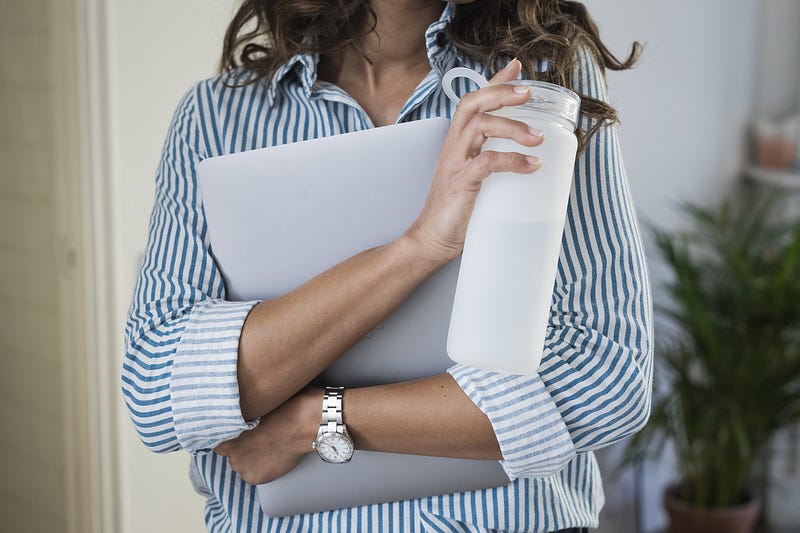
Photo by Bluewater Sweden on Unsplash

When I leave the house, I check if I have everything: A mask for transport, my phone to pay for it — and as they remind us on the trains, a bottle of water, especially in summer.

If I don’t have a bottle of water while I’m out and about, I admit — I become a little anxious. Am I parched? And yet, I always start the day with a large glass of water. It must be psychological; I can not become dehydrated under an hour away from home.

Where did I get this idea to keep hydrated? I don’t remember carrying bottled water to school in the 1990s, and I grew up in a hot climate. So, did I grow up completely dehydrated?

There is a lot of confusion about the benefits and drawbacks of drinking water. Some people believe that you need to drink eight glasses of water a day. Others say that we should be drinking more filtered or bottled waters, but no one seems to agree on what exactly is best for us.

Every so often, a podcast comes along to make you rethink your daily practice on something as essential to life as water. The hydration industry had me exactly where I wanted, that is, with hydration anxiety sitting on a hot train with my metal water flask empty. That’s how I began listening to Willa Paskin on Slate Magazine’s podcast The Decoder Ring, “The Invention of Hydration.”

Why have we come to embrace hydration so thoroughly and passionately in the past 50 years?

Hydration is a word that has been branded by the beverage and sports industries to make it seem like something only obtained from their products. They’ve done this with clever advertising, lots of marketing money, and an effective sales pitch — one which has become indistinguishable from common sense.

From thirst to hydration

This “hydration hustle” is surprisingly recent: If you were to ask marathon runners or athletes in the 1960s, they would say drinking water was a bad thing because it sloshed about inside as you run.

Water didn’t help you run faster or become a better athlete. But this was the time before Gatorade.

Created in 1965 by Dr. Robert Cade, who happened to be a professor at the University of Florida and an expert on kidney function, Gatorade is considered to be the first “sports drink.”

Inspired by his work with kidneys, Dr. Cade noticed that the body needs electrolytes for good hydration levels. He then sold the idea to a food company.

In marketing terms, they discovered a new “problem” (hydration) and then provided a unique solution (Gatorade).

As the urban legend goes, university researchers first gave Gatorade to an all-freshman football team who beat their older and bigger varsity squad.

When doctors say that this younger group of players outperformed their counterparts, they started giving it to other athletes.

Eventually, in 1967 when Florida won the Orange Bowl for the first time, coaches chalked up those victories and its new drink: Gatorade.

Gatorade named the electrolyte drink after the University of Florida’s mascot, the Gator. Allegedly, the opposing coach chalked up their defeat to Gatorade, saying, “We didn’t have Gatorade that made the difference.”

Gatorade’s first significant marketing move was securing a deal with the NFL and the NBA. It gave them access to professional athletes, which turned into role models for everyday Americans.

Still, they would later find that their second big marketing strategy was just as important: scientific research.

It is an established marketing ploy for sports science companies to use scientific evidence to promote their products.

Gatorade created the Gatorade Sports Science Institute to study athletic performance in 1985.

They turned these ideas of what we need for physical activity from “thirst” towards a consensus about performance when they discovered the problem of “two percent dehydration.”

This scientific finding was the first gift for marketing hydration.

At about two percent dehydration, you might not feel thirsty, which means your muscles could be a little dehydrated, and you would not even know.

To avoid this problem, the solution is you must drink before you feel thirsty, even when you are not thirsty, even when you may not need it at all.

The Gatorade marketing managed to alter the perception of thirst to say we could always be unknowingly dehydrated and need more than H2O could provide.

From hydration to wellness

In the late seventies and early eighties, Americans were jogging and aerobicizing like never before. Soon, Gatorade was not alone in capitalizing on this social moment.

Rather than focusing exclusively on hydration, a European brand introduced an idea about health purity that sold itself on self-betterment and virtuous consumption.

In Europe, bottled water from a source spring has always been part of the gastronomic experience. Spring waters emerged out of the fashionable spa towns in the nineteenth century. Each water has “unique minerals” and tastes depending on its source.

One of the most popular brands in the 1980s was the French brand Perrier, typically served with dinner in restaurants.

When sales were flat in Europe, the company tried to reignite growth in the US by investing heavily into advertising campaigns and hosting extravagant events for celebrities such as Madonna or Jack Nicholson, who could be seen enjoying their water on camera.

Even though water made up a small part of the 43 billion dollars soft drink category in 1989, Paskin explains the market was primed for the next step in hydration and wellness thanks to Gatorade, Perrier, and Evian.

At the end of the 1980s, outside of the fitness world, the general public did not see how buying bottled water made sense. Tap water was free, after all. With the rise of exercise, bottled water became seen as a necessary component to staying hydrated.

By 1990, those who cared about health became interested in getting fit while also looking for alternatives from sugar-filled beverages like soda or fruit drink loaded with dextrose or fructose.

Thanks to Gatorade, they knew about hydration, whereas thanks to Perrier and Evian, there was already some awareness of what mattered when drinking water — purity and clarity.

There was only one problem stopping it from becoming as popular as today. Gatorade and Perrier were first introduced to the market in glass bottles.

The invention of PET plastic bottles revolutionized how we drink our water today — for better and worse. It has made drinking cheap bottled water more accessible than ever before with a cheaper price and found at any convenience store.

The convenience and lower price of plastic bottles allowed people to carry water on the go. Water and hydration drinks became an alternative to soft drinks at the supermarket.

Michael Balas, the founder and chairman of Beverage Marketing Corporation, a beverage industry consulting firm, spoke to Willa Paskin, the host of The Decoder Ring podcast. Balas explains the sales pitch for water in plastic bottles after he first saw them:

“Water was dietetic, all-natural, didn’t have to be carbonated. It didn’t have to be chilled and had more usage occasions than any other beverage. Plus, it was healthy and good for you. You go into a store, see something new, and say, well, what the heck is this? You got to figure it out. You got to read the label. Look at the ingredients. But you don’t have to do that with water. There’s not a comparable beverage that could possibly emerge probably ever that will equate with the success story of water.”

Today we recognize this convenience is not without consequence. PET plastic products contributes significantly to landfill waste that will take tens of thousands of years to break down on its own.

Our desire for hydration has more eco-friendly options with everything from plastic to glass and even a goop water bottle that comes with amethyst inside. There is a good chance your reusable bottled will be handy at any time because you can take your water anywhere and everywhere — always keeping it close by.

The concept of hydration has crossed into the beauty industry, too. Despite water being a part of every living cell, the beauty industry wants to plump up your skin with more water. If water is good for you, so the logic goes, then more water is even better.

Meanwhile, the market for bottled water and other hydration products is booming, with a steadily increasing number of Americans spending more than $15 billion annually on these items.
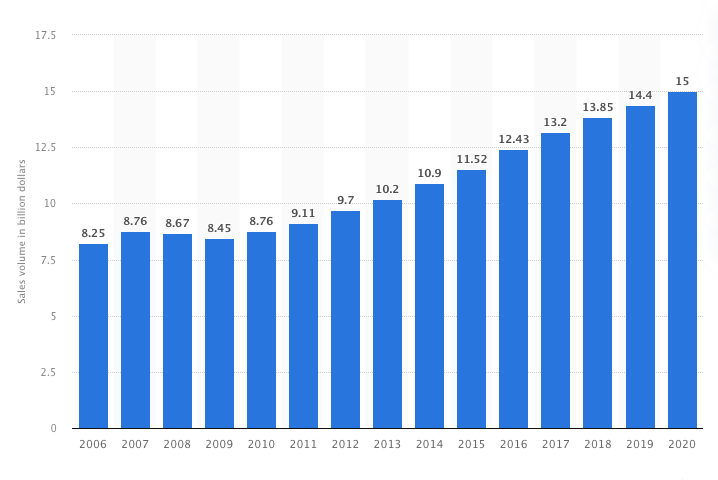
Sales volume of bottled water in the United States from 2010 to 2020(in billion gallons) / Statista.org

The popularity of bottled waters has only increased since the late 1990s — in 2018 it became America’s most popular beverage by volume sold; while in 2020, people spent over 15 billion dollars on bottle water, not including water-related accessories or value-added water (such as vitamin water).

A recent report by Statista noted the international bottled water market is expected to grow robustly over the forecast period and reach more than US$392 billion by 2025.

Why do I take a bottle of water with me everywhere? It’s not just the convenience or habit, it’s my genuine concern for what will happen if I’m even a little bit dehydrated.

Marketing has been selling us something that we need so much to make us believe we need hydration more than ever before. But more hydration does not make you more hydrated, as many trips to the bathroom will tell you. The next big challenge is water bottles equals plastic waste, and that was due yesterday.

For marketers, the concept of hydration shows how science-backed advertising, celebrity placements, social awareness, and the right time in social history can make the essential even more essential.

Our obsession with hydration has become a nervous tic, a billion-dollar industry, a large amount of product innovation, and too much waste. Could air be next?

Marketing
Culture
Business
Creativity
Health
Recommended from ReadMedium