
Addiction/Mental Health/ Lifestyle
Addiction Part 1: Why Can’t People Stop Using Drugs?
The American Society of Addiction Medicine defines addiction as “a primary, chronic disease of brain reward, motivation, memory and related circuitry.”

According to experts, addiction is a brain disease. It can be difficult for some people to stop using drugs without treatment. Let’s think of some people visiting a doctor and getting treatment for diabetes, hypertension, or cancer. Do family members support or encourage them to get treatment?
But too often, many people with drug problems feel embarrassed seeking help or sharing their addiction problems with family members or doctors. Why?
Any form of addiction or mental illness carries shame and societal stigma.
Understanding why some people can’t stop using drugs
National Institute on Drug Abuse explains, “Many people don’t understand why or how other people become addicted to drugs. They may mistakenly think that those who use drugs lack moral principles or willpower and that they could stop their drug use simply by choosing to. In reality, drug addiction is a complex disease, and quitting usually takes more than good intentions or a strong will. Drugs change the brain in ways that make quitting hard, even for those who want to. Fortunately, researchers know more than ever about how drugs affect the brain and have found treatments that can help people recover from drug addiction and lead productive lives.”
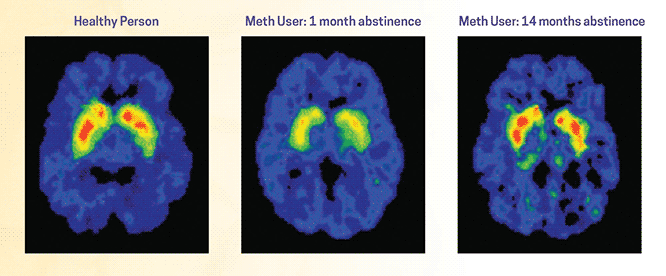
“These images showing the density of dopamine transporters in the brain illustrate the brain’s remarkable ability to recover, at least in part, after a long abstinence from drugs — in this case, methamphetamine.51.”
What next?
Treatment can work if you do the work and ask family and friends to support your treatment.
Seek help today. For help and hope 24/7, call 1–877–8-HOPENY (467369) or text HOPENY (467369), or call SAMHSA’s National Helpline, 1–800–662-HELP (4357). Toll-free and confidential.

You’re not alone.
“Addiction is a chronic brain disease. Forty million Americans ages 12 or older — or more than 1 in 7 people — have addiction involving nicotine, alcohol or other drugs.1 This is more than the number of Americans with heart conditions (27 million), diabetes (26 million) or cancer (19 million).2 Addiction is costly to our Nation, exacting more than $700 billion annually in costs related to crime, lost work productivity and health care.3 Studies have documented the effectiveness of treatment with total savings related to health care, reduced drug-related crimes and criminal justice exceeding costs by a ratio of 12 to 1.4 Too often, however, addiction goes untreated, with estimates that only 10 percent of people who need treatment receive it.”
Seek help today. For help and hope 24/7, call 1–877–8-HOPENY (467369) or text HOPENY (467369), or call SAMHSA’s National Helpline, 1–800–662-HELP (4357). Toll-free and confidential.
A version of this story was first published on another website.
References
https://nida.nih.gov/publications/drugfacts/understanding-drug-use-addiction