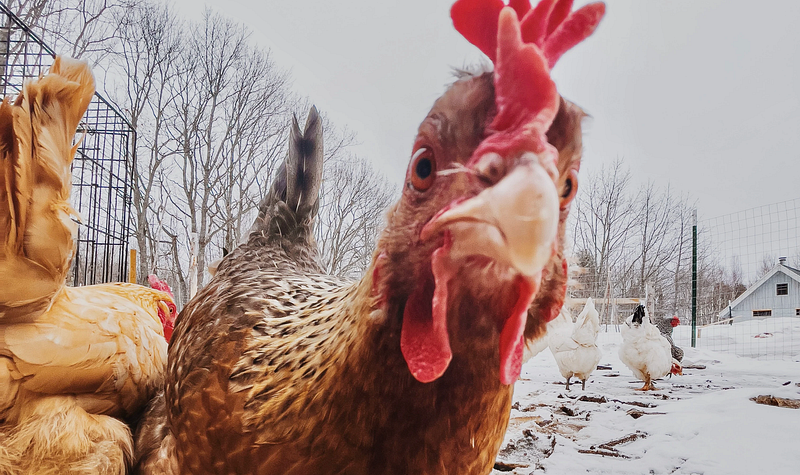
Add These Easy Egg Recipes to Your Kitchen Repertoire
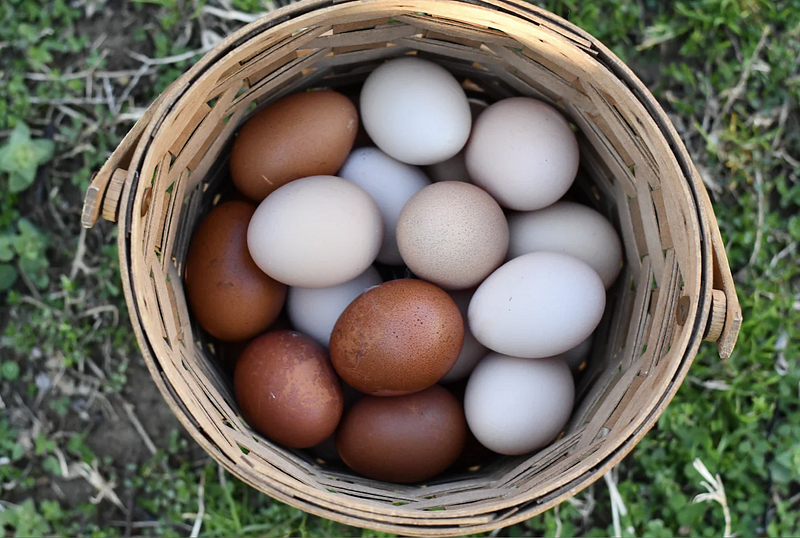
Too many eggs? It’s a common problem for those with a backyard flock, yet a good one to have.
Have you fallen in love with the trough full of day-old chicks at the local farm supply? Been seduced by pics of fluffy chicks in the catalogues? Congrats! Now here’s how that will pan out…no pun intended.
If you bring home eight chicks today, in six to eight months they’ll be eight fat, fluffy, hens. You’ll have six or seven eggs a day coming into your kitchen…the equivalent of four cartons of eggs per week.
These add up QUICKLY if you you’re not used to eating eggs on a production scale. At first you’ll be giving baskets of eggs to your friends and neighbors, and that feels good for a while. What’s feels even better is finding new and fun ways to use those eggs.
“But,” you’re asking. “Oh, merciful Heaven, how?”
Let’s start out with the easiest things first.
Microwave Omelets
Oh sure, we make traditional omelets with a real pan on the real stove most weekend mornings, when we have the leisure for all that…but weekdays it’s microwaved omelets every morning. These “omelets” (which are half omelet, half soufflé, really) are simple enough that even my sleep-deprived teenaged son can make one for himself before he drags himself onto the school bus.
Microwaved omelets can be made individually in a bowl or pasta dish that’s been sprayed with PAM. Use two to four eggs per person, and whisk them together with a little milk, salt, and pepper. Pour into the bowl and throw in spinach, cheese, leftover ham, or whatever to zazz it up. Microwave for roughly one-and-a-half minutes per egg — at least that’s what works with my inexpensive setup. You’ll have to work with your microwave to find out the best time for your machine. Once the center is firm, you’re ready for breakfast.
Quiche
Make them in a deep-dish pie form, with a homemade crust, store-bought crust, or without crust at all. They can be a simple supper, and the leftovers make excellent breakfasts.
I use six or eight eggs with about a cup of milk, salt, nutmeg, cheese, and greens, all thrown into a whole wheat pie shell. Bake at 425F for 15 minutes and then reduce heat to 350F for the next 30 minutes. Once the center of the quiche has puffed up and looks “baked,” (i.e. golden, brown, and delicious) it’s done.
Note: If you don’t have spinach or other greens, you can use sautéed onions, chopped luncheon meat, crumpled bacon, sautéed kale, shredded chicken, or just about anything else that’s on hand. Last night’s quiche was made with shredded quattro formaggi and chopped Brussels sprouts sautéed with garlic…because that’s what was in my fridge.
Soufflé
Soufflé is the fluffy egg dish you may hear about in old movies, but not many people make them anymore. These have the reputation for being difficult but they’re not, especially when you get the hang of it. I used to make them every week or so, and now that i’ve written this, they’ll probably go back into our menu rota.
These delightful and unusual dishes can be sweet, such as a chocolate soufflé or savory like a cheese soufflé. Soufflés were very popular in the mid 20th century, and always impress guests, so try making one soon and entertain like you’re Laura and Rob Petrie.
Important note: always be ready to serve soufflé as soon as it comes out of the oven. If someone’s late to the table, it’s best to start with out them. The air that inflates a soufflé into the stratosphere begins to dissipate as soon as the dish begins to cool. A flat soufflé will still taste as good, but won’t win any awards for presentation.
Egg Foo Young
It’s probably a staple of your neighborhood Chinese restaurant. The good news is that it’s easy to make, and is designed to use any leftovers you have laying around. Egg foo young goes with any rice, (or even Asian noodles like ramen, soba, or udon if you like to switch things up, as I do) but jasmine rice is probably the best option if you have it.
Egg foo young is an easy and impressive thing to prepare for casual entertaining. Make a big pot of rice beforehand, make your sauce or gravy, and have those things waiting when guests arrive. It’s easy then to make the omelet part of the dish to order, letting guests pick their favorite ingredients. For a larger, or more formal party a chaffing dish could be used to both keep the omelets warm, and make an elegant presentation.
Omurice
My husband learned to love omurice while stationed in Korea and Japan. It’s popular in both countries, and makes a regular appearance at our home whenever we need an easy meal. A warming combination of eggs, rice, and sauce/gravy, I’m told it’s a comfort food in many Asian countries. Though it’s not often on the menu, I find that chefs in small, family-owned restaurants will often happily make it for you if you ask. (If you’re a chef at one of these family-owned restaurants and disagree, please let me know!)
Like Egg Foo Young, it will take almost any leftovers you have lying around. On any night when you have leftover rice, you’re even closer to dinner. Here is a Japanese-inspired version and a Korean one.
Dozen-egg cakes
My grandmother, who worked in the fields every single day of her life, used a dozen eggs for every cake she baked. As she had eight kids to feed, plus her husband, assorted farmhands, as well as herself, these dense, hearty cakes where served on the breakfast table alongside ham, eggs, bacon, and cornbread. They weren’t frosted; as soon as they came out of the oven she’d slather them with homemade butter and let that melt in as she set them on the table.
I don’t have a recipe for this, as she probably never wrote it down. The best way to come up with a facsimile version would be to get a homemade cake recipe like this one if you like apples, or this one if you like more of a cinnamon crumble coffee-cake-style cake. (I appologize if you don’t like cinnamon) and then just subsitute eggs for most or all of the other liquid ingredients.
That story leads me into my next suggestion, which is…
Super-egged everything
if my egg basket is overflowing, I start substituting eggs for water or milk in baking recipes. If your recipe calls for a half cup of water, for instance, just throw a couple of eggs in the measuring cup, and then fill the rest up with either milk or water as the recipe suggests. This will make your cakes, brownies, bread, and everything more dense, and more nutritious.
Last week I needed a last-minute birthday cake the other day, so I grabbed a boxed cake mix, substituted eggs for the 100% of the water the instructions called for, and added a teaspoon of almond extract. The result was delightful — much like marzipan. I whipped up a cream cheese frosting (with a bit more almond extract) and let me tell you what. People dove into that cake. It was demolished. It was gone. Now my family is begging for me to make another.
Note on 100% egg recipes: If you follow my lead and substitute eggs for ALL of the water in a recipe, remember to add an extra egg or two OVER what the recipe calls for — like a 1 1/4 cups instead of one. Why? It’s because eggs are only three-quarters water, so you’ll have to add a bit extra to come up with the right amount of liquid in your recipe.
If you’re using eggs instead of milk, you don’t have to add as much extra liquid. Milk is 88% water, so just a teaspoon, or tablespoon of extra liquid will probably be enough.
If this sounds daunting, don’t worry. Just play around with this until you feel like you’ve got it down. If you know what cake batter, cookie batter, bread dough normally look like, just add a little extra liquid at a time until what you’ve got in the bowl looks right.
Dogs and cats like eggs too
If you have pets that are carnivores or omnivores, they’ll be happy to take any extra eggs off your hands. Dogs and cats can both eat eggs in bulk, according to the AKC and Purina, respectively. This is true for ferrets too, as well as pot-bellied pigs, African gray parrots…and well, just type whatever kind of pet you have into the search engine and see what you come up with.
A note of common sense here: just like you can’t live on nothing but eggs, they can’t be the entire diet of your pet, either. In moderation, however, eggs provide essential nutrients that your dog, cat, ferret, parrot, pig or whatever may not be getting in their regular diet.
Looking back on my list here, I realize that most of the recipes here will happily accept any leftovers you have in the fridge.
A lot of self-sufficiency in a small coop
You don’t have to have special ingredients to make most of these dishes. What you have hanging around in your kitchen is probably enough to whip up any number of enticing meals, as long as you have and abundance of fresh eggs. This is great news for those who haven’t been to the market in a while.
It’s also great news at time when you can’t get to the market for one reason or another — like when there’s been a hurricane, earthquake, ice storm, or blizzard in your area. Where we live in small-town New Hampshire, this means we have a layer of self-sufficiency between us and the next nor’easter coming up the coast.
Take care of your hens, and they’ll take care of you.
Oh, and for or a deeper look into how backyard chickens will change what goes on in your kitchen, click here.