
Actually taking book notes
So my structure for taking notes comes from way, way back before I had really got a clue about there being wikis for anything and everything. I was reading Skulduggery Pleasant by Derek Landy and it has a lot of characters who have multiple names and places and little 13 year old me wanted to keep a track of them all.
Later me needed to do that when I was reading War and Peace — Great Comet really got it right when they said everyone has like 9 different names.
First things first — Make your Book Page
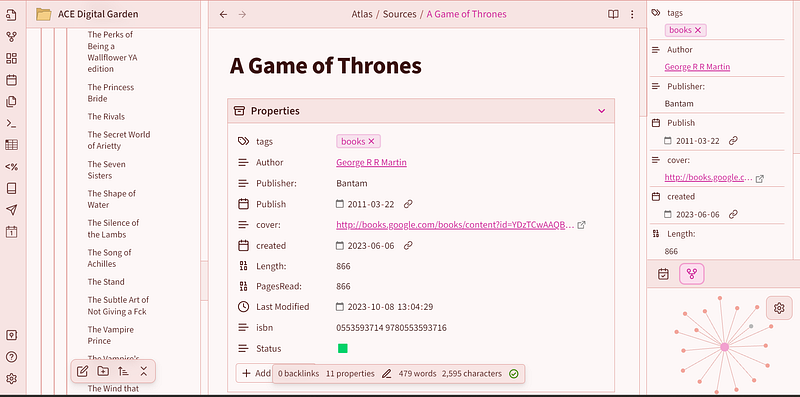
I’m using Obsidian for this but you can choose anything. I like having somewhere I can link back to and use as a “base” for everything else that follows which is why a main book note works well for me.
The details I collect in Obsidian are to help me link it back to other things;
- Tags: Are used to work with dataview queries on other pages, displaying all of the sources that fall into particular categories.
- Author: I like to have a link to the author handy — it helps to keep it near the top for navigation
- Publishing information: Useful for citations! Since I used these books for my university work I had to ensure I could cite easily. All that information goes here.
- Cover: This just makes the dataview queries look prettier, I won’t lie.
- Length and pages read: Handy for if you’re working through the book. You can see how far you’re through and don’t have to worry about losing your bookmark. Since I use scraps of paper this is really handy.
- Created, last modified: Useful for filtering old notes and also keeping tabs on what I was feeling, thinking or doing on particular dates.
- Status: instead of using read, reading etc. I decided to go with colours and emoji because it’s just a bit more visually appealing. But this is if I’m reading, if I’ve read it, if I’ve yet to read or did not finish.
So, the first thing I always do is to make this page, and include a character list, and depending on what I’m doing this for, then make character pages.
So, the example I’m showing here is ASOIAF based and centred around Sandor Clegane:
Character Pages
So because I was reading specifically for him for uni I went ahead and made a page (originally in Notion, but we’re recreating this and doing it in more detail in Obsidian).
I make a note of what the source material is (for series that have many books like Discworld, for example to link back to the overarching series page), and then what books (or chapters if it’s just one book!) the characters appear in.
Then I look at the specifics — canon events (I chose to note the particular events I’d be talking about more than anything), about their personality, and then after about any Meta (essays, discussions etc.).
If you’re enjoying what you’re reading and would like to support my work, please consider leaving a tip in my virtual tip jar. Your contribution, no matter how big or small, helps me continue creating content that you love.
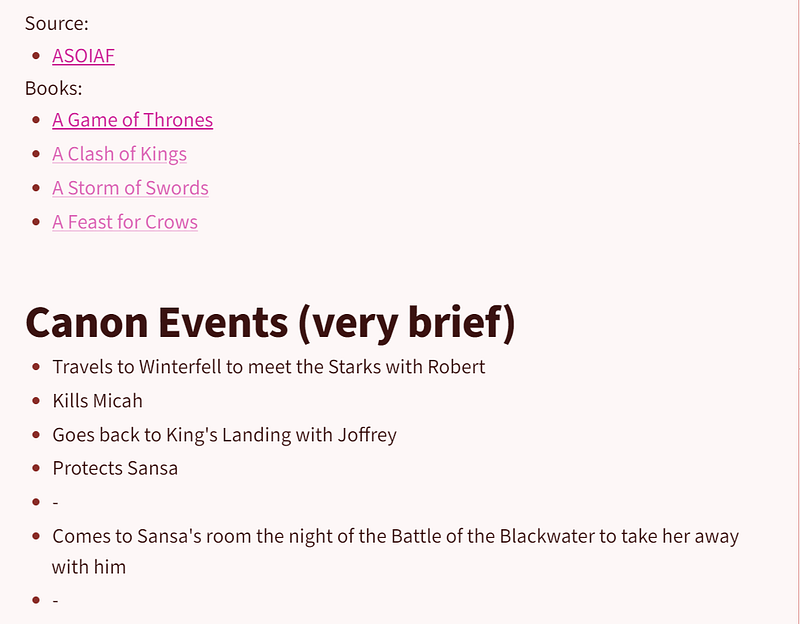
If you haven’t read the book before this note will look like a lot more quotes, split into the various sections that you can then tidy up later.
I tend to place all quotes into the various book specific pages to add another layer of processing and editing:
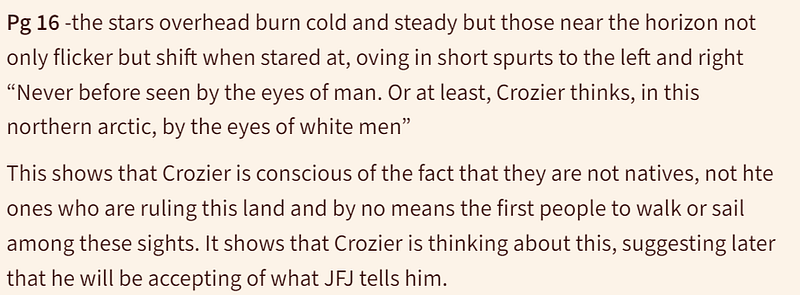
Like how this note of mine from the Terror looks — quotes copied in full, analysis underneath showing specific details. It hasn’t been processed; it’s not linked properly and it’s not as easy to understand as it could be.
Processed notes look more like this:
“Crozier is conscious of not being a native in the area, “Never before seen by the eyes of man … or at least… white man” (pg 16). This leads him to be more understanding later with [[James Fitzjames]] and his backstory, but also more obviously at this point with [[Lady Silence]]”.
These can also be made on the main book page under a heading or in a callout and then embedded [[with the note title^and section heading]] like that in Obsidian which can help for ease of navigation.
Then underneath that we get the personality and meta sections.
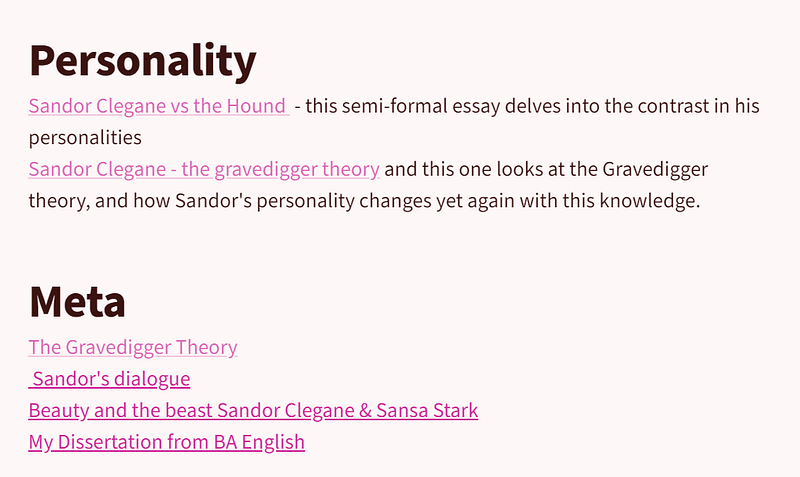
These sections are great for info dumps & working through thoughts. I have separate sections for things relating to personality specifically as it’s something I know I want to focus on for Sandor.
Essentially this page becomes a Character Map of Content. And links can exist in multiple pages, so if I was to make a new note all about dialogue in ASOIAF then I could link to Sandors dialogue too.
General Book Notes
If you’re taking notes on more than just a specific character it can be useful to make “dump pages” for particular chapters where you record what you’re thinking as you’re reading.
If there’s a particular quote I know should be it’s own page because it’s important enough I’ve done that as I’m going through but definitely “get it down first, organise, edit and kill your darlings after” is my main method.
Most of my notes are taken through annotating the book if I own it, or writing out the quote & my annotations in a notebook if I don’t. These then get transferred to the computer, first stage of editing, and then after that are “processed” or turned into something more useful.
I tend to use callouts to have chapter notes there, but collapsed on the main book page. Any processed notes & analysis go into the relevant sections.
So, this is how I go about taking notes from books and making my own sort of wiki for everything I read.
Hey! Tara here and thanks for checking out my blog. I update every Tuesday with posts about studying tips, advice and talk about productivity and organisation too. If you enjoyed what you read and want to support my work please consider leaving a tip in my virtual tip jar.


