
Actually, Sometimes, You Are Too Old for College
Even at 25, I’m over the hill. Before you get offended, hear me out.
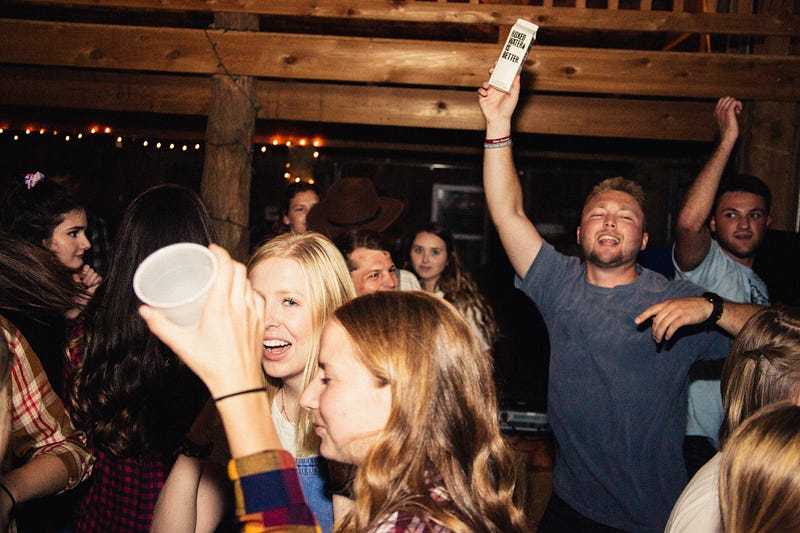
They say “you’re never too old to go back to school” and on some level, I’d have to agree.
Age is just a number and the “Earning a Degree” boat only passes people who have passed on, in my humble opinion.
As long as you’re breathing, feel free to take some classes. Or don’t — it’s your life.
However, as a non-traditional student, I’ve made some observations about the higher education system.
Taking classes is for everyone but…
Per my calculations, the window for the ubiquitous College Experience™ cuts off at 22 years old. Maybe 23 for those born on the cusp of classes and 25 for super seniors.
As for kicking off freshman year, it’s tough to blend in with the kids after 21.
While everyone else is sneaking into bars with fake IDs and whining about their lame parents, you’ll be flashing your legal, legit ID to the bouncer and wondering if you sounded this immature at 19.
The answer is yes, yes you did. When you weren’t tackling grown-up responsibilities like full-time employment and paying your own bills during the gap years, that is.

Imagine a grown-up dorming with a fresh high school graduate
After you’ve enjoyed the luxury of having your own bathroom and bedroom, the dorms just wouldn’t feel the same. For a first-time experience living outside of a childhood bedroom, dorms suffice. After all, most of the dorms occupants have no idea what they’re missing outside the dormitory walls.
And even if these youngsters have some upperclassmen friends who show them life outside shared quarters, the university usually binds freshmen and sophomores to live in dorms for their “comfort and safety” (read: the university’s overpriced pockets).
College hits different when you’re paying for everything
The modern college experience is designed almost exclusively for young people whose parents are happy to foot the bill for their reckless decisions for four years instead of keeping them in the nest.
Not all students or families are like this, but college seems to be engineered based on this assumption.
Plus, college is prohibitively expensive.
Families pay upwards of tens of thousands of dollars just so their freshly minted adult children can have an educational, enjoyable experience.
As a non-traditional student scrapping together the tuition money with financial aid and limited savings, college is less about choosing a fun time and more about selecting the most economically feasible option.
While silly dorm contests and cozy common study spaces might entice parents and traditional students, the price tag prohibits an older student from opting for schools whose main selling point is the “college experience.”
It’s hard to relate to traditional students as a non-traditional student
Seven years may not seem like a huge age gap, but the difference between my life experience and that of the average traditional college freshman is massive.
I’m even older than some grad students and PhD students, so it can be hard to find common ground even with these groups.
Although I am proud of myself for going back to school and working towards bettering my circumstances, I feel a little self-conscious sharing that I’m a second-semester freshman with upperclassmen.
By a typical timeline, I’m way off-track. While one’s twenties are a bit of a free-for-all, the societal expectation that students complete their undergrad years by their early twenties is evident in how colleges themselves are set up.
They’re essentially a young adult’s paradise, complete with overpriced microwavable dinners, dorky dances, bathrooms built to handle dozens of daily users, and cute rooms with two twin beds that rival the size and price of an NYC apartment.
At this age, it wouldn’t be impossible for me to go back for the full college experience — pandemic permitting — but it would feel a little awkward.
Maybe that’s my own personal bias, but I’d also feel out of place at a college party or campus trivia night.
I’m grateful for options like community college and accelerated bachelor’s programs that cater to non-traditional students who want to get our education and get out into the world.
Sometimes, I wish I could have had a “real” college extravaganza with all the trimmings.
However, I trust that I’m exactly where I’m supposed to be and doing precisely what I’m meant to do at this stage.
Or something like that.
If you like what you see and want to support my work directly, please consider donating the price of a coffee through my Ko-fi page here: https://ko-fi.com/mayastrongwriter.
It might not seem like much, but it’s a huge help in keeping a roof over my head, food on my table, and therefore new content on this blog. Thanks for reading and contributing!