
Achieve Your Goals with Tapering: The Science of Success
When you are lousy at tapering, you have to unravel the mystery

As an endurance runner, I study everything about running. Form, mindset, nutrition, hydration — you name it, I have studied it.
The one mystery that still keeps its little talons away from digging into my brain is tapering before a big race.
I sort of understand the why. I can download the plans, listen to running coaches, and have even attempted it before most of my fifty ultra-marathon finishes in the last seven years.
With all that confession, I decided to dig a little deeper and try to clear up this whole taper mystery once and for all.
It turns out that tapering isn’t really a mystery. Instead, tapering is a decision.
Simply put, that means I need to learn to make better decisions and then I’ll see my performance at running races improve.
What is This Strange Thing Called Tapering

The website, runningshoesguru.com, has a fantastic blog post about this subject and they define tapering in a way that is easy to understand.
The part I like best in the article, How to Successfully Taper For Your Race Distance, is that they don’t dwell on a systematic approach or definition to tapering, but on WHERE to start.
As runners, we can concentrate all we want to on schedules and suggested distances and pace, but where to start will become the difference maker in the training you have put in.
The definition from the article though begins to shed some light on where to begin with this tapering mystery.
“Tapering is a training term relating to the final week or two of your training plan. It systemically reduces your exercise intensity and load for the lead-up to your race day. It’s vital in endurance sports such as training for a marathon because it allows the body to rest and recuperate energy to fly on race day.”
What helped me to get a better grasp on tapering was one phrase in this definition. “…reduces your exercise intensity and load…”
Running is that place where I can move my mind to a place of peace and serenity, the daily movement that allows me to focus on daily being a better person than I was the day before.
Races are merely an outcome to look forward to, more like a celebration of a period of focusing on a great block of disciplining myself physically and mentally to be a better version of myself daily.
Yes, I have training plans and goals for my training in order to perform better at races, but that is more of an internal goal.
The reason I have always struggled with tapering is because I was more focused on the reduction of load, rather than the reduction of exercise intensity.
The mystery finally unraveled for me when I realized I could reduce my exercise intensity, which I’ll explain in a moment, and not reduce the miles I run every day.
As I began to focus on exercise intensity on a daily basis, the week to two weeks before races, I became freer to reduce that intensity as I perceived was needed based on the race I was running.
The fact that I began to perform better at my races once I unlocked this mystery is a side benefit of the mental freedom that allows my body to perform better physically.
Simple Method to Apply Tapering to Your Race
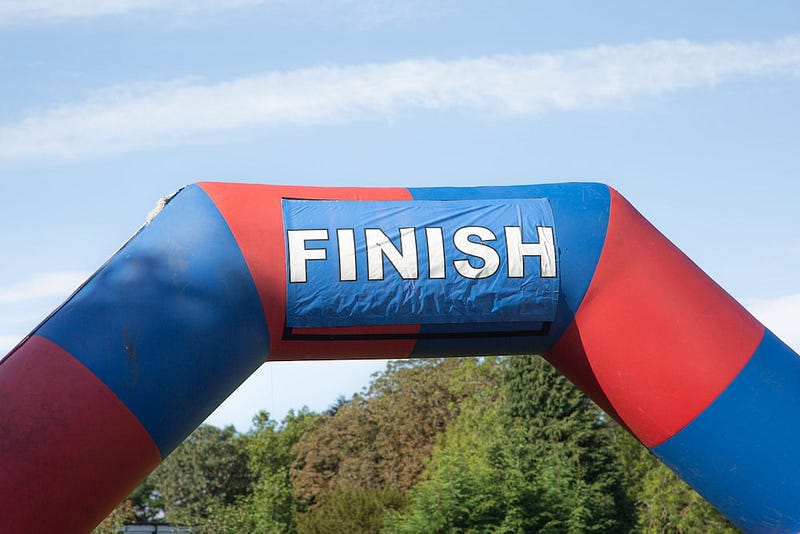
The biggest way to understand this tapering mystery is to take the word “rest” out of your vocabulary. Rest is applied to this running journey after a big race or outing because rest applies to recovery.
Once you are able to take “rest” out of the equation, then it becomes a matter of deciding how you want to taper. This comes down to how you schedule your runs.
Since I know I am a much better cool-weather runner than a heat and humidity runner, I schedule all of my races in the cooler months.
Although it doesn’t often look like it to somebody looking at my race schedule and what I sign up for, there is a method to my madness that has been developed over the last nine years of ultra-running.
The races in the link are my races that show up in Ultrasignup, which doesn’t include a couple of other “B” and “C” races. B and C races are meant to experiment with hydration, nutrition, and pacing techniques in preparation for your A races. This is important to distinguish because it will make more sense as I explain my newfound tapering techniques.
My season of racing this past year began with the Cape Fear 24-Hour race in October 2022 and ended with the Virginia Run for Cancer in April 2023.
I had two “A” races, Cape Fear and Swammie Shuffle 200. Everything around those is to build up for the “A” races.
On my upcoming race season, once again I begin with Cape Fear 24 Hour and then Swammie Shuffle 200 is once again my second “A” race.
For this upcoming season, Windsor Castle 5 Hour is an opportunity to hone in on some pacing and nutrition techniques. Then I will just sweat through another hot and humid Virginia summer before doing a fun race in the Wyoming mountains in September to finalize my preparation for Cape Fear 24 Hour.
This is how I apply just one technique to my regular training schedule to taper for my A races.
Two weeks out from my A race, I lower my training intensity by doing two very simple techniques. Two weeks out, instead of running six days per week, I only run four days and then do a power walk for one day. I always do a six-day running schedule, but usually, when I am training I add strength training, rowing, and stair climber into my running schedule.
Two weeks out, I eliminate the stair climber only.
My runs for the two-week training week are less intense. I still run 4–6 miles in the morning during the week and still average 15–30 miles on Saturday. However, I reduce my pace by over a minute per mile to sometimes two minutes per mile.
I also eliminate the Sunday long run, which is where I reduce a little bit of the load.
This reduces the intensity without necessarily reducing the volume.
One week out, I reduce my runs to three days and then power walk for two days.
Once again, I do not reduce the mileage I run during those times but will decrease my pace by another 30–45 seconds.
I also eliminate the rowing this week and just stick to my strength training routine.
My strength training is not that intense because it consists of body-weight exercises like planks, crunches, and band work for mobility. Then I usually include a 30-minute jump rope routine which strengthens ankle and calf muscle strength as well as reduces quad and glute tiredness somehow.
Unraveling the tapering mystery has kept me injury free for the last three years and also has resulted in much better performances in my A races.
Hopefully, this will help others out there struggling with the whole taper mystery.