
Are We Trapped In A Digital Plato’s Cave?
Linking 2400 year old ancient wisdom to modern screen addiction
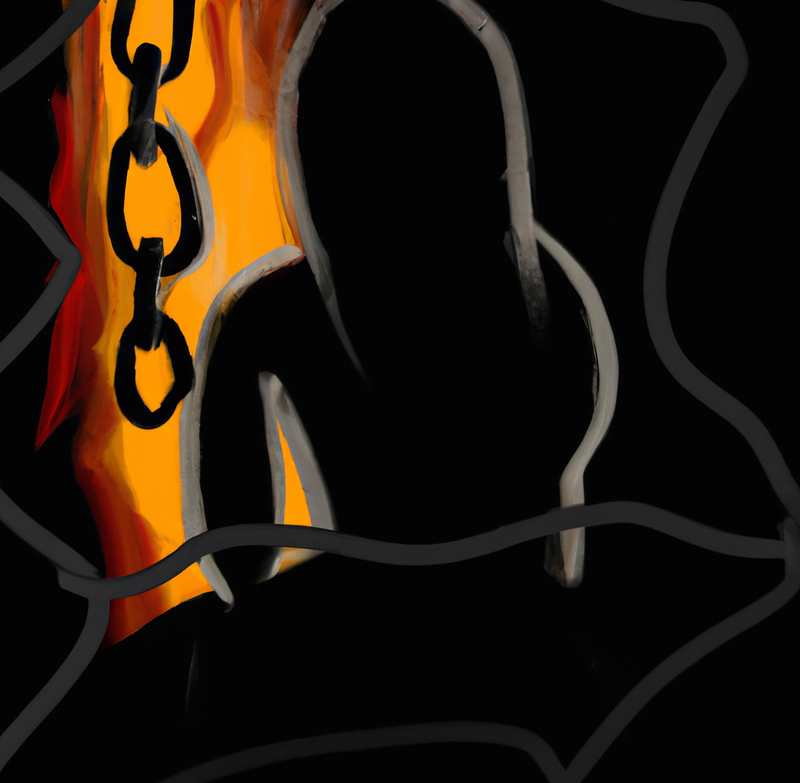
Plato’s Cave is an allegory that was featured in Book VII of his work, “The Republic.”
I hadn’t heard the story until recently, but it really rang true for me.
My interpretation is that we can all get trapped in our own ‘caves’ — our own limiting versions of reality. But if we push ourselves out of our comfort zones, and embrace reality as it actually is, we can “unlimit” ourselves and experience the true beauty of life.
But don’t expect everyone else to see things the same way…
Screen addiction is a big challenge for our modern society, especially with media providers deliberately manipulating our dopamine systems to keep us hooked and “engaged”. I think Plato’s Cave is a cautionary tale for our modern age.
At the end of this post, I’ll give some tips on how to break free of screen addiction,
But first, see if the story resonates with you…
Prisoners In The Cave
A group of people have been held as prisoners in a cave.
They are chained together and sit facing one of the cave walls, unable to turn their heads. Behind them, a fire burns brightly at all times. The people see shadows dancing around, projected onto the cave wall. The prisoners give these shadows names, and this becomes their reality.
The dancing shadows are the only reality they can perceive.
Escaping The Cave
One day a brave prisoner manages to pick the lock on his leg irons.
He turns to look at the fire, but is blinded by the intensity of the light. He shields his eyes and waits until he can face it again.
After some time, his eyes gradually adjust to the brightness, and he begins to see the world behind him. Not just the dancing flames, but also the objects casting those familiar shadows.
He sees other prisoners still chained, their gazes fixated on the wall, and further beyond, the entrance to the cave, where a hint of sunlight piques his curiosity.
Recognising The Truth
His heart pounding with a mix of fear and exhilaration, the escapee decides to explore beyond the confines of the cave.
As he approaches the entrance, the brightness intensifies. Once outside, he’s met with an overwhelming vista of colours, shapes, and forms he could never have imagined.
The world outside the cave is vibrant, filled with trees, animals, rivers, mountains, and a radiant sun in a vast sky. The sounds are different too — the chirping of birds, the rustling of leaves, the gentle flow of water. It’s a reality so much richer than the shadows he’d known for so long.
As he immerses himself in this new world, a realisation strikes him — the shadows on the cave wall were mere representations, pale imitations of the vibrant reality outside.
He can’t wait to get back to the cave and share this truth with the others.
Meeting with Hostility
Upon re-entering the cave, his eyes struggle to adjust to the darkness.
The world of shadows feels alien to him now. He walks over to his fellow prisoners who are still transfixed by the shadows on the wall. He tries to describe all the wonders he’s seen. But the prisoners are sceptical, hostile even.
They don’t believe his tales. They dismiss them as madness or dreams. To them, the shadows remain the ultimate truth, the only reality they’ve ever known.
The man soon realises that the others are too scared to leave their distorted perception of reality. He’ll never be able to convince them that it’s all an illusion. That a greater, more fulfilling and beautiful reality exists just outside of their reach.
An Allegory for the Modern Age
Even though he wrote the cave allegory way back in 380 BC, could this story be any more pertinent?
How many people in our modern age live in a fantasy world? A distorted perception of reality.
The countless hours spent in front of screens, scrolling through endless feeds, playing video games, watching movies — are not very different to the dancing shadows on the cave wall.
Too many of us accept these digital narratives and manipulated images as our reality.
The problem is set to get worse in the age of AI, unless we’re very careful.
Many are afraid to disconnect, to step out of their digital caves, fearing they might miss out on something.
But, just like the escaped prisoner, when we venture away from our screens, we find a world full of authentic experiences, real connections, and natural wonders that no digital platform or video game can replicate.
How To Escape the Digital Cave
The modern cave is not made of stone walls, but of pixels and notifications.
Our chains are not iron, but there areWi-Fi signals and charging cables that keep us tethered.
And just as the prisoners ridiculed the man who had seen the world outside, today, those who advocate for a more balanced spiritual life and digital detoxes are often met with scepticism or ridicule.
If Plato was here today I wonder if he’d ask us if we’re ready to unchain from our digital caves?
It’s not about rejecting technology, but finding a balance, and making sure that the virtual shadows don’t become our only reality.
Tips to Break Free
- Digital Detox: Set aside dedicated times or entire days where you unplug completely. These digital detoxes can be as short as a few hours or extend over weekends. Use this time to reconnect with nature, read a physical book, or engage in hobbies.
- Limit Notifications: Adjust your device settings so that only the most crucial notifications get through. This reduces the constant pull to check your devices and helps you focus on more essential tasks. I turn off all notifications apart from messaging apps and phone calls. I leave “do not disturb” mode permanently switched on so that I only receive notifications from family and friends.
- Physical Boundaries: Have designated areas in your home where devices are not allowed, like the bedroom. This ensures quality sleep and personal moments free from digital distractions. I leave my phone in my home office when I’m asleep and I’ve recently started trying to leave it there more and more often during breaks throughout the day.
- Mindful Consumption: Before engaging with any digital content, ask yourself: “Is this energy enriching or depleting?” Aim to consume content that adds value to your life rather than merely passing time. Personally, I avoid all news these days (TV and online) apart from reading the BBC News website for half an hour per day to stay informed. The negativity of the 24-hour news cycle depletes my energy very quickly.
- Tech-Free Activities: Dedicate time to activities where technology isn’t required, like journaling, meditation, or even cooking. This can help you cultivate mindfulness and remain present.
- Connect Offline: Make it a priority to have face-to-face interactions with loved ones. Physical connections can often be more fulfilling than digital ones.
- Educate Yourself: Understand the mechanics behind technology addiction — the dopamine hits, the designed-for-addiction interfaces of many apps, and platforms. Being aware can make you more resilient against their pull.
If you like my writing and would like to show your appreciation, please check out my book: Mikey the Magic Poet. Yes, it’s a kids book, but I’m pretty sure that grown up kids will like it too!


