
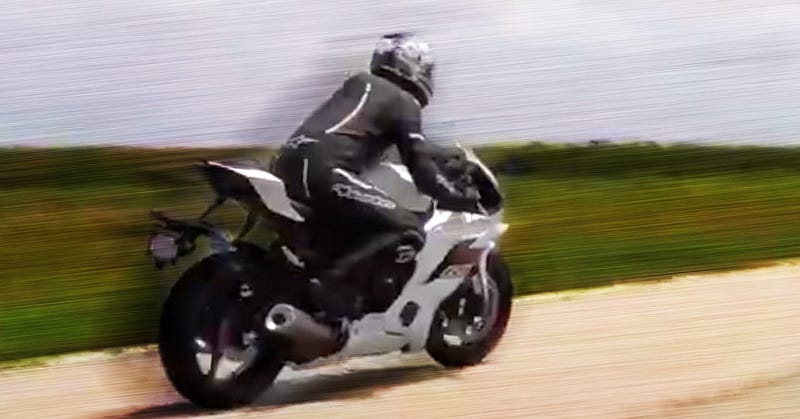
Accidental Insights: The Hidden Leadership Lessons of Motorcycle Racing
Or, what I learned when I crashed.
Life was different this year. I made it so.
Perhaps it was turning 40. Perhaps it was seeing my daughter thriving. Perhaps it was realizing that there would always be plenty of work. Perhaps it was recognizing that I craved adventure.
Whatever the reason, I finally found the courage to chase a far-fetched personal goal. I knew it would require significant investment of time and money. I knew it would challenge me mentally and physically. I knew it would be polarizing — some folks think it’s inspiring, while others think I’m irresponsible.
What I didn’t know was that it would also make me a better leader.
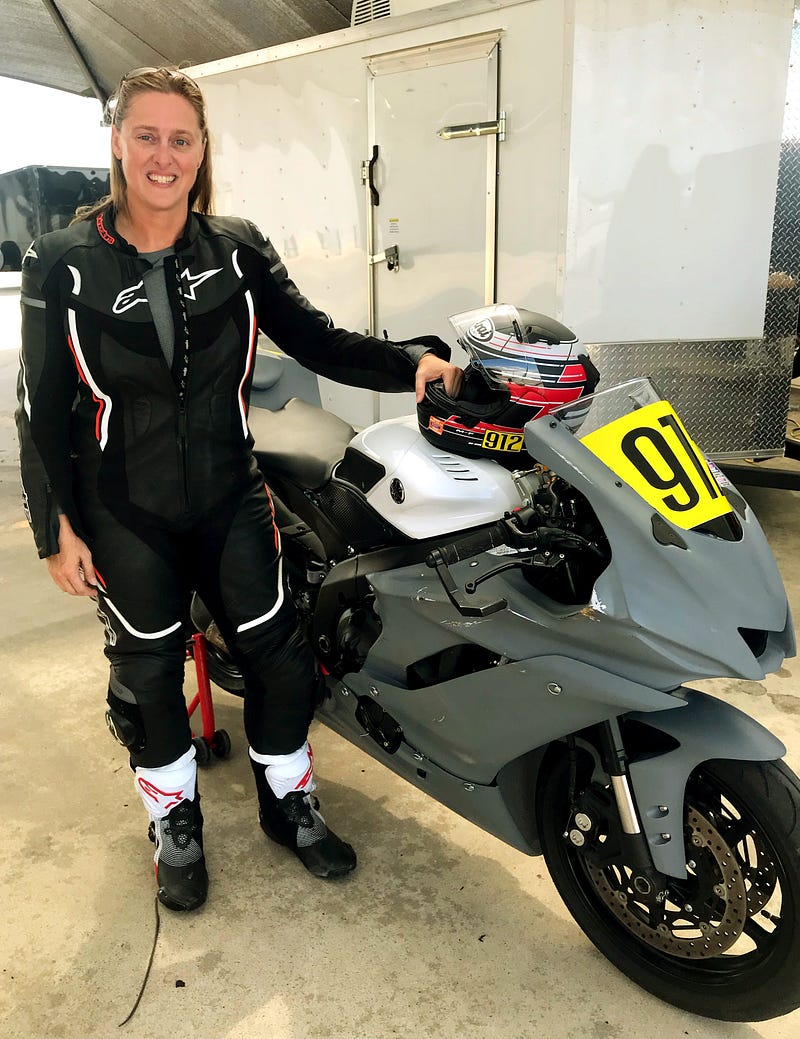
This year, I’ve worked to earn my novice license from the Central Motorcycle Roadracing Association. (I’m close.) I bought and race-modified a brand new Yamaha R6. (She’s beautifully smooth.) The flow I feel when I’m on the track is unmatched in any other area of life. All of my senses are engaged and my focus is intense, but I also feel in awe and at peace. I’m rejuvenated by the camaraderie and community spirit at every track.
I soon discovered that what started as a way to give my mind a rest from the intense responsibility at work was actually teaching me valuable lessons about my leadership.
It seems like a short-term, solo effort, but that’s far from the truth.
At first glance, racing seems simple: one rider, one bike, eight laps. I quickly learned that’s only a myth. At a minimum, a racer needs a mechanic, a tire specialist, a pit crew member, and a mentor (or several).
The same is true for leaders. Without a team, there’s little meaning or progress. And just like our other priorities in life, we ought to pick our mates carefully. Talent matters, but not that much. In fact, the folks that make the best teammates for a rookie are likely those that have struggled recently. Whether they’re just a few steps ahead, converting to a new bike, or recovering from a crash, their insights are likely to be more relevant.
Alignment and values matter too. There are some folks that believe a rider should do everything within their power to win a race (or place as high as possible). Others prioritize the ‘marathon’ mindset, recognizing that it’s a long season, with multiple race opportunities each weekend, and focus on simply getting better each session.
This reminds me of the business leader that must choose between seeking the best results possible for the next quarter, or sacrificing some short term results to setup for sustainable success in the future. In racing and in business, my values put me squarely in the latter category, and I must remember that.
Seat time is important.
I’ve long believed that leadership is a verb — a mindset, a choice to be renewed each day. Much like the commitment to stay in the seat for another lap around the track. On practice days over the summer, Eddie Thornton often ribbed me for coming in before the session ended. (He holds the track record at MSRH in Angleton.) I hadn’t yet faced my fear of fatigue, but I understand now.
Just like racing laps, leadership is often doing the same things over and over again, trying to get a little better each time. Opening up the throttle sooner, braking later, taking a smoother line through the corner — lots of tiny adjustments that add up to faster times.
This same approach holds true for meetings, difficult conversations, complex decisions, or just staying calm when we’re confronted with a challenge. Learning to listen fully, to pause before we react, to seek out specific wisdom — all skills we can practice over time.
In both, we must be willing to stay in the seat long after it’s comfortable. That’s the only way we’ll get the repetitions needed to keep learning and growing.
Distractions are dangerous. Focus is essential.
I learned this one the hard way, as they say. About 15 seconds after recognizing that my thoughts had been distracted, I was face down, tumbling through the grass awkwardly.
I felt like I’d mastered turn 9 at Hallett in Friday’s practice sessions, and I had planned to pick up my speeds in turns 7 and 8 during Sunday morning practices. But I often had to navigate lots of traffic, and I was discussing that delicate balance in our pit area. Another racer had a strong opinion and expressed it passionately. Before I could process the interaction, it was first call, and I needed to gear up.
I went through my breathing routine in the holding area and cleared my mind. But a few laps in, I realized that I was replaying that conversation. I tried to refocus and steady my breathing, but it was too late. I was going faster, and my line was too far to the left. I decided to run off into the grass and felt that I had regained control. I remember thinking about turning right to prepare to re-enter the track. As I pulled the chunks of grass from my helmet moments later, I realized that I hadn’t slowed down enough and the grass was still wet with morning dew.
In leadership situations, the consequences aren’t always as instantaneous or obvious, but they can be just as harsh. If we’re distracted, we may miss the early indicators of weaknesses that need attention before they grow into significant threats. What’s worse is that our teams often pay the price for distracted leadership. If we miss a change in customer preferences, our front-line teams will feel the additional stress in their interactions. If a threat goes unresolved for too long, it may result in a decline severe enough to require layoffs.
Just like racers, leaders must be focused on the course ahead and keep our eyes up for any unexpected obstacles.
When you have a misstep, it’s important to reflect, learn, and try again.
After a painful mistake, it’s tempting to curl up and nurse our wounds. And a certain amount of that is necessary. But we’ve also got to quickly assess, regroup, and do our best to keep moving forward.
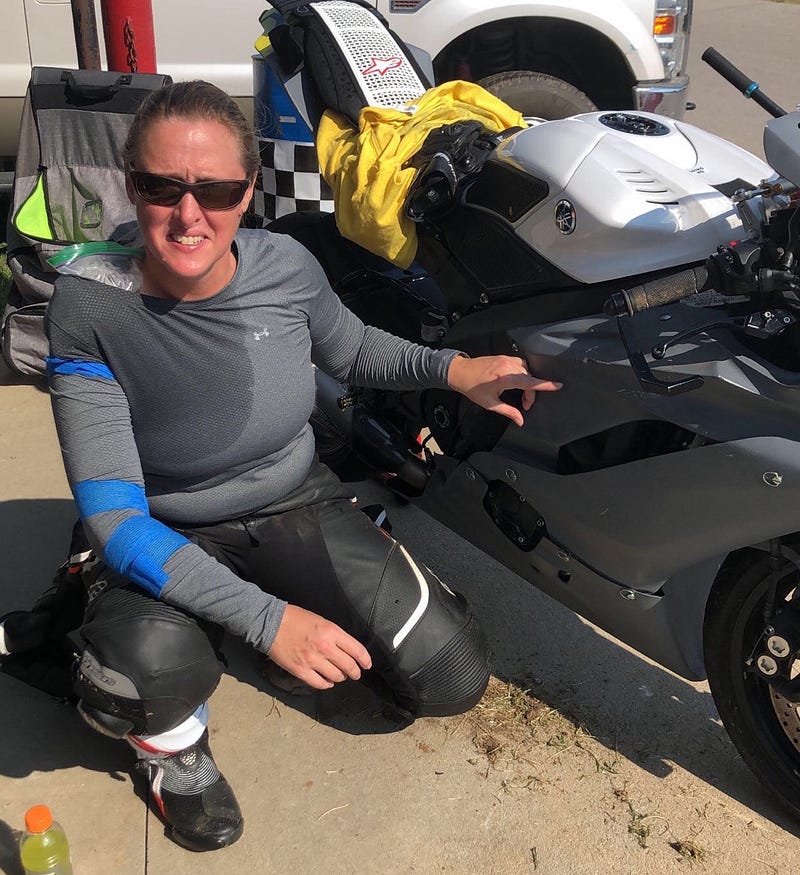
As I returned to my pit area after the crash, I tried to be calm, but I was still shaking. Thankfully, an experienced racer was already waiting for me. She helped me get my gear off and assess my potential injuries more carefully. To prevent swelling, she taped and iced my elbow and shoulder.
I was registered for two races that Sunday: one early in the morning, and one after lunch. She recommended that I get back on the track for the second race, unless it was physically impossible. I agreed and was confident that I could do it. My bike also seemed to have only minor scrapes.
As the hours ticked by, that early confidence was replaced by anxiety. I felt nauseous. My heartbeat echoed in my ears. My hands trembled. I was terrified to my core. I kept going anyway. I went through my routine for gearing up — suit, boots, brace, helmet, gloves. I clicked into first gear and headed down to enter the track. As always, I slowed my breathing as I waited for my transponder to be scanned. I made it through the warm up lap and found my spot at the starting grid.
My start was reasonably smooth, but I knew immediately that this would be unpleasant at best. My handlebars were slightly crooked and put extra pressure on my right shoulder. My feet felt like bricks, and I had trouble switching gears. My heart raced as I got closer to the section where I’d crashed.
But I did it. I completed four full laps before coming in. (Oddly enough, I technically won that race by being the only one in my category.) A week later, I also got back out on my home track in Angleton. The fear and anxiety returned in force, but dissipated after a lap or two. And my shoulder was still weak, but the bike felt smooth again.
I’ve felt those same physical symptoms when I’ve dreaded an upcoming project or discussion, particularly when it involved disclosing and working through the consequences of a misstep. It’s often tempting to delay or avoid the conversation, and some times I have.
Lately, though, I’ve realized that the only path forward is right through the fear. We can rely on mentors to guide us. We can admit that we’re weak or tired. But just like getting back on the track after a crash, it must be done.
“If an action tires your body but puts your heart at ease,” Xunzi said, “do it.”
In his recent book, Stillness is the Key, author Ryan Holiday argues that outside pursuits are essential to our spiritual and mental health.
“At leisure, we are with ourselves. We are present. It’s us and the fishing pole and the sound of the line going into the water. It’s us and the waiting, giving up control. It’s us and the flash cards for the language we are learning. It’s the humility of being bad at something because we are a beginner, but having the confidence to trust in the process.”
I gave myself permission to explore racing this year because it provided a relief from the extreme intensity of my work. Through the vulnerability of a beginner’s mindset, racing unexpectedly reinforced the leadership principles that I need to embrace again.
- Know your values, and choose your team carefully.
- Stay in the seat, particularly when it’s uncomfortable.
- Do whatever it takes to stay focused.
- Acknowledge fear, even when it’s real, and keep going anyway.