
Academic Burnout Cycle: Is there a way out?
I have spent most of my adult life in an on/off again relationship with the creative academic world and I’ve finally given up.
Hlp! I’ve moved in with the parents.
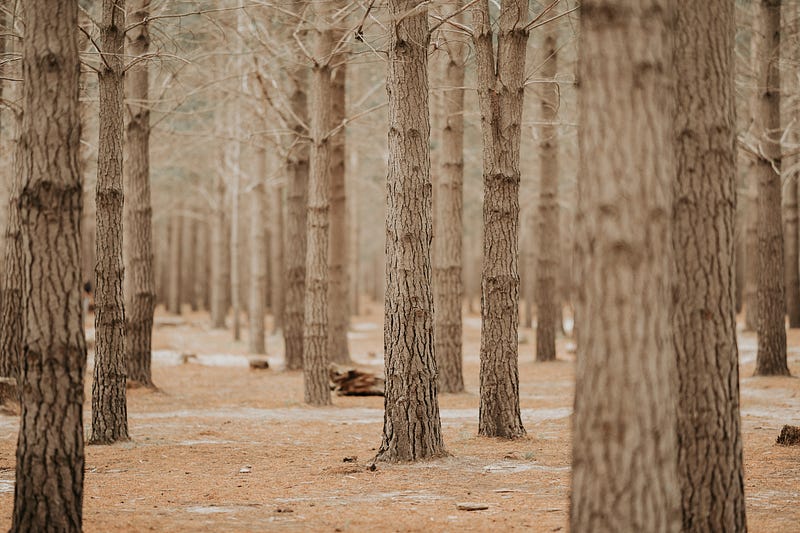
I’ve just turned 39 yrs old and am living with my parents in the middle of the Minnesota woods, no — bff down the street to gripe to, no — grandparents a few blocks over retreat to when things get rough, the closest friend — and international airport — is two hours by car. It’s just me, the dogs, and them. And quite frankly if any one of us goes postal on the others, it’d be plenty easy to hide a body out here.
The year before the pandemic locked most of us away, I set myself up for the biggest bout of burnout I’d experienced since my early twenties. As a perpetual student, I was three years into a joint master’s degree in Library and Information Sciences and Book Arts at the University of Iowa Center for the Book (UI).
I went into spring semester as I always do: bright-eyed and bushy-tailed, full of possibility and overzealous about what I was capable of achieving, but I was irritated by my poor executive function which prevented me the previous semester from attending a conference in nearby Minneapolis. I wasn’t even aware the conference existed until it was happening. I missed an opportunity to explore book work, to network, to visit friends, and have an adventure.
Determined not to let this happen again, I spent spring semester applying for all of the scholarships to all of the conferences and workshops as well as keeping up with classwork and finishing a hand-printed book of poetry (Hypersigil by Ricki Cummings (Midge Books)), I also traveled to Arizona and Nevada on two separate occasions.
I might have been fine if at the end of the semester I’d dug myself a hole in the sofa and turned on Netflix for three weeks, but instead I jumped into hand-printing another book, as well as attending a two week workshop in New York state, moving house, and driving north to pick up my dog and buy a new car before returning back to Iowa just in time for orientation.
By mid-semester fall 2019, between coursework and the two conferences I’d won scholarships to attend, I was barely functioning. I slept as much as I could, completed the absolute minimum reading and coursework to get by, I skipped whatever classes I felt was possible, but it wasn’t enough to replenish my energy. I was still snipping at people under my breath, disengaged while in class, and generally doing a piss-poor job, feeling awful and giving off loads of negative energy.
I needed a hard crash: weeks in soft pants, low-light, sensory deprivation, food ordered in, good books, and long binges with no obligations or humans, but wouldn’t get one until winter break.
I’ve spent most of my adult life retreating to academia to avoid the weekly burnout of full time work, a frequent user of emotional health days well before the term would be invented, I remember taking sick days as far back as first grade.
I couldn’t tell you what I understood my reasons were at the time, but I do remember legitimately FEELING sick though I knew it wasn’t the kind of sick you needed a thermometer or medicine for, in fact I had a general sense that I was doing something wrong, which over the years compiled into a deep, deep shame-well that I’ve worked hard to fill with compassion and acceptance.
I never skipped school to have a Ferris Bueller adventure, nor did I intentionally skip any tests or assignments, my grades were always quite good and I didn’t struggle in school in that way. I wasn’t even mischievous at home, I literally slept in and watched TV.
What I needed was down time. And this need hasn’t abated as I’ve become aware of it, it’s only grown more necessary, more urgent.
The semester cycle comes with its own rhythm of burn out, but until I attended UI I’d been at art schools: Bath Spa University and the School of the Art Institute of Chicago, where I didn’t yet recognize or understand my burnout cycle, but also where the expectations are a bit different than the expectations of large research facilities even if the department I was in at UI was filled with the same kinds of empathic, sensitive people.
That’s not to say I didn’t experience burn out, or that there’s not a lot of work involved at art schools, but I had a lot more solitary time making/writing/exploring from home, there were fewer classes in a semester, and most were focused on reading, play, and fueling the existing writing practice, whereas at UI I learned A LOT of new skills in a short amount of time; attended more academic-based classes that developed my knowledge around the long history of book work, but required separate projects; and the creative work required a lot of in-studio time rather than home-practice time simply because there’s necessary equipment and tools involved in book work that I didn’t have access to outside of the studio. None of which was bad, it was just a lot.
As the semester crept on and I catapulted back into a level of burnout I had last experienced more than ten years earlier, I knew I had to make much bigger changes than cutting back on my schedule, I just wasn’t sure what those might be.
I started the spring 2020 semester cautiously, slowly, a lot less optimistically. And as I recovered and began thinking about how to maintain a sustainable writing and art practice, COVID hit.
I want to be crystal about something here before I go on, I don’t count the last year and a half as rest, the emotional toll alone, even for those of us who were able to isolate without losing income, is still affecting my molecular structure, but it wasn’t long before I realized how much in some ways not HAVING to go anywhere was a relief.
University of Iowa spreads over nearly 2,000 acres, hosts a student body of 30,000 people, and houses eight separate libraries. It is by far the largest university I’ve ever attended. There are some upsides to being a member of a large research institution: there’s more funding, which means there’s access to more resources, more equipment, and there’s a large and varied, creative and intelligent student body with whom to connect and collaborate. On the downside there’s nowhere to cry.
No dim, private study rooms to step into and weep when one just can’t hold on any longer.
There’s florescent, industrial-style lighting in every room and hallway, long walks between parking lots and buildings (which can be a relief if the weather’s perfect and one isn’t in a massive hurry and there aren’t three 20 yr olds talking loudly on their phones along the way), there is absolutely nowhere you can go to be completely alone.
Even in the most remote toilets, say on the fourth floor of the English-Philosophy building where there are mostly just department offices, there is still a pretty steady stream of humans and in any case, it’s not like you can lock the door to the room itself and if you could, someone would inevitably knock.
And of course there’s the bureaucracy, the deadlines, the 20,000 emails that come to the inbox every day most of which have little to do with your degree program but do make you feel like you have to check your email constantly.
There are the extended expectations of a graduate student interested in finding a career in academia — and what graduate student in the humanities is actively NOT looking for an academic career track? — i.e., taking on a teaching load, giving lectures and presenting research at conferences—or in my case, artist talks — the applications for funding and fellowships, the needing to think a year in advance what you might like your life to look like as all the big fellowships and grad school deadlines are in the autumn the year before.
I was caught in the whir of the system.
And not unlike the military or Peace Corps in which you go where you’re sent, whether you’re applying for academic jobs or a graduate program, you have to go where you’re accepted/hired, and you might spend two to seven years in a locale you didn’t wholly choose (after all you choose a program, you choose mentors, you choose facilities, you choose funding, you don’t necessarily choose cities), and to me that has felt ike being in a constant state of transition. I have rarely felt like I belonged or like I was connected to or settled in the places I’ve lived.
Despite working remotely, attempting to make progress on a thesis that wasn’t going anywhere, and experiencing high levels of anxiety, it wasn’t long into COVID season before I realized I was feeling lighter in other ways. I hadn’t realized quite how much energy I was giving up every time I merely left the house.
As the weeks bore into months I started to re-think where I was headed, what kind of life I wanted to be living, and subsequently how to get there with the least unnecessary resistance, which led me here: living amongst the pine trees hoping my parents and I don’t smother each other in our sleep before I have an opportunity to build my own little dwelling.
This is the first installment of a series on a journey out of academic burnout. Find the second installment here.
Libby Walkup is a writer, book binder, and slow living novice who resides in the north woods of Minnesota with three dogs and her parents. To support her writing become a Medium member through this link and she’ll receive half of your membership fee and you’ll have access to unlimited Medium stories.


